Showing posts with label orson welles. Show all posts

06 March 2022

AND I SAID WHAT ABOUT BREAKFAST AT TIFFANY’S? [334]


I have thought about this question every so often, and I will be answering it in my capacity as Leigh Spence, B.A. (Hons) in Film Studies from Solent University, Southampton: what is my favourite film? 


Erm, I don’t really have one, but there are candidates for what may be my favourite film. 


This situation is borne from my taking a critical eye to absolutely everything, both in nature and by training: it was pointed out from the outside that film studies is an arts and humanities subject, and a cinema screen is as much a mirror as a blank canvas. Everything has its virtues, everything has its foibles.


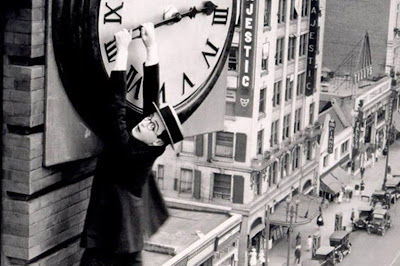
There are films that serve as personal landmarks: “Who Framed Roger Rabbit?” was the first film I saw at a cinema, and the “Back to the Future” trilogy (1985-90) is part of our family, right up to our seeking out the ride when it was still at Universal Studios – the real studio, not the theme park. VHS copies of Hayao Miyazaki’s “Castle in the Sky” (1986) and Disney’s “Fantasia” (1940) were present in my childhood, and I am fortunate to have been exposed to silent comedy from Harold Lloyd, Buster Keaton and Laurel & Hardy from early on, particularly Lloyd dangling from a building in “Safety Last!” (1923), a film I have, of course, now have on Blu-ray.


My go-to-answer for my favourite film is usually Alfred Hitchcock’s “North by Northwest” (1959), having long been a fan of his careful suspense plotting, the shadows of both pictures and character, and his style and humour – I remember a lecturer once stating that, while teaching Hitchcock’s films in a film studies degree is the most obvious thing to do, like he is the Shakespeare of film, the reason why they do teach him is because he is the Shakespeare of film which, having seen “The 39 Steps”, “Rear Window”, “Vertigo” and everything inbetween, I am inclined to agree. Ernest Lehman’s script for “North by Northwest” was deliberately a combination of all of the best Hitchcock motifs to that point, working as a perfect summation of why I like them – the fact that Hitchcock then blew this apart the following year with “Psycho” the following year is another reason for loving the director’s work, but is not as representative of his entire body of work as his previous film.


An easy metric would be for me to list the films I have watched the most times, to find a favourite there. Uniquely for me, I saw Pixar’s “Wall-E” at the cinema more than once, with the Monty Python canon, “Network” (1976), and Terry Gilliam’s “Brazil” (1985) sustaining multiple home viewings. However, films I don’t like – Neil Breen’s “Twisted Pair” (2015) and my personal bête noire, “Myra Breckinridge” (1969) – have required repeated viewings just to understand what happened, both in front of my eyes and behind the scenes.


It would be very easy for me to rely on lists of best films to formulate an answer, had it not been for the British Film Institute’s journal of record, “Sight and Sound”, producing a decennial “greatest films of all time” list from a poll of hundreds of directors and critics, making for the most definitive, answer for such a subjective question. The 2012 list, asking more industry people than ever, famously had Hitchcock’s lush psycho-drama “Vertigo” (1958) knocking “Citizen Kane” (1941) off the top spot for the first time since 1962. Orson Welles’s film is undeniably the greatest debut anyone has made with a film, and remains one of the best films ever made, but it also proves that you can only decide how good a film is by taking a good twenty years to think about it. The first poll, in 1952, stuck “Citizen Kane” just outside the top dozen films, and placed Vittorio De Sica’s “Bicycle Thieves” at the top, released only four years earlier – the 2012 poll placed it at number 33, below “The Godfather Part II” (1974) and “Taxi Driver” (1976). People asking why no “Star Wars” film is on the list should notice that “2001: A Space Odyssey” (1968) and “Blade Runner” (1982) are there. That said, a new poll is due in 2022, so there is still time.


My most diplomatic answer to why I don’t really have a favourite film is because I have not seen every film. But I know my tastes: I will have had to search it out, it won’t be on a mainstream streaming service, it won’t be a genre film – unless “Hitchcockian suspense” is a genre - and it certainly won’t be “The Sound of Music” (1965), as I have done a good job of avoiding it up to now.

22 November 2020

CAUSE YOU’RE NOT HERE [270]


The CBS radio network, just before 9pm on Sunday 30thOctober 1938:

“This is Orson Welles, ladies and gentlemen, out of character to assure you that The War of The Worlds has no further significance than as the holiday offering it was intended to be. The Mercury Theatre's own radio version of dressing up in a sheet and jumping out of a bush and saying Boo! Starting now, we couldn't soap all your windows and steal all your garden gates by tomorrow night... so we did the best next thing...”

Apparently, an executive at the network did not want Welles to add a disclaimer at the end of his theatre company’s radio adaptation of H.G. Wells’s novel “The War of the Worlds,” just in case they could be held liable for anything, like causing mass panic. As the hour-long play ended, anyone still in the broadcaster’s studios were commandeered to answer phone calls from members of the public for reassurance the broadcast wasn’t serious, in what must be the first instance of a call centre. At 10.30pm, 11.30pm and midnight, CBS broadcast messages confirming that all they did was broadcast a modernised play of a fictional Victorian novel, swapping English place names for American ones. The following morning, a haggard Orson Welles appeared in front of reporters and newsreel cameras, saying none of his company thought it was going to cause mobs in the streets, block telephone lines and cause traffic jams. The people that chose instead to listen to the ventriloquist Edgar Bergen on NBC were none the wiser.

The recounting of this incident portrays Americans as having overreacted to a radio drama. Less remarked upon is how live radio news reports, of the type parodied by “The War of the Worlds,” really only began being heard regularly on US radio in 1938. Like the first cinema audience ducking from the Lumière brothers’ oncoming train in 1895, people were only just getting used to the concept, just as the gravity of world events increased their need, and demand, for breaking news.

“...We annihilated the world before your very ears, and utterly destroyed the C.B.S. You will be relieved, I hope, to learn that we didn't mean it, and that both institutions are still open for business...”

Radio in the United States was originally seen by newspapers as a way of promoting themselves through a new medium, but once it became more established, newspapers saw how they could threaten their existence – the CBS and NBC radio networks established their own news divisions once wire services, like the Associated Press, stopped their work from being used for broadcasting. The Biltmore Agreement, named after the New York hotel where it was signed in 1933, restricted networks to two five-minute news bulletins a day, after 9.30am and after 9pm, to protect morning and evening newspapers – these bulletins could only use information supplied by newspapers, and no story could last more than thirty words. Because the agreement did not cover independent stations, or programmes featuring news commentators, this weird state of affairs died within two years, by which point newspapers started opening their own radio stations.

What proved the power of “live” radio news was Herbert Morrison exclaiming “oh the humanity” as he saw the Hindenburg zeppelin disaster unfold in May 1937. Chicago station WLS had no ability to complete outside broadcasts, but Morrison’s commentary, recorded onto disc at the scene of the disaster and played out later the same night, demonstrated the urgency of radio reporting, if not the immediacy. The first episode of “CBS World News Roundup,” broadcast on 13th March 1938, was a one-off live broadcast reporting of the annexation of Austria by Nazi Germany the previous day. The broadcast experiment was repeated the next day, and once again later in the year before the deepening pre-war conflict in Europe created turned “Roundup” into a daily show.

In this light, it is curious that NBC were meanwhile broadcasting a weekly radio newsreel dramatisation of events into short sketches. “The March of Time,” started by and named after the news magazine, once featured Orson Welles on its staff of actors, portraying himself in 1936 when a production of “Macbeth” he directed opened in Harlem. The show began in 1931 as one of the first regular news programmes, but by the time it ended in 1945, regular news bulletins outmoded it entirely.

Orson Welles is reported as having said the approach of his company’s dramatization came from a British radio production. “Broadcasting the Barricades” was a 1926 talk by the Reverend Father Ronald Knox, was broadcast to all BBC stations from Edinburgh on Saturday 16th January 1926 at 7.40pm - the listing in the “Radio Times” has no description for the programme itself, but Knox was well-known as a detective novelist. The surviving script for the programme started with a BBC announcer interrupting an academic lecture from Oxford to announce that Communists had invaded London, followed by news that the Savoy hotel, next door to the BBC’s then headquarters, had been set on fire; Big Ben had been blown up; and the transport minister had been hung from a lamppost.

After twenty minutes, the show was over, and it was time for variety, probably from the Savoy Hotel. The BBC received 249 written complaints, and 2,307 written appreciations of the programme. This hoax did cause a minor panic, reported by newspapers in the United States, but if radio was still too new a technology to play with in 1938, it certainly was if regular broadcasts in Britain had only been running for three years.

With the expectation that live reporting was one hundred percent reliable was what made the approach used by Welles in “The War of the Worlds” work too well, especially if a listener tuned in after the drama began – to an audience only expecting to hear this type of radio in only one context, it could be argued that attempting to change or play with that context while the form was still, well, forming, has to be approached very carefully. It should therefore be taken that Welles, his theatre company, and CBS had assumed the intelligence of their audience when it decided to start playing.

“...So goodbye everybody, and remember the terrible lesson you learned tonight. That grinning, glowing, globular invader of your living room is an inhabitant of the pumpkin patch, and if your doorbell rings and nobody's there, that was no Martian... It's Hallowe'en.”

10 June 2020

PRIVATE EYES, THEY’RE WATCHING YOU [245]


“Who is this man? You know we can’t afford any trouble.”

The filmography of Orson Welles is usually split into two categories: “Citizen Kane,” and everything else. While two more films, “The Magnificent Ambersons,” and “It’s All True,” were made under Welles’s contract with RKO, only “Citizen Kane” was made the way he wanted, and finished and released as he intended. There remains only one version of “Citizen Kane,” and that is the vision of its director, co-writer and star. 

This distinction is critical when discussing Welles’s films, as in most cases, especially 1955’s “Mr Arkadin,” you must clarify which version you watched. A French-Spanish production, filmed across Western Europe, “Mr Arkadin” was taken out of Welles’s control by the producer when the original release date was missed – after four months of editing, only the first third of the film had been pieced together. There now exists about five different versions that are available to view, cut together in vastly different ways, and the version I watched had a different name, “Confidential Report.”


The story is the same across all versions: played by Welles, Gergory Arkadin is a billionaire businessman and socialite, who claims to have amnesia, with no memory of his life before 1927. Arkadin hires a man named Guy Van Stratten to produce a confidential report that fills in the missing time, except each person Van Stratten consults winds up dead, as Arkadin ties up the loose ends of his former life as a gangster in the years following the First World War – a race to Spain ensues as Van Stratten becomes the last target. If it sounds like the search for Charles Foster Kane mixed with “The Third Man,” it is because it was based on a script Welles wrote for a Harry Lime radio series.

Welles took so long to edit “Mr Arkadin” was because he wanted the story to jump around in time, as Van Stratten discovered new information. Non-linear plots were less common in 1955, but Welles was also trying to alienate the viewer from the characters – instead of easily allowing the audience to identify emotionally with the characters, the performances, direction and editing are intended to make you look at everything more critically. However, what worked for this effect’s originator, Bertolt Brecht, didn’t work so well for Welles – all the characters are spiky and unlikeable, even Van Stratten, the nominative hero. Even worse, the dubbing work found in the film, mainly to rewrite lines, sounds more convincing in a cheap ninja action flick, mainly down to the small budget Welles was working with.


“Confidential Report” was the name given to “Mr Arkadin” when it first premiered in London in 1955. The more well-known title came when it was eventually given a US release in 1961 – there had been legal action between Welles and the producer, but the film was not copyrighted properly, meaning US law counts the film as existing in the public domain. A couple of versions begin with an unexplained dead body on a beach, as Welles intended - the version I saw put that shot in the middle. I got voiceovers from Van Patten explaining what his intentions are, which other versions do not have. My version had the credits at the beginning – they should be at the end. My version had events presented out of order, which varies in intensity and editing between versions - the most common public domain version was recut for television and home video, presenting everything in chronological order. You may have to watch more than one version of “Mr Arkadin” to get the full story, which is fitting for the story it tries to tell, but not very helpful if you want to be satisfied at the end.

19 January 2020

THINGS THEY DO LOOK AWFUL COLD [218]


“My definition of a film director is the man who presides over accidents... Everywhere there are beautiful accidents. There’s a smell in the air, there’s a look that changes the whole resonance of what you expected.” – Alfred Hitchcock Orson Welles.

If 2018 could be remembered for anything good, it is because two of the most extreme examples of film development hell finally saw release: “The Man Who Killed Don Quixote,” directed by Terry Gilliam, and Orson Welles’ “The Other Side of the Wind,” released by Netflix thirty-three years after its creator’s death. Like Gilliam’s project, Welles’ film has its own behind-the-scenes documentary, daring to tell a more interesting story than the film itself.

“They’ll love me when I’m dead” may well be something Orson Welles said, but that was not true in the New Hollywood of the 1970s – the old one kicked him out for making uncommercial or downbeat films, leaving him to scrape together funds for his work in Europe by resorting to cameos and commercials. Welles had the reputation of “Citizen Kane” loom over him for the forty-five years from its release to his death, especially when the film students and scholars that rose up in that time lionised his craft as a cinematic auteur. He still couldn’t get his films made – the ones that did were the scholars, like Peter Bogdanovich and Steven Spielberg. In this environment, the only option for Welles was, effectively, to make a student film.


When it eventually appeared, “The Other Side of the Wind” could not be more of a self-portrait: an old-time director, played by old-time director John Huston, is making a film that attempts to evoke the vogue of atmospheric European productions by directors like Michelangelo Antonioni (and starring Oja Kodar, the film's co-writer and Welles' lover), while being followed around by journalists with tape recorders, forever asking about his life and his work, because there can be no difference between them. The film is shot like a documentary – point-and-shoot, get as much footage as you can, and make sense of it later. The film within the film itself is wordless, arty, impenetrable, and unfinished - the fictional director also ran out of funds.

“They’ll Love Me When I Dead” is linked by Alan Cumming, who appears to be turning into James Mason, and while it tells the story of a man that could never finish his films due to circumstance, you get the feeling that Welles probably deserved it: the unplanned nature of the production, with a constantly rewritten script, is as chaotic as the outtakes show. The money was scraped together from various sources - Welles would use an American Film Institute ceremony, held in 1975 in his honour, to unsuccessfully make a bid for funds to complete the project. One source of funds was a son-in-law of the Shah of Iran, which ultimately led to the film being impounded by the Ayatollah Khomeini’s regime. Peter Bogdanovich, a defender of Welles’ reputation, later cast in the film as a confidante of Huston, later had Welles living out of his house for two years, filling his rooms with cigar smoke and Fudgsicles. The director of photography, Gary Graver, spent fifteen years answering to Welles every day, but was not paid by him, and resorted to camerawork on over a hundred porn films, to make ends meet, most notably for the notorious Ed Wood – Graver would later spend eighteen months carrying around Welles’ ashes in the boot of his car. 


The documentary ends with a reminder of other Welles projects that went unfinished including, appropriately enough, a version of “Don Quixote,” as if to prove that anyone attempting to film that story must be quixotic in their own way. As much as Orson Welles left behind, his reputation means what was left behind will come to light: with “They’ll Love Me When I Dead” focusing squarely on Welles, we do not get the story of how it took until 2014 for the litigation around “The Other Side of the Wind” to finally end, and how it was eventually completed – that needs its own documentary. What we do get, however, is an idea of the Orson Welles that was drawn upon to finish the film, the Welles that put into the mouth of John Huston: “We can borrow from each other, but what we must never do is borrow from ourselves.”


02 May 2019

AND THEN THE CAT CREPT IN [169]


I had not expected myself, having finished watching “Cat People,” to be comparing it to “Get Out,” but both films, in their time, challenged expectations of what a horror film can be, and Jordan Peele caused as much surprise with his debut feature film as Val Lewton had done with his.
The horror in “Cat People” is implied, and psychological in nature. Like the other films Lewton made as a producer at RKO Radio Pictures, the story didn’t necessarily need to be told as a horror film – it is grounded in our reality, and the characters are relatable, even being shown at work. In fact, the horror comes when it is needed, not just because the audience needs to be jolted in their seats.
The story concerns someone who, like Lewton, was born in Eastern Europe – Irena, a fashion designer, who is haunted by the stories of devil worship and witchcraft from her ancestors’ village, which turned them into cat people. She believes she will turn into a panther if she gives in to passion and becomes aroused. All of this is foreshadowed in the opening scene, based in a zoo, where Irena discards sketches she made, but didn’t like, of a panther, which attracts a man, Oliver, who begins to talk to her - one sketch has a sword put through the panther.
The psychology and reason of the “new world” is played against the myth and tradition of the world, as Oliver, who goes on to marry Irena, his co-worker Alice, and a psychiatrist, all believe Irena is letting these stories control herself, but the reactions she gets from pets brought by Oliver for her, and being called “my sister” by a woman in a restaurant, remarked upon for looking like a cat, only convinces Irena further. As the others begin to suspect what they are seeing and hearing themselves, the threat of what they dismissed becomes more and more real.

“Cat People” begins and ends with quotes that allude to good and evil existing in the same place, and with a main character that embodies a kind of inevitability in their turning to darkness – a kind that even marriage cannot solve – you find that what was meant to have been a straightforward horror film actually contains very mature themes for the time. The shadows and fog of “Cat People” coincided with the birth of film noir, with RKO’s 1940 film “Stranger on the Third Floor” seen as the first of the genre, continuing into 1947’s “Out of the Past,” a masterwork by “Cat People’s” director, Jacques Tourneur. All three films have the same cinematographer, Nicholas Musuraca, whose use of light defined the genre.

“Cat People” is the definitive Val Lewton film. Lewton began as a journalist and pulp novelist, before becoming a script editor for producer David O Selznick, apparently telling him that “Gone with the Wind” was unfilmable. However, Selznick’s MGM production of “Anna Karenina” was influenced by Lewton’s grasp on detail as an amateur historian. When RKO approached him to head up a unit making cheap horror films to compete against Universal’s monsters, it was Selznick that negotiated his contract there, seeing the chance he should be given. Despite the terms - make films using titles suggested by the studio, lasting 75 minutes or less for under $150,000 (now only over $2 million with inflation), Lewton could make his films however he liked – to that end, despite using the staircase from Orson Welles’ “The Magnificent Ambersons” more than once, all the psychological intrigue, and even the way the shadows fall on his characters, were written into the script. “Cat People” made $4 million at the US box office over the next two years for RKO, twice what “Citizen Kane” and “Ambersons” had made put together at the time, saving the studio.

27 January 2019

THIS PROGRAM IS BROUGHT TO YOU IN LIVING COLOR [148]


Nowadays, colourising black and white films are normally encountered in programmes with names like “The Second World War in Colour,” or “Hitler in Colour,” but the first time I encountered this practice was a VHS copy of a Laurel & Hardy - a version of their feature film “Way Out West,” the one where they sing “The Trail of the Lonesome Pine.” Now I have a DVD that includes both this and the original black & white version, I will watch the original, because I am older, and know better.
Unless you were actually there as these films were being made, or if you have done exhaustive research on the production design, looking for sources that may no longer exist, your choices for how a black & white film would look in colour may as well be informed guesswork.

Regardless of the original claims made in the 1980s, when this act was prevalent, of providing films that young people were more likely to watch or, even worse, that they would have been made in colour if the option was available at the time, wilfully changing the work of someone else to make money is very circumspect. The worst example I can think of is that 1941’s “The Maltese Falcon” was colourised without the input of its director, John Huston, who was still alive at the time: when interviewed for “Entertainment Tonight” in 1986, Huston said, “I think it is a desecration, it’s an absurdity, it’s a demonstration of the will to corrupt the taste of the multitude.” If you’re going to be pissed off, do it properly.

Turner Entertainment owned many of the films that were colourised in the 1980s - Ted Turner himself stated, "The last time I checked, I owned the films that we're in the process of colourising… I can do whatever I want with them, and if they're going to be shown on television, they're going to be in colour.” Turner Entertainment would actually colourise the last reel of “Citizen Kane” as a test, mainly as a result of the outcry when Ted Turner said he was considering it – “It’s a Wonderful Life” had already been “done” by then. Thankfully taste, and probably also the estate of Orson Welles, stopped the experiment – a fragment of this was shown by the BBC in 1991, as part of the “Arena” documentary “The World of Orson Welles,” and it is a pastel-coloured nightmare.

The worst example of colourising that I have come across was a situation that left you unable to see the original film. Turner owned the original black & white “Popeye” shorts made by Max & Dave Fleischer’s studio for Paramount, and did appear to be the only cartoons I could find that were colourised, until I found out that some early Merrie Melodies cartoons were also colourised, and even some Mickey Mouse films were “done” by Disney. In the case of “Popeye,” Turner sent the films to South Korea, where the film was traced by hand, inked, and coloured. This meant the three-dimensional backgrounds used by the Fleischers were no longer seen. Even worse, the films were originally animated “on ones,” with a drawing every frame for more fluid moment, especially in the limbs of Olive Oyl – the tracing was only made on every other frame, or “on twos,” rendering the action jerky and like a flip book, the resulting twelve frames a second being right on the point where the persistence of vision in your eye turns stationary objects into moving ones. 


[This looks like a piss-take at how badly these were redrawn, but this is just one example.]

[From "A Clean Shaven Man" - I watched the remake to check this was actually true. Wow.]

Fortunately, what came out of this was a mandatory disclaimer stating the film you were watching was modified from its original version. Unbelievably, Frank Capra did sign a deal for “It’s a Wonderful Life” to be colourised, but because the film was then believed to be in the public domain, Capra’s original investment in the process was returned to him, and he joined John Huston’s side. Luckily, this all appears as ancient history now, because once I realised I was not watching “Way Out West” as originally intended, I lost all interest, and found the original version instead.