Showing posts with label facebook. Show all posts

12 January 2025

WITH THE SOUND ON THE GROUND [483]


Gatekeepers don’t remove gates until the opportunity for profit arises from selling off the gate.

The decision by Meta’s Mark Zuckerberg, announced on Tuesday 7th January, to remove much of the rules and moderation policies regarding content on Facebook, Instagram and Threads, speaks both of an attempt to see off anticipated regulatory problems with an incoming US presidency that scorns any perceived impediment on “free speech”, and of a decision to save the cost of running the old system by letting end users police themselves through a “community notes” system, already used at Twitter/X for similar reasons.

Social media is a digital simulacrum of a town square that creates a Speaker’s Corner for each entrant, the unspoken price of admission being the intentional harvesting of the data created from any utterance or exchange for profit. I concluded this after having gone through Meta’s settings on both Facebook and Instagram to deny their ability to do anything with data created from my having used their services, or with data they have received from other websites that may have also interacted with me. Meta already cannot use my data to train artificial intelligence engines, because I had already been asked this, and I already said no – why let lazy people use my work to take a shortcut?

I couldn’t care less about any perception of Meta becoming anti-LGBTQ+ regarding what they are now allowing people to say, as people who feel the need to say certain things in the name of debate usually don’t have any trouble saying those things. Worst of all is having someone so identifiable in charge of a public “space”, like Zuckerberg. Perhaps decentralised social media, like Bluesky or Mastodon, is the nearest you can get to a real-life public space.

That’s one thing about rules: we wouldn’t think we’d need them unless we needed them, would we? Society has rules, and the Internet stopped being a “Wild West” when we integrated it into our normal lives. Social media will either need to rejoin society, or be subsumed by it – I have covered this subject too many times to say otherwise.

I wrote this in June 2020: “There will come a time when social media will end – sites will either be legislated out of existence, or people will get bored and wander off. Either extremism and fake news will be dealt with, or people will just have to learn how to speak to each other properly – which they have increasingly been doing via by video conferencing services, like Zoom, FaceTime and Microsoft Teams, instead of social media. This is much healthier than measuring your influence and wealth by how many followers you have. If you really need to let people know what you think about something, get a blog, or ask Google to resurrect GeoCities.”

I also wrote this in January 2022: “If everyone uses social media, we are essentially all in the media business and, therefore, we all should receive media training to fully understand the uses and effects of media, so that we can use it most effectively and mindfully. I think this would press home the importance of acting professionally in the public space created by a media that requires us to act intimately in order to receive the content required to run it. Organisations specialising in media training offer communication skills, interview technique, provide experience in dealing with PR and media relations, and provide “key message development” for the messages you want to get across.”

From May 2017: “In his essay ‘Politics and the English Language,’ published three years before ‘Nineteen Eight-Four,’ [George] Orwell admonished the overuse of flourishes and technical language in English writing, as if any step away from clarity will cloud your intentions straight away. However, when the same essay provides six rules for writers, Orwell was wise enough to use the last rule to say it is better to break the other five ‘than say something outright barbarous.’ These days, the point that makes is more like using social media to immediately say what you feel, without thinking what you are about to post – in other words, Big Brother bellyfeel Twitter.”

14 July 2024

WE’VE GOT THE RIGHT TO CHOOSE [457]


You do not have to accept the internet pushing information to you that you don’t want to see. It has taken me long enough to act on this advice, but taking a few seconds to complete small actions have, and will, make using the internet, and social media in particular, more serene.

This began only around a year ago, when I stopped clicking “Accept All” to cookies on websites. Reading the disclaimers on cookie notifications reveals scores of companies listed that use data generated by your interaction, anonymised or not, for whatever use they need, even if just for counting your having accessed the page, or how long you stayed there. 

Choosing “Reject All”, or taking the time to scroll through and deselecting options on personalised content and advertising performance, gave me peace of mind that, down the line, I might get fewer phishing scam e-mails for services I know I don’t use. The phrase “legitimate interest” comes up a lot: “Some vendors are not asking for your consent, but are using your personal data on the basis of their legitimate interest” – following that by stating said interest would be helpful, especially if some sites rely on information about advertising to help them stay in business.

Having taken care of the wider internet, social media remained problematic. Usually, the best thing to do would be to avoid the “For You” tab now prevalent on many such sites, keeping to accounts you already follow, but algorithms may still throw up a surprise that finally fits your interests, like YouTube recommending the “third episode” of “Turn-On” I spoke about recently.

The “For You” section on the other sites I use are as follows: Threads has people moaning about Elon Musk, Donald Trump and Apple computer products; Mastodon’s equivalent “Local” tab doesn’t display anything written in English; Instagram has brutalist architecture; and Twitter – I’m still not calling it “X” – is a cesspit of rage, telling people what they can and cannot believe, or be.

Twitter has always been a bit of a puzzle for me – I can choose to search for something someone said on Twitter, because the news is reporting it, and I will then be recommended similar stuff from then on. I cannot pretend to understand Twitter’s algorithm, even with its program having been posted to the technology development website GitHub, but suffice to say that, if you engage with something, you become stuck to it.

Fortunately, I have found a more straightforward workaround, although its location is a little buried. Going to “Settings and privacy”, then “Privacy and safety”, then “Content you see”, then finally “Interests”, you are presented with an almighty list of what Twitter thinks you want to see, gleaned from my fifteen years of using the site. 

Having taken the implied compliment that my interests are wide, I started wondering why it was recommending football to me, something I have never searched for. I have followed the broadcaster and music journalist Danny Baker for years because he writes entertainingly, and has stories to tell from across his career, but he also broadcasted about football for years, and writes about that as eloquently as he does about everything else. All that eyeball time has built up, along with any time any of the other people I follow talk about British politics, American politics, Dungeons & Dragons, protests both for and against transgender rights, Star Wars, and Star Trek.

Fortunately, I can start unticking some of these “interests”. Out goes the football, the politics, and “Good Morning Britain” (the current one, not the TV-am original). Why is Kanye West there, or Piers Morgan, or J.K. Rowling? I’m not American, so who is Herman Cain? Why the fixation on female news presenters like Fiona Bruce, Victoria Derbyshire and Susanna Reid?

So much of this speaks to the “Sturm und Drang” that is the background of Twitter, that my having gone past it appears to have been mistaken for my reading it. I have taken to muting some accounts to prevent some subjects appearing, usually those that provoke the most reactions in other people.

I have been unable to find similar lists for Meta’s websites like Facebook, Instagram or Threads, but the content I am being pushed on there appears to be benign enough for me not to worry about it, and only Twitter was causing concern. Now just need to make sure I keep an eye out for something that might snowballs on social media, or avoid clicking “Accept All” by accident.

04 May 2024

EACH MORNING OUR KEY TO THE WORLD [447]

I only buy one physical newspaper each week...

Should I remain someone that consumes as much news as I do? I certainly read, watch and listen to enough news to ask that question, but I have started feeling like I need an answer.

My average weekday begins by turning on my phone as soon as I wake up – I have a separate alarm clock – to read the front pages of a list of news and social media websites: in order, BBC News, Facebook, Twitter, Instagram, Mastodon, Threads, the LGBT+ sites PinkNews (UK) and The Advocate (US), CNN, The Times (of London), The Telegraph, The Spectator, the New Statesman, The Guardian and The New York Times. Having completed Wordle on the last of these sites, about twenty minutes will have passed, and I am now ready to get out of bed and face the day.

This choice of sites is deliberately meant to be a broad range, including places that don’t fit my own politics. The objective is to see what truly the most important stories are, which stories are more important to each site, notice any trends and, importantly for me, read anything interesting – I am always looking for subjects to talk about, and you can’t expect these to come to you. The only reason I don’t look at the “Daily Mail” website, apparently the most-read news website in English, is because their front page has too many stories on it to discern what is meant to be important.

Once out of bed, I will put on the television to watch “Breakfast” on BBC One while I get ready for work, and once I have left the house, the news bulletins interrupting Lauren Laverne’s breakfast show on BBC Radio 6 Music will be the next source of news, unless I am looking at other stories on my phone while listening. This will continue at various points throughout the day even after I get home – a house tradition is to watch the ITV Evening News after the regional stories have played, but upon its doubling in length to an hour in March 2022, the television is consciously switched to another channel at the half-hour mark, ending my news for the day, provided I have put my phone down.

Perhaps I wouldn’t have a problem if I didn’t feel the need to check my phone so much, but having realised it has become my main source of news, it has become unavoidable. Short hourly news bulletins have evaporated from the main television channels, and I avoid opinion-led discussions of the news on TV, preferring to make my own mind up.

The issue that means I consume too much news is defining what it means to be “informed”. Requiring a broad range of sources for news means my own requirements are very high. I wouldn’t choose one channel, site or bulletin to serve as my single source, but if I was to reduce the number of places I search for news, it would feel like reducing my horizons, or not challenging my opinions enough. It may well be that I am thinking about this now because I am reaching my upper limit.

23 January 2022

LAUGH ABOUT IT, SHOUT ABOUT IT [328]


Social media has become as much of a bĂȘte noire for myself this website as the 45th President of the United States came to be, so I must now also write it out of my system until further notice.

Social media is just another form of traditional media, and should be understood as such. Marshall McLuhan, the philosopher whose work created the field of media studies, was forty-one years old when regular television broadcasts started in his native Canada in 1952, making him well-placed in commenting on television’s impact on communication and our world. The focus of his book “Understanding Media” was how we should study media more than the content it carries, and the impact of a new medium will be more than that of the content. For social media, which became part of everyday life during my twenties, content is fuel for the algorithm of the site, and providing content to the site is both amplification of your message and the price of admission. The “social” side is an impression created by the content.

If everyone uses social media, we are essentially all in the media business and, therefore, we all should receive media training to fully understand the uses and effects of media, so that we can use it most effectively and mindfully. I think this would press home the importance of acting professionally in the public space created by a media that requires us to act intimately in order to receive the content required to run it. Organisations specialising in media training offer communication skills, interview technique, provide experience in dealing with PR and media relations, and provide “key message development” for the messages you want to get across. 

It sounds not far away from preparing for a job interview, as you prepare to create the greatest possible impression of yourself, until I saw that one company, PA Mediapoint, also offers “crisis media training” in how to deal with intense media scrutiny – their website states that “the focus is on equipping comms teams and spokespeople with the essential techniques and strategies to limit reputational damage.” 

For all that you can hate about what Piers Morgan says on Twitter, his account can be viewed as the same collection of safe press release announcements and off-the-cuff pronouncements that define a brand-building social media account that keeps on the right side of the site’s terms of service, because Morgan knows how to play the social media engagement game. Whenever Twitter has been used in a controversial fashion, mostly by people since banned from using the platform, the “social” side of social media is not applicable. 

Something that is slanderous if spoken between two people is counted as libel on social media because it is media, it is recorded, it is written down. Putting yourself on public view carries an element of risk for anyone, celebrity or not, at any point, and whether it is worth putting on that off-hand comment, to be deleted later, or to target someone or something anonymously, carries its own risks.

I therefore use Twitter and Instagram primarily to link to my website, and to share things I like, because that is as much as I want to use it. I could decide to play the game, building social capital through likes and followers, but I think I prefer it more when that happens as a coincidence of one thing I posted about what I write elsewhere.

As everyone now has access to the media, we must not just get used to having a separate private and public face, but the management of that is now a life skill. That essentially makes it impossible to get it out of my system.

02 January 2022

REMEMBER WHAT THE DORMOUSE SAID [325]


On Monday 27th December 2021, I watched “The Matrix Resurrections” at my local cinema, eighteen years after going there to see “The Matrix Reloaded” and “The Matrix Revolutions”, and over twenty years since buying “The Matrix” on VHS cassette. Not only was “Resurrections” the film we deserved in this particular moment, but it symbolised why I have named this new year “Twenty Twenty 2: This Time It’s Personal”, before the “My Brother, My Brother and Me” podcast names it officially. 

On the surface, “Resurrections” can be viewed as a cynical sequel and reboot exercise by Warner Bros. to exploit their dormant intellectual property and catch the nostalgia of its audience, much as they did with “Space Jam: A New Legacy”, a film in which “Matrix” characters also appeared [link]. The “Matrix” of the original trilogy is portrayed as a video game, developed by Thomas Anderson (Keanu Reeves) based on memories of himself as Neo, that Warner Bros. is also to be rebooted, either with or without the involvement of its original creator, a situation that mirrored real life before “Resurrections” entered production. Trinity (Carrie-Anne Moss) is Tiffany, a married mother with no connection to Anderson, but was unknowingly the basis for the character. 


At this point, we are meant to believe this is the “real world” outside of the “story”, such as stories can be real. “Resurrections” begins with an on-screen “modal error”, referencing both the “modal” Anderson is using to test an element of a game he is programming, but also the philosophical concept of a “modal error”. Anderson’s explanation for his newly recurrent flashbacks to the events of “The Matrix” is because he is in it, but the world he is in is one where that proposition is the least attractive – it is one where the actual answer is to keep taking the blue pill, to keep him where he is. We can see where the error is, but the subject is kept in a place where they can only be wrong. It’s the kind of world where conspiracy theories work most easily, and people can spout about the system being “rigged”, because it is in their interest that the best explanation for why a proposition is possible or necessary must always have the opposite power.


I read a bizarre review of “Resurrections” in “The Times” newspaper on Christmas Eve 2021, describing the action as being “frequently muddy and dull,” “littering” the film with flashbacks “as if [director Lana Wachowski] has no faith in the film’s narrative power,” with a screenplay that “mistakes self-referentiality for sophistication.” What was new in the original “Matrix” trilogy has become the standard in any blockbuster film that wishes to add any level of thoughtfulness to its relentless action, from the Marvel Cinematic Universe to the works of Christopher Nolan. To miss the psychological and philosophical arguments over consciousness and representation of the original trilogy, then dismiss the same being done in “Resurrections” as “oddly preachy and [warning] audiences not to be ‘programmed’ by society”, is maddening, as it also skips over how audiences, with time, have become more used to more complex concepts being explored in mainstream cinema. To make a new “Matrix” film is to comment on what has happened to our representation of the world in the last eighteen years, because that is the only acceptable way to do it.


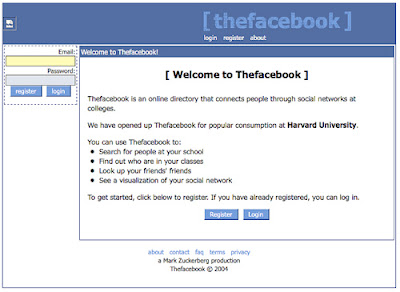
What begins as Neo and Trinity being recaptured in the Matrix, despite the end of “The Matrix Revolutions”, becomes crystal clear by the film’s end. Despite the peace between humanity and the machines, the Matrix was rebuilt, producing more power than ever if humans are kept running high emotionally - the fact that Facebook opened for business in 2004, the year after “Revolutions” was released, was not lost on me. Neo and Trinity were resurrected by the Analyst (Neil Patrick Harris) for study, finding they allow the Matrix to work most efficiently when they are kept close, but without their memories. 


I then remembered a certain incident on Twitter in May 2020. Elon Musk said, “take the red pill”, a major “Matrix” motif misappropriated by alt-right fascists. Ivanka Trump pipes in with, “Taken!” Lilly Wachowski, her work having been misread, replied, “Fuck both of you.” “The Matrix Resurrections” feels like a remake of that Tweet on a budget of $190 million. Its plot came from a dream Lana Wachowski had in response to the death of both her parents and a friend. Lilly Wachowski also revealed in August 2020 that the films were an allegory for being transgender, amid the sisters’ own personal journey: "I'm glad that it has gotten out... That was the original intention but the world wasn't quite ready.” I wish it had been. They may not own the intellectual property of “The Matrix”, but to make a “Matrix” film without either of its creators would be unacceptable.


“The Times” gave “The Matrix Resurrections” one star out of five. I will just recommend that you see it, because you will leave the cinema wanting to delete all your social media accounts to take back control – whether you follow through on that is another question.


I had already co-opted the tagline from “Jaws: The Revenge,” titling the new year as a sequel, “Twenty Twenty 2: This Time It’s Personal”, because it came from an anxiety that, culturally, the 2020s have not yet begun, and I need to get the decade underway for myself, so it feels like we are making progress of any sort.


“Cultural decades” never started on time: the 1950s only got started with rock ‘n’ roll in 1954, while Beatlemania and the Kennedy assassination began the 1960s in 1963-64. Civil unrest and the Beatles’ breakup start the 1970s pretty much at 1969-70, while the New Romantics and the rise of home computing, the fall of the Iron Curtain and Nirvana’s “Smells Like Teen Spirit”, the World Trade Center attack, the Arab Spring and quality for LGBT+ people caused successive decades to begin culturally around a year or so after the calendar marked it.


Right now, it feels like we cannot move forward culturally, kept in a holding pattern by events that need to be resolved: the COVID-19 pandemic, the culture wars, and political deadlock. These will eventually pass, particularly when the end of the pandemic makes meeting people in person, and not through the mediation of the online realm, less of a strange experience. I have no idea what the cultural moment that properly begins the 2020s will be, but it won’t be found through social media, or through a Zoom or Microsoft Teams call. As much as you can create in isolation, or recycle what has been proved to work, that human connection will show you where to go next, and I’ve always preferred talking to someone in person.


Until then, it feels like we are in our own Matrix, and we are fine with it - but it all feels a bit too 2010s for me.

03 April 2021

RETURN TO SENDER, ADDRESS UNKNOWN [290]


Here was the idea I had:

After nearly five years, I had reached the conclusion that I could use a website address that was shorter than www.dancingwiththegatekeepers.com, ideally one that used my name. This was compounded when, after describing what I wrote to someone at work, I had to write out the site address for them, instead of confirming what top-level domain followed my name, whether it was .com, .co.uk or .net. I could also do with getting some business cards printed, but that can follow later. For the record, this is not because I am phasing out “Dancing with the Gatekeepers” from my site – if something like that comes to you in a dream, you use it, and you keep it.


Here is where we are now:


I am now the owner of the address leighspence.net - entering this into your web browser will redirect you to www.dancingwiththegatekeepers.com. I chose the top-level domain .net, one of the first such domains to be introduced on 1st January 1985, because of the hard T sound making it clear to anyone who asks for my website. (The other six domains introduced onto the internet on the same day were .com, .org, .edu, .gov, .mil, and .arpa, as in “Arpanet,” the predecessor of the internet.)


As convenient as this sounds, the original plan was to have leighspence.net as the main address, and www.dancingwiththegatekeepers.com would be retained as a redirecting address. I hadn’t realised how that wouldn’t work.


I am sure that, if you have read any of my articles before, it is more because you have seen a link to it on Google, Twitter, Facebook or Instagram, rather than going straight to the website. I thought that, as I own both addresses, you could have the individual weblinks, or “metalinks,” for each individual article, remain under www.dancingwiththegatekeepers.com, while future articles would use leighspence.net in their metalinks.


That was naĂŻve. Instead, changing the main address for the website broke the connection for five years of existing links, which is when I realised that these were the more important web addresses of them all.  I could have added the new address to the metalinks, but there are nearly three hundred of them, and any connections they have made with anyone will be broken by this action – it would be like rebuilding the connections I have made from scratch, and I am not prepared to do that. 


What I am left with is the remnants of a good idea. I guess I could copy across my work to a new website that uses leighspence.net, but that would also be starting from scratch. I don’t honestly know what the best option would be. Does anyone have any ideas? 

13 June 2020

WE'RE LEAVING TOGETHER [246]


Taking a look at Twitter, I see Debbie Harry and Kate Bush are trending. The BBC had shown two episodes of “Top of the Pops” from 1989, repeating old performances they made. As ever, that was not why they were still trending from the night before: it was from people opening Twitter themselves, and expressing thanks that they hadn’t died, because seeing their names trending got them worried for a moment. Of course, writing their names out one more time feeds them back into the system, and the process continues. My sincere hope is that, one day, this will happen to Twitter itself, and no-one will have reason to care.

I have maintained a presence on Facebook and Twitter since 2009, initially to avoid being impersonated, and later just to keep up appearances, as more people made social media their primary form of communication. Today, these accounts are only used to promote my writing, along with an Instagram account I recently started, in order to keep a hand in there. (I should point out that most referrals to www.leighspence.net are from searches on Google, far outstripping social media.) Outside of these, I have no reason to engage: Twitter is a place for people to shout the first thing that comes into their heads, usually about how what they said previously was taken out of context; and Facebook is for parents posting pictures of their children. Instagram is for selfies, but we knew that much already.

There will come a time when social media will end – sites will either be legislated out of existence, or people will get bored and wander off. Either extremism and fake news will be dealt with, or people will just have to learn how to speak to each other properly – which they have increasingly been doing via by video conferencing services, like Zoom, FaceTime and Microsoft Teams, instead of social media. This is much healthier than measuring your influence and wealth by how many followers you have. If you really need to let people know what you think about something, get a blog, or ask Google to resurrect GeoCities.

I have no answers on what would happen after social media is ended, because the next question would be what to do with the data that sites were allowed to collect. For as much use as it could have in anonymised form, identifying and targeting specific groups of people with only the services they could want, the data collected will immediately become outdated and irrelevant the moment that collection is stopped.  

There is precedence, in the form of Bebo and MySpace – just delete the data, put it beyond use, and move on. The former was a site that was founded after Facebook in Twitter, in 2005, and closed when it went bankrupt in 2013. Meanwhile, MySpace has remained in business since 2003, but use of the site had peaked by 2009, and what remains is ineffective. Bebo’s bankruptcy led to the announcement that user data would be deleted, although account holders were given the opportunity to download what they had entered first. MySpace, however, returned to public consciousness in 2019 when a server move led to their pre-2016 records being corrupted and lost, with a banner warning of this remaining on their front page – for those who were shocked into remembering they still had account, their data was now irretrievable.

Admittedly, I do not know where I am going with any of this, but I would just like to think of a time when there is no social media anymore. Everyone will be out of their respective bubbles, I have no obligation to maintain a presence there, and presidents will have one less way to bully their people.

20 August 2018

NOW THE FISH JUMPED OFF THE HOOK [123]


The following should have been what caused me to think, for once and for all, “that’s enough.” The use of capitals confirms both who wrote it, and where it was posted:
“There is nothing that I would want more for our Country than true FREEDOM OF THE PRESS. The fact is that the Press is FREE to write and say anything it wants, but much of what it says is FAKE NEWS, pushing a political agenda or just plain trying to hurt people. HONESTY WINS!”
Under the same lack of awareness, the same person later spent time moaning about how the platform he was using discriminated against right-wing voices, saying it cannot be allowed to happen: “Who is making the choices, because I can already tell you that too many mistakes are being made. Let everybody participate, good & bad, and we will all just have to figure it out!” I think he said this because there have been already many calls for him to be kicked off the platform.
Recent news from the United States often consists of news surrounding its President, which just caused his lawyer, Rudolph Giuliani to blurt out that “truth isn’t truth,” in a ham-fisted attempt to make the idea of truth into a subjective, “he said, she said” thing; the usual backlashes to things said on Twitter and Facebook; the cavalcade of far-right people, alt-right people, racists, incels and so on; arguments over political correctness and free speech...

...and then there was the mayonnaise. In the magazine “Philadelphia,” an article published under the title “The White Stuff” was given a clickbait makeover: “How Millennials Killed Mayonnaise.” In it, a mother bemoans how her mother’s salad recipes are not eaten by her children anymore, and once globalisation is mentioned, along with salsa and kimchi, things went haywire: “It’s too basic for contemporary tastes — pale and insipid and not nearly exotic enough for our era of globalization. Good ol’ mayo has become the Taylor Swift of condiments.” I prefer salad cream, and that is the end of it.
The furore over mayonnaise, even more than what Donald Trump was saying that day, was what drove me over the edge: can we just put the United States on “mute” for a bit, just as I probably should be doing with its President? For a country whose issues are currently in a feedback loop, and whose technology, especially through social media, facilitates and relies on the continuation of that feedback loop, wouldn’t it be easier to leave them to sort themselves out elsewhere? Rather than the onus being on me to reduce my own access to information to avoid being overwhelmed, shouldn’t the system that does the overwhelming try dealing with itself in its own time?
The reason the answer is “no” is because I am from the UK, where our own feedback loop, Brexit, has caused its own set of problems, even if it feels more like a localised dispute than anything that ever comes out of the United States. When our information systems depend on the American-created internet, and American technology companies the size of countries, any issue from any other company could be rendered a localised dispute.
However, the UK has a Commonwealth, while the United States currently has “America First” – countries as people, versus countries as land, and dialogue versus boundaries-then-dialogue. Engaging with an opponent is easier than waiting for it to tire itself out, especially when it has its own feedback loop. I would rather have that hope when I see the words “fake news” in capitals on Twitter again.

11 February 2018

SOMETIMES THE SUN GOES ROUND THE MOON [95]


Is there a rational reason for believing the Earth is flat?
It’s quite a question to pose, challenging universally held truths about how we see the world, and how we live our lives, but questioning them sometimes reminds us of the concrete truths upon which we base everything else.
But is there a rational reason? Any reason? No. Absolutely not. No way. In fact, I should tell myself to fuck off for even thinking of the question. It is not really even a question, because it is not in question – we all know the Earth is round. There was already enough evidence produced in the last couple of thousand years before anyone could take a picture from space. A bit of me did think of this as being too easy a target to discuss, but when the target - the Flat Earth Society, and there still being a theory about the Earth being flat, takes itself too seriously, it makes itself fair game.
Why would such a stupid question come to mind? It was a simple case of an engineer entrepreneur launching a car into space, and the usual suspects having a go at him using a spurious premise they themselves had set.
Last week, Musk launched the SpaceX Falcon Heavy, a partially-reusable rocket for launching payloads into space. Instead of simulating the weight of a satellite, or other payload, by using concrete or metal, Musk installed one of his Tesla cabriolets, and the unveiling of the car in front of the Earth, with a dummy driver named “Starman” in the driving seat, playing David Bowie songs, could well be cooler than playing golf on the moon.

However, an inevitable statement on the Flat Earth Society’s Twitter feed said, “Why would we believe any privately-held company to report the truth?” Meanwhile, their Facebook page sought to debunk what everyone saw: “we have already witnessed the shortfalls of this blind belief in online materials,” reminding us that “corporations are driven by profit, not the pursuit of knowledge or truth.” For the record, Elon Musk previously questioned on Twitter why there is no Flat Mars Society – the Flat Earth Society replied that Mars has been observed to be round.

The Flat Earth Society’s wiki [link] is aimed at “unravelling the true mysteries of the universe,” while demonstrating that the “Round Earth doctrine” is an “elaborate hoax.” It does this by having an answer for everything: Earth is a disc, with the Arctic in the middle, and the Antarctic as a ring around the edge; magnetic fields are created by ring magnets in the Earth, rather than unipolar ones; weather is created by the landscape; you cannot see the curvature of the earth, even when in a passenger plane flying at 36,000 feet.

I had looked to see how the word “satellite” related to the theory of a flat Earth, since global communications, including Facebook and Twitter, rely on communications satellites, geostationary orbits and atomic clocks to work, all things that require the Earth to be round, and what I found were reports of a campaign led by B.o.B, a rapper, to put a satellite above the earth to gather independent evidence to examine – this is “independent” as in independent of NASA, the perennial target for conspiracy theories. For a theory that distrust the evidence that science brings to the conversation, using science to prove the opposite seems a bit suspect.

The only legacy of flat Earth theory is that “Flat earther” is a term for someone that believes in an outlandish or discredited theory, or refuses to believe something despite overwhelming evidence, and I really have nothing to say further than that. We all know what to think about this, as we have all the evidence for it already.


02 November 2017

BUT WHAT A FOOL BELIEVES, HE SEES [80]


I had already decided it was time to talk about “fake news” when dictionary publishers Collins yesterday proclaimed the term as their word of the year, just as Oxford Dictionaries had done with “post-truth” last year. The use of “fake news” had, according to Collins, increased by 365 per cent in comparison to last year, confirming not only an increased awareness among the general public awareness of what it I, and how to identify it, but of an increasing boldness in using the term – we all know who is responsible for that, but I will return to that later.
I am pretty sure anyone encounters a website named “Leigh Spence Is Dancing with the Gatekeepers” knows what they are to expect. Each article is presented from the point of view of a particular person, i.e. me, and that person may have a particular axe to grind. At the same time, I expect that you know that without me telling you because, from Wikipedia to Facebook to Twitter to Snapchat, anyone can say whatever they want online, and the more respectable you appear, the more seriously you will be taken. Your CV may be watertight, but the interview is what gets you the job – plus, using your own .com address, and pink and white text on an International Klein Blue background also helps. I know I am writing in a more anecdotal style than an academic one, and sources are not listed like an essay, but if I know that someone wants to look something up, either because they are interested, or want to check it is correct, my work is done.


However, the Collins dictionary definition of the noun “fake news” will be: “false, often sensational, information disseminated under the guise of news reporting.” Interestingly, when you go to collinsdictionary.com, and enter the word “false,” the first example of the adjective “false” is: “It was quite clear the President was being given false information by those around him.” Oh well – there is no mention about separate objective and subjective uses of the word “false,” or of “fake news,” because to do so would be to fall down the proverbial rabbit hole.

It is no surprise that Donald Trump could take credit for popularising the term “fake news” – in an interview with Mike Huckabee, he said, “the media is really, the word, one of the greatest of all [the] terms I’ve come up with, is ‘fake’ … I guess other people have used it perhaps over the years, but I’ve never noticed it.” For someone who is also quoted as saying, “I am more humble than you could ever understand,” claiming to have invented words that have existed for decades is about as hubristic as you can get.

The accumulated use of “fake news,” already used to describe “The Daily Show with Jon Stewart” and “The Onion,” has grown because of Trump, but his use of it – “the Fake News is at it again” – is different from the Collins definition, because it is the same as his abbreviation “MSM” (mainstream media), in that it is anything he personally doesn’t like. Donald Trump uses “fake news” like the main character of J.D. Salinger’s “The Catcher in the Rye,” Holden Caulfield, calls everyone “goddam phoneys.” That we can now argue the meanings of words is par for the course these days, and that we can do it with “fake news” is even worse.


07 July 2017

TWIDDLY-DIDDLY-DEE, TWIDDLY-DIDDLY-DEE [63]

“The trouble with Twitter, the instantness of it - too many twits might make a twat," said David Cameron, a year before becoming Prime Minister, while being interviewed by Christian O’Connell on Absolute Radio – he has since tweeted over 2,500 times.
Five months earlier, on 3rd February 2009, Twitter entered the consciousness of most British people when Stephen Fry posted a message from a building at the end of London’s Oxford Street: “Ok. This is now mad. I am stuck in a lift on the 26th floor of Centre Point. Hell’s teeth. We could be here for hours. Arse, poo and widdle.” Fry has since quit and rejoined Twitter a few times, including on one occasion, again in 2009, when he said there was “too much aggression and unkindness around.”
In 2017, Twitter is known as the social media website where there is not enough space to express yourself. Facebook has built its reputation as the greater data aggregator, providing acres of space through its main site, then Messenger, Instagram and so on, to give two billion people all the space they need to display their lives, make connections with others, and pour their souls straight into Facebook’s servers.

Meanwhile, Twitter may let you add a picture or a video, but the site’s origin as a way of sending SMS-like messages to small groups, and co-founder Jack Dorsey’s definition of the word “twitter” as “a short burst of inconsequential information,” show that public perception, and use, of the site has outstripped the site’s intentions. The ability to broadcast your thoughts is too compulsive for some, and the free, easy cyberspace setting makes real-life consequences feel, well, inconsequential.
How do I fit in to all this? I mainly use Twitter, and Facebook – I really cannot be bothered with any of the other sites right now – to signal I have written something new, or to highlight something interesting. However, I have felt the need to repudiate things a few people have said, once I realised I had the same means they did. I have only done this with the tweets of three people, but they are people that give the impression they could not be bothered by anything anyone said.

The people are Donald Trump, with his self-styled “modern-day presidential” attitude on social media that would get any other person fired from their job, requiring both defense and explanation  from White House Staff; Piers Morgan, a former newspaper editor who writes a column for the Daily Mail Online when not pontificating and raising his voice at people on breakfast television; and Katie  Hopkins, a contestant  on the reality TV show “The Apprentice,”  noted for her hardline views there, which has also been turned into a career as a hardline newspaper columnist, insisting it is the Left that made her, like a Frankenstein’s monster. These are all very forthright people, where I wouldn’t want to agree with them, even if I did, because of the way they force their opinion on people.

The responses I have made on Twitter have been when I could see someone was only talking from their own point of view. Humour had to be central – I am not trying to incite conflict of any sort – and if I made a point at the same time, that is fine. I like that one person described my tweets as “sassy,” because, at last, I now have proof. Basically, all you need to do is remember that, just because someone feels they can say what they like, they will become answerable in one way or another, as Katie Hopkins would know, having lost a court case over libelling the cook and blogger Jack Monroe – just because it is social media doesn’t mean it doesn’t count.
I’m not yet saying we should “drain the swamp” of annoying people from Twitter, but they shouldn’t have to be completely comfortable in saying whatever they like – there have to be consequences. We should have a backup plan - we could all migrate back to MySpace instead. No, I didn’t know it was still going either.

24 February 2017

WE’D LIKE TO KNOW A LITTLE BIT ABOUT YOU FOR OUR FILES [43]


I suppose I shouldn’t be at all surprised about what I read on Facebook, given the measures being currently rolled out to combat “fake news” articles, but what surprised me more was an advertisement that appeared in the middle of the long procession of updates from family members and work colleagues. Somehow, Facebook’s data and algorithms suggested I read an article, first published by “The New York Times” in October 2016, titled “Is It OK to Find Sexual Satisfaction Outside Your Marriage?” The article turned out to be the from the newspaper’s problem page, which also answered a query about smoking after beginning a new health insurance policy.
I certainly didn’t need to read it – it’s not a case of, “she doth protest too much,” I’m just not married, and I don’t smoke – but it made me wonder what it was about me, or my associates, that made Facebook suggest this to me. An algorithm is not “artificial intelligence,” in which case it would have known better, but all it had to go on is the information we had all been feeding into it.
Later the same day, my thumb clicked on the wrong “Maps” app on my phone, clicking on the app provided with the phone, and not the better one I usually use. Somehow, without me never having asked it, the app had plotted my usual journey to and from work, even down to marking the two ends of the line as, “Work” and “Home.”

We had this coming. Tesco Clubcard, the supermarket loyalty card launched nationwide in 1995, may be the first time most people had come across the idea of “Big Data,” where the data being collected was so large, so complex, that the ways of storing and reading through it had to change. The results, however, caused Lord McLaurin, a Tesco executive, to declare, “What scares me about this is that you know more about my customers after three months than I know after 30 years.”
We rely on “Big Data” to anticipate our needs, demands, and wishes. What that means, however, is that companies can no longer be in a position to guess what people might need. Tesco has expanded enormously over the twenty years since Clubcard began because it knows exactly what it needs to buy – it is a business that no longer needs to anticipate demand, in the same manner as Facebook, Google, Apple, and so on.
However, in the rush to accept the more convenient future that Big Data can bring, we often rush past the Terms & Conditions to press the “Accept” button, something I am also guilty of doing, in the name of convenience. Would we be less accepting to give away our information if we took the time to read through the T&Cs? R. Sikoryak has created “Terms and Conditions: The Graphic Novel,” a 94-page comic adaptation of the Apple iTunes Terms and Conditions but, with this being unauthorised, is it against Apple’s business plans to make their conditions more entertaining to read? Does it no longer matter? I have a good idea for Netflix’s next big show.