Showing posts with label President of the United States. Show all posts

16 November 2025

NOW THAT I OWN THE BBC [518]


I am compelled to support the British Broadcasting Corporation in what is either its most perilous moment, or only its latest predicament, because I lay as much a claim to owning a public corporation and cultural institution as any other member of the British public, and as one inspired and shaped by what it has broadcast.

At the time of writing, the President of the United States is expected to sue the BBC for an edit made to a speech made on 6th January 2021, that was shown in an episode of “Panorama” just before the 2024 Presidential election – two sentences were linked together without making clear the gap in time between them, the resulting montage creating a more inflammatory statement than made at the time. The BBC apologised for the edit, promising the programme would not be shown again, but also made clear the programme had not been aired in the United States, that the edit did not intend to harm the President, nor did it ultimately harm them, and it was to be considered as twelve seconds of an hour-long piece. 


All this for whether a fade, or flash of white, could have been used to illustrate the passage of time – I don’t know when the latter became a device used on television, but I am sure that I saw it on the BBC first. My love of its comedy programmes and documentaries led to my being intrigued as much by how they were made, how they conveyed their message, as much as what that message was – it is why I write, why I have made videos, why I took a film studies degree, and why I visited BBC Television Centre in 2009.


The BBC has spent a century building a reputation as a trustworthy and impartial broadcaster by not just being as even-handed and thorough as humanly possible across its entire output – a good maxim to live by too – but by demonstrating that these are ideals that are worth striving for, proven by the high quality and reputation British broadcasting has across the world.


Unfortunately for the BBC, the apology to the President did not work. The “Panorama” episode had been raised in an internal document from an editorial oversight board, leaked to a newspaper, which then led to accusations of political bias in news reporting, ideological capture, complacency or ignorance of issues, and political interference in the governance of a public body. Both the Director-General and CEO of BBC News have resigned, just as the process of renewing the BBC’s Royal Charter begins, giving commentators in other media the chance to declare the BBC out of touch, in need of reform, or in need of destruction as an anachronism the country no longer needs. The irony that most of these commentators have appeared on the BBC at some point is not lost on me: “Two resignations won’t do. It has to be scorched earth at the BBC” is the title of a piece by Camilla Long of “The Sunday Times”, who has appeared on the primetime satirical comedy quiz “Have I Got News For You” nine times between 2013 and 2023.


I am clear that there will always be the need for a BBC, a national broadcaster where democracy of access and information is at its core of its foundation. I once put the BBC alongside the NHS, Penguin Books and free art galleries as institutions that make up my idea of what the United Kingdom is, and should continue to be, alongside queuing and complaining about the weather. I should have included Channel 4 in that list: the UK’s other publicly owned public service broadcaster, it has been threatened with privatisation many times, most recently in 2022-23, each time halted over how it would damage the distinctive, innovative and experimental output it is mandated to have, and the larger independent TV production sector from there.


That said, I don’t know how much the BBC should be doing to cater to everyone, or how the money for that should be provided. Any reduction or selling-off of parts of the BBC will need to be weighted against any effect it may have on the creative economy of the UK, and the reflection of the UK’s cultures and values across the world – the existence of the BBC helped make either of those considerations possible in the first place. 


An expectation that we should all pay in some way towards public broadcasting will continue for as long as people believe in its universal benefit as an aid to democracy, a way of preventing anyone from being left behind in the information age. Anyone that doesn’t have a reason to believe that should find one.


This is only what I think, but everybody has something that would make them dread for the future of their country if it were to disappear, and mine has touched every part of my life.

18 September 2022

ON THEE OUR HOPES WE FIX [361]


With the UK still in a period of national mourning as I write this, I decided that discussing the prospects for the country and monarchy can wait for now. 


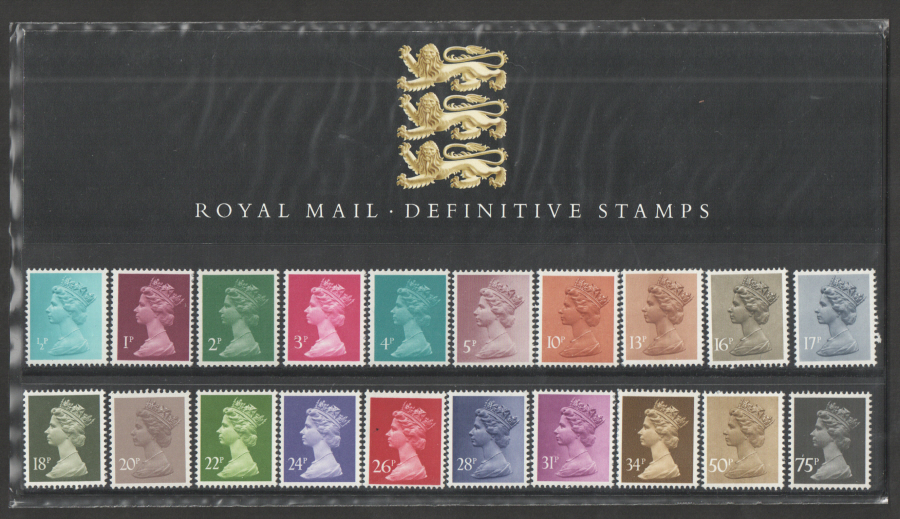
What I do know is that the passing of Queen Elizabeth II will be noted most visibly when the face on the UK’s money and postage stamps begin to change. I have already been witness to this, when the smaller 5 and 10 pence coins introduced in 1990 and 1992 respectively removed one and two shilling coins featuring King George VI, and possibly still George V, from circulation, but that was a change due to progress. Any change this time will be felt more keenly, especially when for the last fifty-five years, the UK has had perhaps the best postage stamps in the world.


The Royal Philatelic Collection is one of the largest and most valuable stamp collections in the world. It was begun by King George V, although stamp collecting has been a part of the Royal Family since 1864, not so long after the Royal Mail introduced the Penny Black in 1840 as the world’s first adhesive postage stamp. The Queen continued the collection, currently stored at Windsor Castle.


With the United Kingdom of Great Britain and Northern Ireland substituting the monarch’s face for writing its country name on its stamps, Arnold Machin’s standard “definitive” stamp design used since June 1967 is the most simple and effective design possible: the effigy of Queen Elizabeth II, created by Machin in clay, wearing the George IV State Diadem, a crown that includes the roses, thistles and shamrocks that featured separately on the former, more busy standard stamp design; the price value of the stamp; and a single colour used, helping to differentiate from other values of stamp.

I have a stamp collection, mostly kept within one book, and in looking back into it now, the cumulative effect of seeing so many of the “Machin series”, in so many different colours, across so many pages, puts me in mind of Andy Warhol’s pop art screenprints, again reproducing the same image in different colours, except they cost substantially more.


This simplicity and effectiveness of this design has doomed attempts to change it. A proposal to change the Queen’s portrait in 1981, just as Machin’s separate portrait for the original set of decimal coinage was also being replaced, was met with a letter from the subject’s private secretary: “Her Majesty is very content with the Machin effigy and thinks that a work of real quality is required if this is to be replaced.” 


Other attempts to change the design were rejected by Royal Mail’s Stamp Advisory Committee and by Machin himself, but the Queen’s gentle intervention does make you think that, if your face is the only change that can be made to something, you will more than likely say no. With the Queen having final say over her 1967 portrait, and even requesting the colour of the original 4d. stamp to closely match the original 1840 Penny Black, the sense of personal investment is palpable. It has made this portrait of the Queen into possibly most reproduced picture of a single person there has ever been, or will ever be.


Of course, Machin’s design will now have to be changed. My prediction, and hope, is that King Charles’s portrait will simply be used instead, the rest of the stamp staying as it is, but it remains to be seen if the opportunity will be taken to create an entirely new design. 


24 January 2021

ALL ABOUT THE LOVE AGAIN [279]

A Donald Trump cake delivered to Trump Tower, New York,
ahead of 2016 election festivities.

When Joe Biden finally took over as the 46thPresident of the United States, it was at 5pm GMT, meaning I listened to his speech on the way home from work. That evening, and through the following day, I felt very distracted, almost like I felt anxious about having much less to feel anxious about.

Hearing a politician sincerely recognise the problems besetting the nation they must now guide, promise to address them, and pledge to lead on behalf of all their people, and not just those that voted for them, reminds you these actions are meant to be fundamental to being a leader - it is just nice hearing from someone that actually wants to do the job.

I can now understand what Barack Obama meant about the “audacity of hope”: democracy standing defiant, and in splendid progress, despite the events of two weeks before, and of the previous four years.

The attempted coup on the US Capitol building was the Kmart Blue Light Special of insurrections. (For UK audiences, read as the Debenhams Blue Cross Sale – two dead department store chains for the price of one.) It was like there was a cheap 4K television in every room. People were so excited to be there, they made sure others knew they were, helping the CIA and FBI most efficiently. Most shocking was the level of entitlement, both to storm their own seat of government, and to base their indignation out of something conducted from nothing but unsupported prejudice.

I didn’t think Donald Trump had it in him to incite sedition and insurrection, but when his businesses have declared bankruptcy as often as they have - six, between 1991 and 2009 - perhaps it was worth a go. I sincerely thought that the election of Joe Biden, a man now declared President more often than Franklin D Roosevelt, would be the end of the matter, and Trump would slowly realise his game was lost, and he would allow us all to get on with our lives. But too many people were wreaking havoc in his name for his ego to back down. If a second impeachment trial in the US Senate doesn’t convict him, something else will – there must be a lesson for him to learn.

Often repeated are the lessons taught to Trump by his lawyer and mentor Roy Cohn, formerly chief counsel to Joseph McCarthy, of the witch trials, and defender of mob bosses: “Dominate in every interaction, never admit wrongdoing or defeat, never pay your bills, and sue anyone who objects to your behaviour into financial submission.” Cohn, who denied he had AIDS up to when he died of it – he said it was liver cancer – was given a square on the AIDS Memorial Quilt: “Bully. Coward. Victim.” 

Trump achieved all three before being exiled, a pariah from American life. Trump bullied so much on Twitter that it had to be taken away from him, the benefits for American democracy and discourse in the short-term everyone outweighing the later questions over free speech and the nature of social media – that Trump effectively disappeared until the end of his Presidential term confirms how much he relied on it. Meanwhile, the domestic terrorists now arrested for storming the Capitol wonder why their leader has deserted them, leaving other extremist politicians in the Republican party to continue a pyrrhic crusade against the truth, at the expense of their party’s unity. For anyone still interested in ever thinking of Trump as a “victim,” his niece Mary L Trump, the best-placed psychologist in history released, in May 2020, the timeliest book with the clearest title: “Too Much and Never Enough: How My Family Created the World's Most Dangerous Man.”

With “Dancing with the Gatekeepers” having begun during the 2016 US Presidential race, Donald Trump became the de facto “Gatekeepers” bogeyman: a man whose choppy utterances and half-formed, half-stolen slogans enraptured millions, and radicalised thousands more. Words were often beyond him, left to those in his administration to make sound reasonable, but the longer the noise, the threats against the media, and the pronouncements on Twitter went on, the more it became the stifling daily rhythm to everyday life.

Fewer articles will be written, and fewer minutes on television will be aired, about Joe Biden’s presidency because it will simply be less eventful, and conducted more conventionally, than Trump’s presidency, which is entirely to be expected. Good – the time freed up to all of us, as consumers of media, can be put to greater use. Therefore, outside of any impending arrest, conviction and imprisonment, this will be the last time I feel the need to write about Donald John Trump. He really was the worst of us.