Showing posts with label Xbox. Show all posts

27 June 2021

IF YOU START ME UP I’LL NEVER STOP [302]


When it was unveiled in 2015, Microsoft Windows 10 was intended to be the “final” version of the desktop computer operating system, with incremental updates in the years ahead, instead of the usual wholesale replacement after two or three years. On 24th June 2021, Microsoft announced that, along with the launch of Windows 11 later in the autumn, support for Windows 10 will end in 2025.

I have my suspicions about this change. When I initially heard about Windows 11, through reports of its existence having leaked out, I said I couldn’t care less, as my PC, replaced by an Apple Mac mini earlier this year, was being recycled. Apple had decided to replace its operating system last year, macOS X being replaced by version 11 after nineteen years. With eleven being one more than ten, Microsoft had to respond. My second thought upon the official announcement? “But this Windows goes to 11...”

I remember the scale of the excitement that heralded the introduction of Windows 95 in, well, 1995, the introduction of the “Start” button being underlined in blood by the Rolling Stones song “Start Me Up,” playing on seemingly every TV ad break. This was back when Microsoft was the market for desktop computing, and running your computer on anything other than Windows was either for specialist or industrial purposes, or the act of owning an Apple computer. It would be Microsoft’s investment in Apple stock in 1997, along with introducing Microsoft Office to their computers, that helped to stabilise the then financially troubled company, just as Steve Jobs had returned to run it.

I could be considered an apologist for Apple products, being as I am on my third tablet and fourth phone of theirs in ten years, but the universality of Windows as a computer system, binding together almost the entire desktop computing world, made leaving it for macOS a difficult step that involved much deliberation. I was worried about compatibility issues regarding the twenty years of files I would be moving away from it, potentially being locked out of old work of mine. I then moved, and it ultimately didn’t matter. Even now, comparatively few people use Apple desktop computers, with price an obvious factor, but that base is larger than in 1997, and those that do have been catered for, as proved by my continuing to use Microsoft Word, preferring it over the similar Pages program that Apple provide for free.

What I have been most surprised about is how Windows 11 appears to be attempting to copy the experience of macOS 11. The ability to use Android mobile apps on desktop computers matches Apple’s move to add iOS apps to macOS, allowing me to continue using the video editing app I used on my iPad. Rounding off the edges of the windows themselves, more fluid animations between windows, and moving the taskbar icons from the left to the centre of the screen, is very reminiscent of the startle I received on finding how smooth macOS 11 was to use for the first time, and integration of Teams video calls and Xbox Game Pass is not far away from Apple’s embedded FaceTime and iCloud. Both systems have their own app stores, but all systems do now.

The ubiquity of Microsoft Windows means that moving from PC to Mac means opting out of Windows, so what feels like the moving of the Windows experience towards the Mac experience, instigated by the company that created the notion of having the experience, puzzles me. At the same time, the Mac experience is predicated on staying within a gated community – I moving from PC to Mac, I abandoned anti-virus software to which I was already paid up for the rest of the year, but no longer needed. Windows can be on almost any computer you want, so remaking it to follow one particular computer’s experience proves to me I made the best decision in moving away. 

25 June 2018

I’VE GOT PAC-MAN FEVER [115]


Nintendo made headlines when they announced the NES Classic Mini, the limited-edition nostalgia machine and cash cow for scalpers on eBay, would be re-released on Friday 29th June. Anxious not to miss out a second time, I pre-ordered my console directly with the company. I’m still extremely surprised to have received mine in the post ten days early, but if Nintendo wanted me to write a review it, they knew what to do... I have no evidence of that, of course.
Firstly, I have never owned a games console before this one. In fact, I never really play video games – I still call them “video games.” I remember wanting a Sega Master System once, which was more successful in the UK and Europe than the NES – it might have been the games available, and the general noise Sega made at the time. Moreover, our family owned proper computers, which the British gaming industry still targeted more in the 1990s – we had a Commodore Plus-4, then two Acorn Electrons, followed by an Amiga 500, before my brother joined the PlayStation bandwagon, and I switched to PCs for school work.

Why did I buy a games console now, and why the NES Classic Edition? I have never been interested in the immersive experience that comes with the big, expensive games released these days on the PC, PlayStation or Xbox, and I have no intention of spending hours playing a game to get all of the story it wishes to tell – these needs have already been met for me by the cinema. At the same time, outside of Tetris and Angry Birds, I would appreciate a game that could keep me entertained for a few minutes, something the Atari 2600 could not do with its restrictive set-up.
Therefore, the NES Classic Mini, regardless of the attention to detail in reproducing a miniature version of the original Nintendo Entertainment System, a box of grey textured plastic intended to resemble a 1980s video cassette recorder (down to the front-loading cartridge slot), and irrespective of the nostalgia of playing the first two “Legend of Zelda” games, “Duck Hunt” and a brace of games with “Mario” in the title, it is a machine that presents the right type of game to someone that never plays games. This is meant to be your childhood, but for me, it is brand new.
I know of “Super Mario Bros,” and have seen people play it, and I surprised myself in completing the first level at my first try. However, as with the other games I have played so far – the original “Mario Bros,” “Donkey Kong” and “Pac-Man” - I have yet to get much further: all the sprites moving about on screen, and the screeching square-wave music and sound effects, have meant I have only played for half an hour at a time so far. I could turn the volume down, but the noises help you know what you have done.

It has to be said, I have played the first level of “Pac-Man,” one of the simpler video games there could possibly be, about twenty times now, and I have only reached the first level twice. That should be endlessly frustrating to me, but because Nintendo repurposed the cartridge “Reset” button on the console as a way to save your progress, returning to the main menu and pick another game, I can remain in control. While the short cable for the game controller has meant I have plugged the console into the spare HDMI port on my PC monitor, it does mean I can keep that “Reset” button close at hand.
I can imagine the one major problem that affected game consoles years ago was the cathode-ray tube televisions into which they were plugged: there was always an audible hum that came when a computer-generated signal was displayed on a TV, plus it was never possible to match up lines of pixels with the TV’s scan lines. Therefore, playing on a new TV or monitor, the admirable reproduction of the original NES graphics is as sharp as they can be – the optional “CRT” feature, if you need it, feels reductive and futile, and I have never turned it on. What is more, because the difference between the old PAL and NTSC TV systems meant NES games played slower on the old 50Hz PAL system - while I can play these old games at the 60Hz speed they were made to run, Super Mario’s legs are no longer.

For the last few weeks, an original Nintendo Entertainment System console, with one controller and no cartridges, has been on sale in an electronics shop in my local high street for £110. Meanwhile, I bought the NES Classic Mini, a spare controller, and a power supply for £68, and I have thirty solid, memorable and enjoyable games, that remained so without needing to be updated, just as the same can be said of Monopoly, Scrabble and Ouija boards. Nintendo could have provided access to their Virtual Console service, but that provide competition against is other consoles – unlike the upcoming Atari VCS, the NES Classic Mini is all it needs to be, without trying to play PC games too.
Despite the wait from 2016, I am happy the NES Classic Mini lived up to the hype, proving to be my perfect games console - and, at the rate I’m progressing through Pac-Man, Nintendo may release a Wii Classic by the time I finish all the games.


04 June 2018

TELL ME ALL THE THINGS YOU WANT TO DO [112]


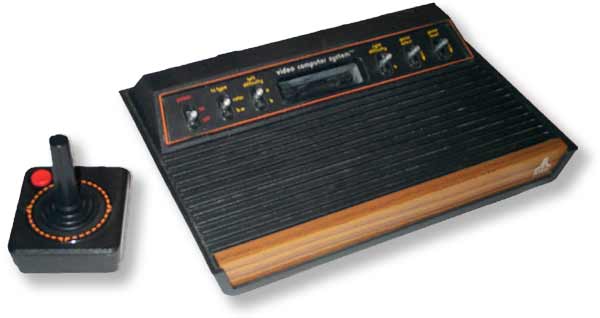
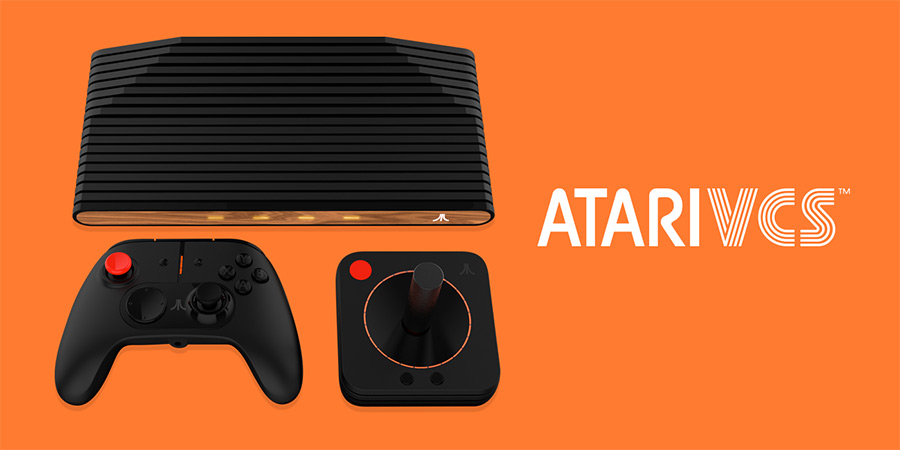
The Atari 2600 games console was originally named the VCS, for “Video Computer System,” when it launched in 1977, and “VCS” is the name given to the neo-2600 that Atari – now probably about the fifth company to have used that name – will launch in 2019, having raised $2 million in its first day of crowdfunding and pre-orders.
The new VCS evocates the ridged black plastic and woodgrain design of the original console, except using real wood this time, while the voice-activated, Linux-based system with ARM processor is expected to play high-end PC games, along with the original 2600’s games, in addition to streaming video services.
In other words, the new VCS is a standard modern computer, but in a box designed to make you feel nostalgic for a forty-year old machine whose abilities were so limited, and so notorious for how it was programmed, it may make those that did program those games want to throw it against a wall.

Put simply, a computer will usually have a “frame buffer,” driving the display, with its own dedicated memory to store each frame before it is sent out. However, computer memory was very expensive in 1977, with the latest new home machines, like the Apple II and Commodore PET, offering only 4 kilobytes (4096 bytes) of RAM – this was also the capacity of the 2600’s game cartridges. In order to reduce the cost of the 2600 as much as possible, only 128 bytes of RAM were made available for all the variables of your game, and no frame buffer was provided at all. Making the most efficient use of the available space will also involve writing each byte in assembly language, using hexadecimal code, to be read directly by the processor.

What are you supposed to do? The answer is you have to tell the machine what to draw on each individual line of the picture you see on your TV screen. This uses only 20 bits (2.5 bytes) of the RAM each time a line is drawn, but you have to keep it going, and time your program correctly, or otherwise your picture falls apart. Furthermore, you can only draw the left-hand side of the screen, with the 2600’s Television Interface Adaptor (TIA) chip enabling you to copy or flip it to the right side. The TIA, also responsible for the sound and reading the instructions given by joysticks and paddles, also provides the two on-screen player sprites, two “missiles,” and one “ball” to make your game – when the most people have played at home is “Pong,” that really is all you needed.


In time, people knew how to exploit the opportunities created by “racing the beam,” attempting to create more detail on screen by timing each line to draw multiples of sprites before the end of each line is reached – this means the bank of alien spaceships required for “Space Invaders” to work became possible, and the release of the most dynamic game yet for the 2600 caused sales of the system to explode. Atari’s own search for producing the best backgammon game that ran “bank switching” between different chips, allowing for bigger, more complicated games, and 1982’s “Pitfall!,” one of the most advanced games for the 2600, was created to make use of a realistic running man that programmer David Crane had made three years earlier.
The Atari 2600 was finally withdrawn from sale in 1992 – as there was no exclusive deals to produce games, and no copy protection in the cartridges, anyone could produce a game for the machine, so nobody stopped. Even now, homebrew programmers continue to see the restricted nature of the 2600 as a challenge, most notably a version of “Halo” written by Ed Fries, who led the team at Microsoft that created the first Xbox console.

This is a very simplified version of how the Atari 2600 works, but when you then look up the story about the debacle over the “E.T. The Extra Terrestrial” game, it becomes clear that the programmer Howard Scott Warshaw needed longer than the five and a half weeks given to him to make something more refined.