Showing posts with label emi. Show all posts

24 March 2019

JUST TRYING TO KEEP MY CUSTOMERS SATISFIED [158]


I realise I could have written about the demise of British record and video store HMV at any time: when it fell into administration last Christmas, or in 2013, when the rise of online film and music streaming threatened its business model, when record label EMI floated it on the stock market in 2002, and when shops like HMV collapsed – Virgin Megastore, Tower Records, MVC and Woolworths. I love to visit these places to discover something that could spark your thoughts, or change the way you think, and take your own personal copy of it home to own forever - to know this experience is now too expensive to support is, well, rather crushing.
The nearest branch of HMV to me is closing next weekend: from next month, if I want to look in a music shop of any type, I will need to catch a train, not just a bus, to a shopping centre three or four towns away, where the cost of renting a store must be cheaper. Cutting rent costs have already closed a dozen stores, leaving around a hundred – the famous London Oxford Street store, where HMV first opened in 1921, was not one of these. Rescuing HMV itself from administration, in February 2019, was relatively cheap: the “Financial Times” reported that Canadian record store owner Doug Putman had bought the biggest store chain of its type in the UK, selling more DVDs and Blu-rays than Amazon, for the price of a large house: £883,000.

For many people, the physical act of going to a shop to buy a film or album is an act of nostalgia: there are simply cheaper, more convenient and more immediate ways of accessing that sort of material, and in a way that does not force you to become a collector, buying a shelf for the DVDs you’ll watch once, then perhaps another time. It is the collector’s market that HMV is being geared towards from now: Putman’s Canadian store, Sunrise Records, which bought HMV Canada when that collapsed in 2017, puts a focus on vinyl, which has become a more premium (and expensive) product in a collector’s market, just as the Criterion Collection, found across from them, promotes the same curated range for films, presenting films as they were meant to be seen, at a premium price. So, if you like to collect things, consider yourself in a niche category, that is currently only being catered to through the goodwill of labels that still want to go to the expense of producing a physical product.

There really isn’t much point to being nostalgic where I had the choice of going to an HMV, Virgin Megastore or Our Price in the same street, if what I was looking for wasn’t found in Woolworths, for this won’t be a situation again, along with the distribution networks that supplied these stores. HMV was once a large group that encompassed bookshops and concert venues, all sold off over time because the safety net of being owned by a record label had gone. The industry is a shadow of what it once was.
I should say I have absolutely no point to make here about what can be done to remedy the situation – I needed time to vent, and take stock of what is happening. I used to pick up a copy of the magazine “NME” from HMV, and even that has migrated online. Retail shopping is changing, habits are changing, and my options for something to do on a weekend has changed. We could be talking about HMV collapsing in another five years from now, once the last person stops looking for their nearest store.

28 January 2018

IT’S A GAME OF GIVE AND TAKE [93]


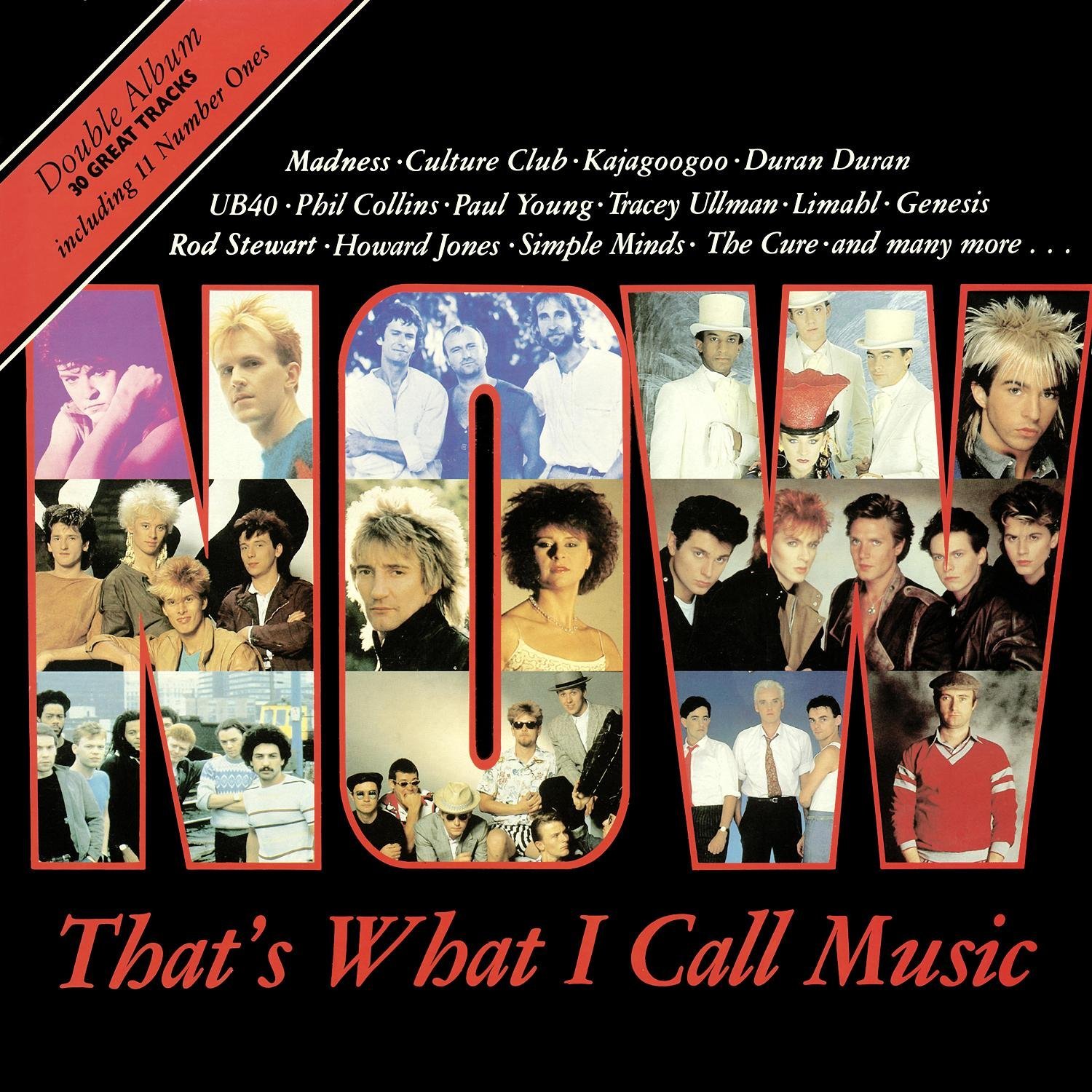
Walking around an antiques store in a nearby village, I came across a selection of vinyl records and magazines. At the top of the display were old 1980s copies of “NME” magazine, still billed as “New Musical Express” on the cover. Working my way down, expecting another magazine, I struck gold: from 1983, I found the original “Now That’s What I call Music” album.
The “Various Artists” compilation album was the preserve of cheaper labels like K-Tel or Ronco, or for when a record label wanted to round up the best of its own releases, like the “Motown Chartbusters” series. Instead, “Now” was the first collaboration between two labels, the biggest in the UK: Virgin Records, which originated the idea, and EMI, which also pressed and printed the records. If you bought “Now” when it came out on 28th November 1983 – it eventually spent five weeks at number 1 in the charts – chances are you went to either EMI’s record chain, HMV, or to Virgin Megastore.
The name “Now That’s What I Call Music” came from an unlikely source, and one I thought had been randomly stuck to the back of the album sleeve: Richard Branson, Virgin’s founder, knew his cousin Simon Draper, managing director of Virgin Records, was grumpy before breakfast, and loved to have eggs in the morning, leading to Branson hanging a 1920s poster, used to advertise Danish bacon, behind Draper’s desk: under the caption, “Now, that’s what I call music,” a pig leans on a wall, listening to a clucking chicken, an egg lying in front of them. After listing the music labels that assisted Virgin and EMI – CBS, Epic, Charisma, Polygram, Capitol and so on – the kind permission is noted of Danish Agricultural Produces in allowing the poster to be used. The pig acted as a mascot for the following four albums.

The first “Now” album has thirty songs, arranged roughly in order of release date, eleven of which (mostly from EMI) reached number 1 when released as singles – a note in the gatefold lists the only five other songs to reach the top of the charts in 1983. In some cases, like Madness’s “The Sun and the Rain,” you are told it had reached number 9 when the compilation was released, and “Victims,” by Culture Club is listed as, “almost certain No. 1 by the time you have this LP” – I am not planning to overwrite the “1” with a “3”. However, the album is redeemed by another choice, “just released at time of compilation,” which was “destined to be a smash hit” – “Let’s Stay Together” proved to be Tina Turner’s biggest hit to date.

A wide range of musical styles are found on the album, ranging from New Romantic bands like Duran Duran, Human League and Culture Club, the big influencers at the time, to R&B, soul and rock groups, all down to including the hits – Bonnie Tyler’s “Total Eclipse of the Heart,” “Wherever I Lay My Hat” by Paul Young, “Down Under” by Men at Work, and New Edition’s “Candy Girl” are all here. A 2015 scientific study, by Queen Mary University London and Imperial College London, of 17,000 pop songs revealed that 1983 was an epochal year, as synth-based music became big in the United States, led by a procession of British bands – in the same year, both Eurythmics and Dexys Midnight Runners would have US number 1 songs. However, the same study also found that the accompanying drum machines and sampling led to more songs sounding similar by 1986, before hip-hop broke through by 1991.
Some bands, or lead singers, do rather well on this album. In addition to “Victims,” Culture Club also feature with “Karma Chameleon,” the biggest-selling song of the year. UB40 also have two songs, “Please Don’t Make Me Cry” and “Red Red Wine.”  Genesis features with “That’s All,” but a solo Phil Collins had the first number 1 of 1983, “You Can’t Hurry Love.” (Phil Collins also features twice on the front cover – once with Genesis, and once by himself.) However, “Now” had more faith in Kajagoogoo than most, including not just “Too Shy” and “Big Apple,” but also Limahl’s solo single, “Only For Love” – the band broke up in 1985, having already fired Limahl earlier in 1983, but have since reformed.

Out of thirty singles, only seven come from artists outside the UK – apart from Tina Turner, you get Rock Steady Crew, with that one hit they had; “Safety Dance,” by the Canadian band Men Without Hats; and “Kissing with Confidence,” a disco novelty song, based around self-help guides, by “Will Powers,” with lyrics by an uncredited Carly Simon, who is pictured in the album with hand on hip, waiting for herself to write “Coming Around Again” and “Let the River Run.” The current Ofcom license for BBC Radios 1 and 2, the biggest stations in the UK, require 45% of the songs they play to come from UK artists, so seven songs out of thirty may have just been down to the available space on the records.

I do have a record player, and “Now” sounded exactly as I expected – a bit quiet. The premium, heavier, 180-gram vinyl found more often today means you can cut deeper grooves into your record, allowing for a louder sound, and reduced surface noise. However, these records weigh 130g each, and in jamming up to eight songs onto each side, the grooves have to be packed more tightly, and cannot cut too deeply. Strangely enough, the first “Now” album I ever bought, 1996’s “Now 35,” turned out to be the last released on vinyl – cassette sales ended with “Now 63” in 2006, digital downloads having started one album previously.

“Now 100” will be released around July 2018, cementing the series’ reputation as the hits compilation of record for the British charts, far outliving the labels that started it – EMI bought Virgin Records in 1992, but Universal Music, which joined the “Now” group in 1990, after ending their own competing series, bought EMI in 2013, with its music publishing arm being snapped up by Sony. Universal and Sony now run the show together, but give it another thirty years, and we may be saying something else again.

17 February 2017

FERGUS-ON SINGS THE BLUES [42]


Once upon a time, televisions were made in our home town. We owned a few of them, but the most memorable, were two black-and-white portable televisions which, like the others, were made by Ferguson, a major employer in Gosport, Hampshire, and a division of the enormous Thorn-EMI corporation. The cathode ray tube in one TV gave up one day, but the other hung on for a very long time: when the on-off-volume switch fell off, it was replaced by the end of a used chapstick, jammed into the hole to serve for nearly a full decade. Colour television arrived in my bedroom when both progress, and a Christmas present, replaced the Ferguson with a portable Matsui TV.
It turns out that this coming Monday, 20th February, is the twenty-fifth anniversary of the closing of the Ferguson factory, which has since become a business park. The US conglomerate Cyanamid, once owners of brands as disparate as Old Spice and Formica, had a pharmaceutical plant down the road, but it has since moved out, the factory knocked down. The remaining mass employer in Gosport, apart from the Royal Navy, is the Finnish company Huhtamaki, makers of food and drink packaging, and formerly known as the great-sounding Sweetheart International, whose base is big enough for them to sponsor the flowers on nearby roundabouts.


It is too easy to get sentimental about these things, especially the jobs that are lost – I have only worked in my home town for five months out of the last twelve years. However, the reason the last TV was replaced was the same reason the factory closed: competition. In 1987, Thorn-EMI sold Ferguson to Thomson, the French company that already shared production and designs with them, but they themselves pulled out of a market where Ferguson no longer fit.
Back when people rented TVs, because they were often too expensive to buy, Thorn-EMI not only made the TVs, you rented and bought from them too – their Radio Rentals, DER and Rumbelows rental businesses have since become Bright House. Thorn-EMI also made some of the programmes you saw, owning half of Thames Television, and all of EMI Records. Only Sony has gone as far as this since, owning Columbia Pictures and record labels, but they don’t keep their customers tied in to the same extent, as TVs have since become cheap enough to buy, and to throw away – no jamming in any chapsticks there.
If people are looking at bringing back industry the way we used to have it, so long as you are able to innovate and adapt as well as any other part of the world, and you know that the conditions are different from the way they were, then it is certainly possible. Whether it means anyone will buy up Gosport’s KFC drive-thru, knock it down, and build the Cyanamid factory on top of it, is another question all together… one that has the answer, “probably not,” unless plans for the future are being made over a bucket of chicken.

28 January 2017

DUN-DUN-DUUUUNNNN!!! [39]


I am still on a “Mission to Explain,” but what I had in mind requires more reading in order to explain correctly, and we must now also contend with the new term “alternative facts,” coined in the last week, i.e. facts that counter the facts most unhelpful to your own cause. Instead, I have a very important piece of information, discovered in the last couple of days, that made the world a little better for having discovered it.
The extremely well-known sound effect, “DUN-DUN-DUUUUNNNN!!!,” used as the most over-the-top reaction to, well, anything, not only has an actual name, but a composer as well.
Its correct name is “Shock Horror (a),” credited to Dick Walter (whose website is at www.dickwalter.co.uk - he also composed the famous piano tune from the series of advertisements for Yellow Pages), and comes from the “Classic Comedy” album produced by “library music” company KPM, now known as EMI Production Music, a division of Sony Music Publishing (formerly Sony/ATV Music Publishing - the music industry has many twists and turns).


I wouldn’t be surprised if the original reaction to this is, “who cares,” but, to me, knowing that the ubiquitous “DUN-DUN-DUUUUNNNN!!!” was actually written by someone makes it that bit funnier.
“Shock Horror (a)” – there is a “Shock Horror (b),” where the notes of music descend, instead of ascending with tension – is so ubiquitous a piece of music, I had it filed away in my mind alongside the “shave and a haircut” coda I previously discussed here, but it then becomes too easy to think “Shock Horror (a)” had also existed since the dawn of time, evolving from a basic human need to have the most over-the-top reaction available, on standby, should the need arise – knowing such a need is certain to arise is a discussion in itself. Only then do you remember it is a recording of an orchestra, meaning it had to have been made by someone, something that can be too easily be taken for granted.
This is where the existence of “library music,” and British companies like KPM, Bruton and DeWolfe, comes in – pieces of music that have been written in anticipation of a need yet to be determined. An example of their use is by the TV show “Monty Python’s Flying Circus” which, along with the first two Python films, relied upon the DeWolfe library for almost all the music you heard, finding music to fit their sketches.
This situation throws up some interesting cases. “Best Endeavours,” written as a corporate-sounding piece by Alan Hawkshaw, is best known as the theme for “Channel 4 News,” but was also used by the 7 Network in Australia for their main evening news, and even in the Clint Eastwood film “Pale Rider.” Another Hawskhaw piece, “Chicken Man,” was used by the BBC as the theme for children’s drama “Grange Hill,” while being used by ITV, at the same time, for the game show “Give Us a Clue.”
From personal experience, listening to library music is like falling down a rabbit hole, going from one piece to the next, imagining what you could do with them. It’s worth a go, if you are looking for some new sounds.