Showing posts with label Walkman. Show all posts

21 May 2018

AND WHO WOULD HAVE THOUGHT, IT FIGURES [110]


Nine months after promising myself that I would upgrade my iPod nano to a Sony Walkman [link], I have done exactly that, when the iPod stopped working for a few days. I have now launched headlong into the devotional task of loading my CD collection of twenty-plus years onto it – the first purchase, from Virgin Megastore in Portsmouth, was of “Jagged Little Pill,” by Alanis Morrissette, and “Now 35.”
Apparently, my NW-A45 Walkman can play “HD Audio,” which Sony defines as anything above CD quality. I had not looked into this before buying it, as my main intention was to find something that can accept a 200 Gb micro SD card – Sony says it can take a card with ten times that capacity, but none has been made yet. However, if this Walkman is expected to beat CD quality, then I can leave MP3 behind: in 2015, Ryan Maguire reconstructed a version of Suzanne Vega’s atmospheric song “Tom’s Diner,” used in the 1990s as a control when testing the “lossy” codec that compresses sounds into MP3 format, that only plays the sounds that were, in effect, discarded – enough sound is left behind for you to still identify the song as “Tom’s Diner.”
After some research, I now have the definitive advice for converting your CDs, which I will be using on my entire collection: only use FLAC (Free Lossless Audio Codec) format, setting it to 44.1 kHz 16-bit if you have the option, because this matches the settings of the CD.


The “lossless” element of FLAC, a format that has been around since 2001, means all the available information on your CD is being retained. Because of this, you do not set a bitrate of kilobits per second like you would with MP3, because that rate will change with the song. Using the first CD I converted, “Hot Potatoes: The Best of Devo,” there is a difference based on the type of song: “Devo Corporate Anthem,” a simple fanfare, reaches a maximum of 655 kbps, while “Through Being Cool,” a more involved, complicated, recording has a maximum of 871 kbps. A few Bee Gees tracks I have break the 1,000 kbps barrier, louder and richer than the Devo recordings, which proves what you can still get from a CD if it has been mastered correctly.
Put in as simple a manner as I can, CDs use a 44.1 kHz sample rate because it is twice the 20Hz to 20 kHz range of the human ear – it also matched the highest usable rate for recording digital audio on video tape - while the 16-bit pulse-code modulation used to digitise the sound, the latest development of a technology initiated to reduce the noise in long-distance phone calls, means the amount of detail picked out by the technology is more than “enough,” with a grove that won’t wear out like vinyl will.
What this does mean is that, if you have a CD that is “24-bit remastered,” this is talking about the digital master used to make the CD, which will still be 16-bit, even if more detail is available to sample. As an example, I have a 24-bit remastered copy of David Bowie’s album “Never Let Me Down,” but I also have the original 1987 release, because Bowie hated the song “Too Dizzy” enough to leave it off all subsequent reissues. The song “Beat of Your Drum,” with a chorus sounding like Bruce Springsteen’s “Glory Days,” is 34.3 Mb in size when taking a FLAC copy from the 1987 album, but the 24-bit mastered version raises this to 36.6 Mb – the difference is there, but you need a very quiet room to start with.

But with Sony highlighting the enhanced “experience” of HD Audio, the extra resonance adding to the recording, I feel like I have already achieved that, for now, by leaving MP3 behind, regaining the lost layer of sound from my, in some cases, decades-old CDs.

04 August 2017

WALKING ABOUT WITH A HEAD FULL OF MUSIC [67]


Last week, Apple announced they were withdrawing the iPod shuffle and nano after twelve years on sale. In 2005, they were the latest extensions of a product line aiming to cram your music collection into your pocket, definitively doing away with cassettes, discs and vinyl for a generation of people.
And now, over a decade later, vinyl has come back, CDs remain on general release, nostalgia over cassettes exist, and MP3 players have been replaced by smartphones and streaming services like Spotify and, crucially, Apple Music, renting music instead of selling, and not taking up space on devices or on shelves.
Meanwhile Sony, creators of the Walkman personal stereo system in 1979, using their existing 3.5 mm headphone jack they created fifteen years before, will carry on regardless, having kept up with their customers’ needs, changing from cassette players to CDs, DAT, Mini-Disc, Video 8, MP3, and lossless audio, bringing out new formats as the needs arise.
This new situation may be suited to many people’s needs, but not mine: I was given free access to Spotify with a previous phone contract, and bought only a few MP3s of songs in that time, but when I found their rights to stream songs by Prince had ended, I did not begin to pay when the contract ended. (Prince is now back on Spotify, but still missing “Fury,” one of my favourite of his songs.)

I have owned an iPod nano for nearly five years, the latest in an almighty long line of personal stereos, radios and MP3 players, and it has been the most flexible and durable device of them all. Apart from storing nearly two thousand songs, with many more via FM radio, it has been dropped, rained on, thrown, and lost in the snow – earlier this year, a sign was put up on the way out of work, alerting the owner of “Leigh Spence’s iPod,” the name I gave the device to find it on iTunes, to call into the nearby police station.
The relief at getting my iPod back was palpable, even though I would not have lost a single song if I never saw it again. Being without the ability to hear my favourite music exactly when I need it speaks to the deep personal bond we make with music and their artist, be it David Bowie or the Spice Girls. The devotional task of loading all of Bowie’s studio albums onto my iPod, having dug deeper into his music following his death, while doing the same with Kate Bush’s work after being mortified at not owning any of it, can be as special as making a mixtape once was – playing and sharing love of music, to do yourself, and your friends, a massive favour in times to come.
But now, with my iPod filled to its 16Gb capacity, no next-generation model to come, and the larger iPod Touch really just an iPhone without the phone (or FM radio), where can I go next? The only logical answer is back to where it all started: Sony.
Looking for a film or album to buy in HMV, I know that Sony had a hand in creating all the formats I can buy, including Blu-Ray, but not vinyl (except perhaps the turntable to play the discs on). It also shouldn’t be a surprise music labels like Columbia/CBS, Arista, RCA, and Epic, and film companies Columbia, TriStar, MGM and United Artists, are all owned by Sony – this innovative new technology isn’t going to sell itself.
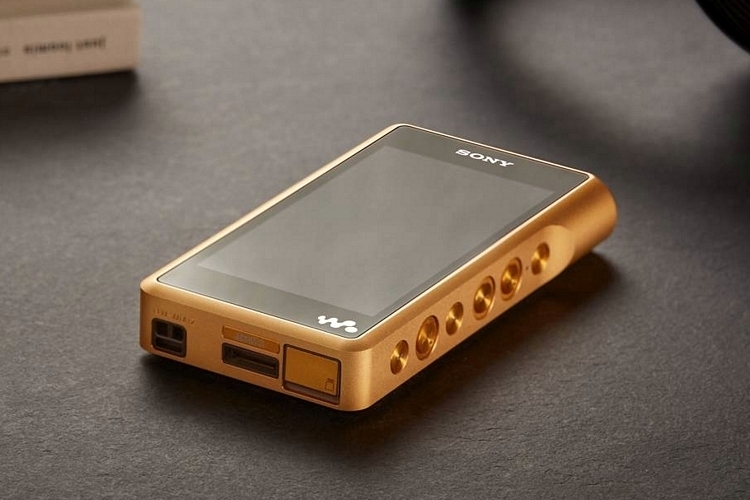
There is one Walkman I would like: a copper body, premium components, and 256 gigabytes of memory. Does anyone have a spare three thousand pounds?

10 September 2016

WE’RE NOT GONNA SIT IN SILENCE [17]


Well, there was me thinking the most important parts of a pair of headphones were put in your ears. Instead, I have heard people moan that, if they next upgrade to the iPhone 7, they can’t plug in their existing pair.
Apart from going wireless, they could use the headphones Apple provide with the phone – a fact seemingly lost on the most annoyed of people - or use the limp-looking adaptor also bundled with it, possibly put there to head off the complaints. Some people really needed a reason to feel screwed: so, because Apple made something a tiny bit fiddlier, they are being outright hostile to you?
Phil Schiller was mocked online for his use of the word “courage” when explaining why Apple removed the iPhone’s headphone jack but, when you are head of marketing at the biggest consumer electronics company on Earth, and you tell people why their habit of a lifetime probably should change, you have to be sure you’re right.
As someone who, for the last twenty years, hasn’t left the house without a radio or MP3 player, I have untangled enough headphone cords, and had them pop out of my ears after catching them on things, to know there must be a better way.
Having said that, the only reason I still tether myself to my source of anti-silence has been the cost of a decent pair of Bluetooth or wireless headphones, by a reputable brand. That will only change when more people buy them, either by showing why they should have it, or by forcing them to shift over.
Even then, headphones are only as good as their connection, and relying on technology as old as wax cylinders really shouldn’t be tolerated by now. Last month, when I had problems with the sound on my MP3 player cutting out, it was because the contacts that line up with the jack had become dirty. This time, it wasn’t a pulled wire, but in an age of USB and Lightning inputs, should my David Bowie listening be interrupted by bits of grit?
Sony introduced the 3.5 mm headphone jack in 1964, fifteen years before the first Walkman. It was a scaled-down version of the 6.25 mm jack, first introduced in 1878 – yes, one hundred and thirty-eight years ago! - for use in telephone exchanges, as seen in old film footage of people in roller skates, plugging cords into giant walls of holes. However, the bigger jack is still used enough for me to have an adaptor bundled in with a pair of headphones I use at home.
No amount of bass boost, neodymium magnets, or digital whatever, are going to make a bit of difference, unless you can guarantee none of that sound can be lost. That can only happen once we have jacked in the jack, or something like that.