Showing posts with label Apple II. Show all posts

30 June 2019

NOW FLIP, FLOP AND FLY [183]


The Sinclair ZX80 launched in 1980 as the first complete home computer available for under £100 – it also sold in kit form for £79.95. It may have been a breakthrough, with both the ZX80 and its successor, the ZX81, introducing home computing to millions in the UK, but that £100 price was achieved through compromise that leaves it little more than that first step. Infamously, it only had one kilobyte (1024 bytes) of RAM, when other computers came with at least four times that amount. Its central processor, a Zilog Z80, also generated the video display, meaning the press of a key caused interference with the picture. The keys themselves were flat, requiring you to press through a membrane to the motherboard itself. When the ZX81 was introduced in 1981, a “slow” mode fixed the flickering screen, and £20 was knocked off the price, but if you wanted more than 1K of RAM, you had to buy an expansion pack, required for most games. (By the way, 1024 bytes is the space needed to hold this paragraph, including spaces.)
The limitations of the ZX80 led to arguments that it cannot really be called a computer, even for 1980. However, comparing it against the “1977 Trinity” - the Commodore PET 2001, the Apple II, and the Tandy TRS-80 Model I all launched in 1977 – the ZX80 holds up reasonably well. The ZX80 could only produce a monochrome display, but only the Apple II was capable of colour. All of the computers have no lowercase text option except for the PET, but you cannot mix them with capitals, with only an either/or option for all text. Only the PET and Apple II had sound, a simple speaker to produce beeps, and only the Apple II had the built-in instructions to load programs from a floppy disc – the others would need to be expanded first.


The main contention over the ZX80 is the implementation of the programming language BASIC, short for Beginner’s All-Purpose Symbolic Instruction Code. This language overlays the assembly code that is being fed to the processor, and is much easier to learn - even people who never used an old computer know what a BASIC program looks like:

10 PRINT “HELLO”

20 GOTO 10

RUN

The Apple II and PET computers, like most at the time, would license their versions of BASIC from Microsoft, but Sinclair would employ a software company, Nine Tiles, to write their BASIC. However, the chip that would hold it in the computer was to be only 4 kilobytes in size, restricting the number of commands it could hold. Shortcuts to the commands it had were laid across the keyboard, reducing the space in RAM needed to hold programs, but one strange result of Sinclair’s BASIC was that the ZX80 could not calculate decimal points.
You would expect a computer to divide 5 by 4 and give you 1.25, or divide 20,000 by 10,001 and give you 1.9998. In both cases, the answer given by the ZX80 is just the integer “1”, making you wonder why you didn’t just buy a scientific calculator from Hewlett-Packard instead. The instruction manual doesn’t help this: it is named “A course in Basic Programming,” cementing that this computer is only your first step into computers, but pages 36-38 provides a program for completing long division on your ZX80 to produce an answer with decimal points, like you were using pen and paper anyway.
What the ZX80 missed was the ability to run floating-point arithmetic, which is a way of calculating very large numbers. Basically (which is the right word to use here), floating-point arithmetic as used by a computer notes that the decimal point can be placed anywhere within a number, and you can use an exponent to determine where the point should lie. One answer we wanted earlier, “1.25”, can be written as 125 x 10-2 – this is because we moved the decimal point two places to the right. We could also express it as 12500000 x 10-8, if that proves more useful to a computer.

Before processor clock speeds and numbers of cores became the standard for how fast a computer is, it was previously how many floating-point operations per second, or FLOPS, it can complete – for 1980, tens of thousands of FLOPS is the standard, whereas an iPhone XS can do a billion FLOPS at least. However, if your computer can do none at all, is it really a computer?
Then again, do you need them? One kilobyte of RAM is not enough to do many things, let alone produce a display full of text, but you can make games – the software company Psion, known later for their personal organisers, fit Chess into 1K, minus a couple of rules. I have also seen the BASIC program for a type of Space Invaders game, made mostly of “PRINT” commands to draw the ships, and “LET” commands to apply values to them. Applying logic to the ZX80 is fine, and the reason most games for the ZX81 required more memory was because the games themselves were more elaborate. A popular early computing project was the “TV Typewriter” of 1973, which existed only to put text on screen, with homebrew projects adding memory chips and BASIC to them, and the ZX80, with its motherboard of mostly logic chips, can be seen as an extension of that.
Of course, the ZX81 added floating-point arithmetic to their BASIC in 1981, with the success of the ZX80 having validated the idea of cheap home computing. However, now that I know the Tandy TRS-80’s original BASIC chip was a public-domain version that had floating-point arithmetic added to it, while still fitting into the same 4K that Sinclair had, it makes me wonder why Sinclair didn’t do that in the first place – the ZX80 was inspired by Clive Sinclair’s daughter playing on her TRS-80, so it would have been worth a further look.

04 June 2018

TELL ME ALL THE THINGS YOU WANT TO DO [112]


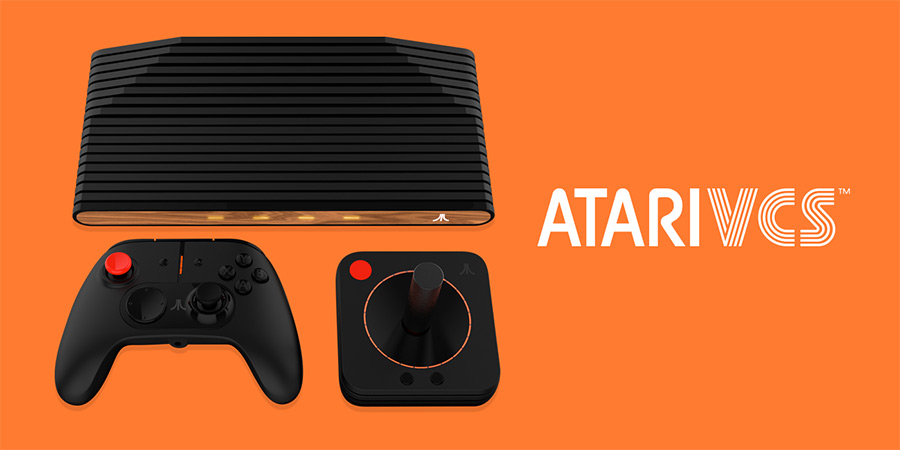
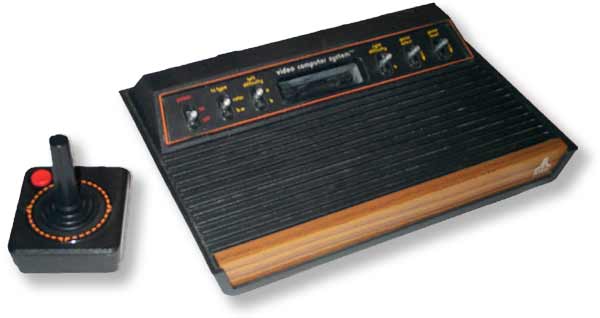
The Atari 2600 games console was originally named the VCS, for “Video Computer System,” when it launched in 1977, and “VCS” is the name given to the neo-2600 that Atari – now probably about the fifth company to have used that name – will launch in 2019, having raised $2 million in its first day of crowdfunding and pre-orders.
The new VCS evocates the ridged black plastic and woodgrain design of the original console, except using real wood this time, while the voice-activated, Linux-based system with ARM processor is expected to play high-end PC games, along with the original 2600’s games, in addition to streaming video services.
In other words, the new VCS is a standard modern computer, but in a box designed to make you feel nostalgic for a forty-year old machine whose abilities were so limited, and so notorious for how it was programmed, it may make those that did program those games want to throw it against a wall.

Put simply, a computer will usually have a “frame buffer,” driving the display, with its own dedicated memory to store each frame before it is sent out. However, computer memory was very expensive in 1977, with the latest new home machines, like the Apple II and Commodore PET, offering only 4 kilobytes (4096 bytes) of RAM – this was also the capacity of the 2600’s game cartridges. In order to reduce the cost of the 2600 as much as possible, only 128 bytes of RAM were made available for all the variables of your game, and no frame buffer was provided at all. Making the most efficient use of the available space will also involve writing each byte in assembly language, using hexadecimal code, to be read directly by the processor.

What are you supposed to do? The answer is you have to tell the machine what to draw on each individual line of the picture you see on your TV screen. This uses only 20 bits (2.5 bytes) of the RAM each time a line is drawn, but you have to keep it going, and time your program correctly, or otherwise your picture falls apart. Furthermore, you can only draw the left-hand side of the screen, with the 2600’s Television Interface Adaptor (TIA) chip enabling you to copy or flip it to the right side. The TIA, also responsible for the sound and reading the instructions given by joysticks and paddles, also provides the two on-screen player sprites, two “missiles,” and one “ball” to make your game – when the most people have played at home is “Pong,” that really is all you needed.


In time, people knew how to exploit the opportunities created by “racing the beam,” attempting to create more detail on screen by timing each line to draw multiples of sprites before the end of each line is reached – this means the bank of alien spaceships required for “Space Invaders” to work became possible, and the release of the most dynamic game yet for the 2600 caused sales of the system to explode. Atari’s own search for producing the best backgammon game that ran “bank switching” between different chips, allowing for bigger, more complicated games, and 1982’s “Pitfall!,” one of the most advanced games for the 2600, was created to make use of a realistic running man that programmer David Crane had made three years earlier.
The Atari 2600 was finally withdrawn from sale in 1992 – as there was no exclusive deals to produce games, and no copy protection in the cartridges, anyone could produce a game for the machine, so nobody stopped. Even now, homebrew programmers continue to see the restricted nature of the 2600 as a challenge, most notably a version of “Halo” written by Ed Fries, who led the team at Microsoft that created the first Xbox console.

This is a very simplified version of how the Atari 2600 works, but when you then look up the story about the debacle over the “E.T. The Extra Terrestrial” game, it becomes clear that the programmer Howard Scott Warshaw needed longer than the five and a half weeks given to him to make something more refined.

15 December 2017

ONE SHAFT OF LIGHT THAT SHOWS THE WAY [86]


Last weekend, I took delivery of a piece of my childhood: an Acorn BBC Micro computer. For an entire generation of British schoolchildren, the BBC Micro, introduced in 1981 as part of a Government-backed computer literacy campaign, cemented Acorn as a British technology success story for nearly twenty years, culminating in the creation of the ARM chip, now found in billions of devices.
Why did I buy a second-hand one on eBay, described as being “in working condition, needs a clean”? Apart from having already bought another BBC Micro eight years ago, sadly no longer working, I wanted to make some music with it – the four-channel Texas Instruments sound chip installed in it is also found in other 8-bit machines, but also many Sega arcade machines, the Master System and the Mega Drive / Genesis. In addition, BBC BASIC, created by Acorn engineer Sophie Wilson, is still the most versatile version of BASIC, with easy SOUND and ENVELOPE commands to build sounds – Commodore 64 owners, in comparison, are left to POKE their sound chips until they made a noise.
In a time when we expect our mobile phones, let alone our computers, to be capable of more than everything, the BBC Micro, and other 8-bit computers like the Sinclair ZX Spectrum, the Apple II, and the Amstrad CPC464, all appear to be as capable as the micro-controller chips you might find in your alarm clock or hi-fi system. That is sort of correct: Acorn’s first computer, the System I, looked like a calculator, was programmed directly to the processor using hexadecimal machine code, and was developed from a cow feeding system.

Modern micro-controller systems, like the open-source Arduino or the Raspberry Pi, take computing back to the same nuts-and-bolts principle of writing your own programs, and building your own devices. Using the BBC Micro at school was Eben Upton’s inspiration for creating the Raspberry Pi, and eventually led the BBC to produce the Micro:Bit micro-controller board, returning to a computer literacy program when programming skills are needed more than ever. The Arduino system was easy enough for me, an enthusiastic bystander when it comes to computing, to consider building a type of electronic typewriter, where you could enter text without the distraction of the internet, and upload it to your computer later -  however, the Alphasmart series of keyboards already did this, so I have since bought one of them.
Likewise, the BBC Micro has been used as widely as the on-screen ident generator for Children’s BBC, the steering controller for a radio telescope at the Jodrell Bank observatory, and as a music sequencer on the Queen song “A Kind of Magic.” My older non-working Micro could also save programs to SD card, through the successful fusion of old technology with the new.
What did I make of my “new” BBC Micro? Erm… It turns out there is a known issue where the capacitors in the internal power supply will eventually fail, because thirty seconds after turning on the thirty-plus year-old machine, the sound of firecrackers, made without any programming from me, was followed by quite a bit of smoke. It would have been nice to make retro computer music using period equipment, instead of resorting to attaching a music keyboard to my iPad, but soldering capacitors is more than a bit beyond my capabilities – at least, I did get my money back.

14 September 2017

DON’T SIT UNDER THE APPLE TREE WITH ANYONE ELSE BUT ME [73]


The new Steve Jobs Theater may be, more than all the products Apple Inc. has made in the last forty-one years, the truest statement of its ethos as a business, embodied by its co-founder Steve Jobs. Above ground, it is a glass temple, inviting you into a gallery-like space – functional, designed with precision and simplicity, both organic and natural. The theatre appears similar to those Apple previously hired for its product launches, but it houses the most advanced technology to be found in a theatre.
Like its products, Apple’s theatre is not the first of its type, but is the best, the benchmark, the definitive experience: it is why, instead of competing with others in unveiling its products at technology shows around the world, Apple can be sure that, when they unveil a phone with face recognition and an all-over screen, the world will come to them.
Watching Apple’s launch last Tuesday, I could spot eternal Apple fanboy Stephen Fry in the audience, along with Pixar’s John Lasseter, whose company was once owned by Steve Jobs. However, I also saw their other co-founder too: outside of being a contestant on “Dancing with the Stars,” Steve Wozniak is not as high-profile as his friend was, but Apple is as much his company as it is Jobs’s. (A third co-founder, Ronald Wayne, sold his share to Jobs and Wozniak for $800 in 1978, but sold his company agreement with them at auction for $1.6 million in 2011.)

While Steve Jobs was in charge of Apple’s image, Steve Wozniak built the technology itself. Their breakthrough computer, 1977’s Apple II, had a Wozniak-designed circuit board, but a case (and marketing) commissioned by Jobs. One of the first true home computers, it was just about their only collaboration on an Apple product, and its development highlighted the differing approaches they had to computing: Wozniak wanted six expansion ports, but Jobs only wanted two. How the Apple II ended up with eight ports is beyond me, but Jobs wanted a straightforward, controlled user experience, and Wozniak wanted owners to play with their machine however they wanted.


Of course, Jobs’s vision eventually won out with advent of the Macintosh: beautifully designed but hermetically-sealed boxes, using proprietary screws, and Apple’s own interface, packaged and sold to emphasise how natural and easy it is to use. The hobbyist Apple II line, endlessly modifiable by its users, remained in use until Apple finally ended it in 1993, 8-bit technology completely overwhelmed by Macs and PCs, and even the 16-bit Apple IIGS, which had its processor clocked to deliberately run slower than a Mac. However, as Wozniak intended, a 1993 Apple II was fully compatible with a 1977 model, something no longer done, as any upgrades to the insides of an iMac require you to buy a new iMac.
Steve Wozniak left daily work at Apple in 1985, later finishing his university degree, bringing to market the first universal programmable remote control, becoming a school teacher, along with being involved in various other businesses and charities. Meanwhile, Steve Jobs was, and is, Steve Jobs, whose story is well known and often recounted, the company he founded with Wozniak now recast in Jobs’s image. Wozniak’s own words on the Steve Jobs Theater bears out what the Apple today is aiming for: “You can’t define beauty. It doesn’t have words. It doesn’t have numbers. You just kind of see it and you know it.”