Showing posts with label sony. Show all posts

25 August 2024

THIS TRAIN DON’T STOP HERE ANYMORE [463]


Among the most notorious flops in American television history, “Supertrain” is a 1979 science fiction adventure series I have known about for years, but only tried to watch recently, the details of its misconception being more interesting than the final show itself.

The “Supertrain” itself is a high-speed, pullman-style luxury train driven by no less than nuclear power and a steam turbine. This is not as wild as it sounds: the English Electric GT3 was a prototype steam turbine train, instead powered by gas, but didn’t move beyond test runs in the early 1960s, never carrying any passengers.

“Supertrain” carried more than a dining car: its double-decker carriages had hotel-like cabins, a gym, restaurant, infirmary, gift shop, dance floor and swimming pool. The opening scene of the first episode implies this is the future of train travel, not long after Amtrak had been formed to save US passenger routes in real life.

The sets were gargantuan, in both size and cost. Built at the MGM studio lot (now Sony Pictures Studios), a reported $6 million was spent constructing a full-size, non-moving train and interior sets, rising to $10 million with the completion of two scale-model trains for use in exterior shots. It is usually accepted that "Supertrain" was so expensive, its failure nearly bankrupted NBC, but failures of other shows, and lost advertising revenue after its scaling back of its coverage of the 1980 Moscow Olympic Games following the United States' boycott, makes the show only one part of a larger-scale problem.

The full-size set had hydraulics to aid chase scenes on the train’s roof, pushing people back if the train accelerated, while a further copy of the roof was fixed to top of real train carriages, for stunts that needed a real moving train. Meanwhile, the interior is very 1970s in design, looking not unlike a cruise ship of the time, with velour carpeting, lots of lights and plenty of opportunity to wander the corridors with an alcoholic drink in your hand.

I have not mentioned the premise of the show so far because it is hardly worth the point. What initially captured me about the show were the opening titles, with Bob Cobert’s aggressively disco theme laid over various shots of the train and of its crew, forming the main cast. Watching the opening episode reveals a set of interweaving storylines featuring the passengers and their romances, a set-up relying on a parade of guest performers, and the crew interacting with them.

“Supertrain” is essentially “The Love Boat” but set on a train, a fact recognised at the time, but the show’s producer Dan Curtis, creator of the seminal gothic soap opera “Dark Shadows”, seemed to be more interested in photographing the train. Curtis was replaced after five episodes, and “Supertrain” was steered into being more comedic, adding a laugh track to its ninth episode before the show was cancelled.

“Supertrain” lasted for only nine episodes from February to May 1979. Creator credit went to crime and mystery writer Donald E. Westlake, and to Earl W. Wallace, former head writer of the Western TV series “Gunsmoke”, and later scriptwriter of the Harrison Ford-starring crime thriller “Witness”. Their only writing credit for “Supertrain” was the opening double-length episode, retitled to “Express to Terror” when released later as a standalone film to try recouping its costs – with Keenan Wynn, Steve Lawrence, Fred Williamson and Vicki Lawrence as guest stars, they become a solid cast for a 1970s TV drama. The following episode starred Dick Van Dyke as a hitman.

25 March 2023

YOU HAD YOUR TIME, YOU HAD THE POWER [389]


On the afternoon of Saturday 8th August 2015, I sent nine rubbish bags to my local recycling centre in what was, at the time, a very lucid and easy decision.

The bags contained over two hundred and fifty Video Home System (VHS) cassettes of off-air TV recordings I had amassed from 1997, none of which were able to be recycled at the time due to the black plastic used in their composition. I had intended to digitise their contents for future use, but after realising the size of the task, and that all I had recorded on them, from obscure films that helped with my degree studies to whole series of the BBC comedy quiz "Never Mind the Buzzcocks", will continue to be available online or from archives.

My habits with recording programmes to VHS also meant you were unlikely to find anything special. I recorded in Long Play mode, reducing the maximum 240 lines of picture quality to 230, something that made very little difference when recording episodes of “The Simpsons”. I also eliminated continuity announcements and advert breaks as much as I could, their comparatively ephemeral nature now making recordings of them more highly prized. Safe in the knowledge that nothing was going to be lost from the loss of my collection, it was easy to let it go.

The big regret I still have was getting rid of the VHS recorder as well, perceiving there to be no more use for it. The random analogue glitches of an authentic VHS recording are more acceptable than the hazy VHS-like filter that can be applied to a digital video file to produce a degraded or nostalgic effect, and because making videos was not a consideration I had at the time, I saw no reason to hold the recorder back. Not readily having the ability to recreate that prized look with authentic equipment was an oversight on my part.

Changing rituals from “time-shifting” by recording programmes to watch later, to streaming everything at any time, makes it easy to forget that VHS was once the only way most people owned moving pictures, other video tape and disc formats notwithstanding. This was mainly the result of the Japanese government attempting to force manufacturers to adopt a single consumer tape format, and by JVC providing their VHS format as an open standard others could use without licence, something Sony was not willing to do with their technically superior Betamax format, its smaller cassette size also limiting their available recording time.

While we have not lost the right to make home video recordings for personal use, the ability to do so has mostly been lost. There is no open ability to download and keep programmes from streaming websites, and neither would they accept that, and while my television can record off-air video to a USB stick, it will only play back on that one television. Very occasionally, a TV station may also show a programme that has been out of circulation for decades – I am still waiting for the BBC to show John Berger’s original 1972 series “Ways of Seeing”, never issued on home video to my knowledge, instead of relying on the tie-in book.

Attaching some sort of video capture device to my television is starting to sound like good proposition, especially now the bulk of VHS cassette storage can be avoided.

02 August 2020

A WHOLE LOT OF FUN, PRIZES TO BE WON [253]


Coke Zone was the name of a loyalty points scheme operated by Coca-Cola from 2008 to 2013 across its range of soft drinks. By collecting codes printed on bottles, boxes and can ring pulls, the points you accumulate could buy money-off vouchers to use in stores, magazine subscriptions, cinema tickets and, if you were lucky, expensive electrical items like games consoles and cameras.

I have great memories of Coke Zone. Diet Coke is still my favourite drink, and because I rarely ever drink anything alcoholic, Diet Coke is often all I ever drink, apart from water. Introducing a loyalty scheme to a product for which I was already a loyal customer was very welcome indeed.

To be honest, I practically fleeced Coca-Cola when they ran Coke Zone. I diligently collected the codes to enter on their website to collect the points, and friends and work colleagues that knew I was collecting the codes gave me their bottles and cans to throw away, after I wrote the codes down. You were only allowed to collect fifty points per week, and while a 330ml can gave you one point, a 500ml bottle gave you two, and a multipack scored five points, I often reached their weekly limit due to the codes I was given.

In return, I received many things: 100 points could be exchanged for £5 vouchers to use at HMV to buy CDs and DVDs – before 2011, when HMV also owned the bookshop chain Waterstones, I could redeem them for books as well. I received quite a few tickets to watch films at my local cinema, also at 100 points each. I had a year’s free subscription to the film magazine “Empire.” I also had a money-off voucher for a clothes shop, which I remembered using on a pair of shorts.

The high point was when I actually caught a big-ticket item on the Coke Zone website, which often disappeared as quickly as they appeared: on a day off from work, having collected enough points to participate, I spent 600 points to buy a Sony Cyber-Shot DSC-T90 camera, which cost about £250 in 2009 – it was either one of them, or an Xbox 360 console. I still own and use this camera.


When Coca-Cola started to wind down Coke Zone in 2013, the offers had become less enticing – increased participation from people in the points scheme had caused inflation, with vouchers costing 100 points having increased to 150, then 200 points, while larger items, previously costing over a thousand points, were replaced with prize draws, spending fewer points to enter. Coca-Cola provided a final round of larger products to burn up the piles of points that some, like me, had amassed – I bought a nineteen-inch Sony Bravia television which, like the camera four years earlier, would have costed around £250, but costed 1,500 points. Once Coke Zone finally closed, I had received prizes and vouchers worth a total of over £650.

I have never been that lucky since, although I rarely enter any competitions. However, I have benefitted from other points reward schemes: HMV started their own, Pure HMV, whose money-off vouchers came in good use when I realised I needed David Bowie’s complete discography after he died. Like Tesco Clubcard and the Boots Advantage card, my loyalty to buying products from them that I could have bought elsewhere is being rewarded, rather than buying one brand instead of another – I guess the 1980s “cola wars” between Coke and Pepsi never really ended. Meanwhile, my bank introduced a current account in 2014 that offered its own yearly choice of rewards, one of which was six free cinema tickets per year. I have paid to watch a film in a cinema only a few times in the last ten years, and one of those times was for “Cats.”

My Coke Zone online login apparently still works, but Coca-Cola’s website now only offers product news and the occasional competition, which is perhaps all it should ever have done. Coca-Cola is a brand that does not need to advertise as much as other products, such is its place in popular culture – I wish I could find a copy of the poster I once saw that shows a Coke bottle with the slogan, “And what would you like to eat?” They only need to advertise to remind people they are there, which is why you see Coca-Cola ads most often at Christmas, Easter and during the summer.

Fortunately for Coca-Cola, I would have continued drinking Diet Coke regardless of whether Coke Zone existed, but I took advantage of it while it was there. My continual loyalty to them has since been measured in pounds Sterling, rather than points.

27 June 2020

I’LL DO ALL THAT I CAN [248]


I could easily have wondered why my family owned the “Rocky IV” soundtrack album, but the opening of James Brown’s “Living in America” answers that question very quickly. However, we also had a cassette named “The Power of Classic Rock,” and when that blinked back into my consciousness, I needed answers.

The track listing for this album befits the name “The Power of Classic Rock,” and its 1985 release date: “Drive,” by The Cars, “Purple Rain,” “I Want to Know What Love Is,” “Dancing in the Dark,” “The Power of Love” (by Jennifer Rush), and “Total Eclipse of the Heart.” But this album is not a compilation of recent hits: it is a covers album, the “artist” is The London Symphony Orchestra, assisted by The Royal Choral Society, and was the seventh album in a series that began in 1978.

The premise is simple: the “Classic Rock” series recreates popular music in a classical, symphonic style. The record label that instigated the series, K-Tel – yes, them of the cheap, quiet and groove-crammed “20 Original Hits, Original Stars” albums – would later instigate an inverse series from 1981, “Hooked On Classics,” presenting a medley of the Royal Philharmonic Orchestra’s usual repertoire against a Linn drum machine. From 1985, the “Classic Rock” series had moved to CBS Records, under Sony, beginning with “The Power of Classic Rock,” but The London Symphony Orchestra remained at Studio 1 at Abbey Road, having played the inaugural recordings there in 1931, when Sir Edward Elgar conducted them in performances of his compositions.

The judder in my memory of this album came from my having realised I first heard these songs on this album as a small child, only hearing the originals much later. Fortunately, there isn’t much of a jump from one version to another, as the “classical” adaptations of the songs simply amount to their being played by an orchestra, extrapolating the vocals, guitars and keyboards to brass, woodwind, strings and percussion like they were tracks on a mixing deck, with added choral and synthesiser sections when needed. No-one is trying to make Michael Jackson’s “Thriller” sound like Beethoven, or making Shostakovich out of Lionel Richie’s “Hello,” and there are few extraneous flourishes. There is a faint whiff of Muzak about the enterprise, and easy-listening LPs released by orchestras in the 1960s and 70s by the likes of James Last and Bert Kaempfert, but this time there is no intention of providing an experience that replaces the original songs: the integrity of the original compositions is preserved, and their original arrangement remains unchanged, just played on different instruments this time around.

For the record (literally), the most forceful performances on the album come from medleys of Frankie Goes to Hollywood’s “Two Tribes” and “Relax,” and Brice Springsteen’s “Born in the USA” and “Dancing in the Dark.” Both these medleys, and “Total Eclipse of the Heart,” were arranged for the album by the prolific composer and performer Richard Harvey, at the time responsible for the synthesised soundtrack for Gerry Anderson’s puppet series “Terrahawks,” and for having two of his library music pieces, “Water Course (a)” and “Exchange,” used to illustrate a “Sesame Street” film about how crayons are made. Harvey is a frequent collaborator on film scores with Hans Zimmer, and his 1984 classical piece “Reach for the Stars” has been used as the definitive heroic music used on everything from film trailers, TV shows, amusement park rides and adverts to “The Ren & Stimpy Show” and “SpongeBob SquarePants.”

20 January 2019

MAKIN’ FLIPPY FLOPPY, TRYIN’ TO DO MY BEST [146]


So, there I was, looking at the post-Christmas clearance shelves in WHSmith, when it stood out like a sore thumb, that had then been hit by a hammer: a pack of ten 3.5-inch floppy discs, brand new, for £1.99.
The Proustian nostalgia took over: in the days before broadband internet, and when I was studying for my degree, I would download articles from the internet, or more often only the text of a web page, then take a pile of floppy discs home and read them there. I also discovered the Pop Art painter Keith Haring at this time, and still have low-resolution GIF files of his pictures saved from sixteen to seventeen years ago. However, my first encounter with the floppy disc was as part of moving from an 8-bit computer like the Acorn Electron, requiring you to learn BASIC commands to load programmes from cassette tape, to 16-bit models like Commodore’s Amiga line where, once the disc was inserted, the computer knew what to do, and got on with it.
Since then, the nature of computing has changed again, and the achievable ability of a floppy disc, with its maximum 1.44 Mb capacity, was left behind in another decade. Incomprehensible levels of data are flung through the air for every conceivable use. Picture and sound quality for video, music, photographs and apps have dictated the everyday levels of data we expect to have in our grasp – it doesn’t take many lines of code to make an app, but the level of graphics we expect is what takes up the space. If anything is using a floppy disc today, it is something that still has a use, despite something newer being available – something like an old word processer or oscilloscope - or because it is something completely outdated that people want to keep going, much like a Commodore Amiga, or one of those Sony Mavica cameras that had a disc drive inside them.

Of course, I bought the box of discs from WHSmith. I hadn’t seen one in all this time, mainly because I didn’t think they were still being made, but someone must be buying them. I could not find any evidence online that Verbatim, the brand on the box, had made these discs since 2016, which explains why some sellers on Amazon, eBay and the like think they could get away with selling the same box for £20 or more. Other sellers list the discs on their sites as “product unavailable,” most likely not because they no longer offer them, but after having realised they still were.

Now the discs are home, what use can I make of them? Almost none. Saving any picture or sound file to a 1.44 Mb space means you have to take something away from it to make it smaller. Saving a video is a complete non-starter. I took a picture of a disc for this article, and even after cropping it, it was still 2.7 Mb – the picture quality, not just the size, would have to be sacrificed.
Making a song fit a floppy disc was a crushing experience. I chose the one song that everyone appears to like, Toto’s “Africa,” which lasts 4 minutes 55 seconds in its album version. The FLAC version I have of the song, saved from CD without any loss of information, is 34.6 Mb in size – the bitrate is variable, but reaches a maximum of 983 kilobits per second (kbps). This is as good as you are likely to hear “Africa,” without paying extra for a new high-definition master released last year. To reduce it down to an MP3 file of only 1.12 Mb, but while keeping it in stereo, and keeping the same 44.1 kHz sampling rate as the CD, that 983 kbps is reduced to only 32 kbps – the result sounds like you have been placed on hold while on a phone call to your broadband supplier. Saving music to floppy disc is achievable, but at the expense of wanting to listen to the result. In fact, the version of “Africa” I created by converting it to MP3 loses so much of the original, I may be able to claim it as a derivative work, separate from the original.
In truth, only document files can realistically fit on floppy discs – a Microsoft Word document (.docx format) takes up thirteen kilobytes before you add a single word, but you could still fit an average-sized novel before space runs out – “Les Misérables” might need a second disc. In fact, saving a document of your passwords to floppy disc might be a useful encryption tool – who else will be able to read it? Just don’t save it to a format an Amiga can read.

17 December 2018

IT’S AUTOMATIC, IT’S SYSTEMATIC, IT’S HYDROMATIC [140]


So many ways have been used to get music, TV and films into the home over the years, but there is a reason I am going to talk about Sony’s U-Matic here, apart from it being the world’s first video cassette: it is the nexus point of all that has been, and all that remains, in the last fifty years of audio-visual formats, and that isn’t hyperbole either.
U-Matic, named after how the tape was threaded around a large chrome cylinder that contained the record and playback heads, was first shown off as a prototype in October 1969, and went on sale to the public in 1971, beating Philips’ VCR (Video Cassette Recording, also known as N1500) and Avco’s Cartrivision by a year. Home video recorders were already on sale for nearly ten years by then, but these were open-reel devices, not unlike reel-to-reel audio recorders – U-Matic simply encased the tape in an anti-static cassette, making it easier to handle. Like the EIAJ standard agreed among open-reel machine manufacturers, Sony also persuaded other companies, like Panasonic and JVC, to agree to make their own U-Matic machines.
However, for all the ease the format gave the general user, they were still ruinously expensive to buy, approaching the price of a small family car. However, businesses, schools and colleges could afford them, which caused Sony to move their efforts towards them – the “VO” prefix on the machines’ model numbers already stood for “Video Office.” The failure to get U-Matic into homes led Sony to develop the smaller Betamax format, and much has already been written about the format war between it and VHS, ironically developed by JVC, with help from their owner at the time, Panasonic.


Holding a U-Matic tape in your hands defines “industrial.” While a smaller E-180 (3-hour) VHS tape weighs 195g, a 60-minute U-Matic tape weighs 505g, and that is mostly the tape: while VHS runs at a maximum of 1.3 inches per second (PAL region, Short Play), using tape half an inch wide, U-Matic’s three-quarter-inch tape runs at 3.75 inches per second – 60 minutes is all you can get into the case, unless you make the tape itself thinner. However, more tape per second means higher quality, and rather than people at home using them to record TV programmes, the programme makers themselves were using them instead.
Until U-Matic, if you wanted to go out and record a news report, you needed to take a 16 mm film camera with you, which would have to be developed before you could edit it and show it to anyone. This had begun to change slowly – Sony had developed a “Portapak” system that used open-reel tape, but once the U-Matic S Type (for “small”) cassette was developed, Electronic News Gathering (ENG) took off in the United States from the mid-1970s. It did not matter if the picture was less detailed than film, it did not matter if U-Matic had a problem with making the colour red too saturated, and it did not matter if the S Type cassette only held 20 minutes at most – making the news became easier and faster, and did not need as many people to make it work. It took another ten years for ENG to become commonplace in the UK, as unions argued it put too many jobs at risk – the BBC took a film developing unit to the Falklands War – but technology was moving on.
As UK TV news began using ENG, other formats were becoming available, and even Sony had a replacement for U-Matic: while the cheaper and more convenient VHS beat out the technically superior Betamax, Sony simply reworked their second cassette for the professional sector as well, creating Betacam (later Betacam SP, later DigiBeta). While these became the industry standard, Sony still supported U-Matic, because companies still used it: there is evidence that films like “Star Wars Episode III: Revenge of the Sith” (2005), and the Studio Ghibli film “Ponyo” (2008) had clips issues to TV stations in the US using U-Matic tapes. I couldn’t find the date for when Sony stopped supporting U-Matic but, considering they only stopped making Betamax cassettes in March 2016, it can’t have been that long ago.
While U-Matic was central to the development of video, it was to audio as well: before the Compact Disc, video tape was the only way of recording music digitally, and U-Matic was often used for mastering music this way in the 1970s and 80s, once connected to early PCM adaptors. Because the digital signal would be encoded using the number of lines in a TV signal, a combination of the number of lines that make up the picture, and the number of audio samples made up one line, meant that a total of 44,100 samples could be recorded per second, otherwise known as 44.1 kHz – CDs use the same rate for this reason, and practically everything else has since.

27 August 2018

AMBITION AND LOVE WEARING BOXING GLOVES [124]


Until I recover my pictures, this is a cautionary tale.
We choose to use old digital cameras. We choose to use technology from two decades ago over our smartphones, not because it is easy, but because it is hard, because that goal will serve to frustrate and drain the best of our energies and skills, because that challenge is not one we should have been willing to accept, one we are willing to postpone, and one which we intend to win, or not, just give me a break.
Whereas John F. Kennedy proposed reaching the Moon to push the United States into the future, using an old camera attempts to catch the past within our present, reframing what we see now in an evocative and familiar fashion – usually a less detailed, less colourful version of now.
I tried to replicate this effect using what I already own, but reducing the resolution of pictures taken on my iPhone 7, or even on my Sony CyberShot camera from 2009, down to the 0.3 million, 640 x 480 pixel-size standard for digital cameras twenty years ago, only gives you smaller versions of well-taken pictures. Buying a camera that uses film was out of the question, as were the costs now involved with developing film (such as travelling to somewhere that still does it), so finding something suitably old almost took me back to the beginning of digital cameras. The first consumer digital camera was 1994’s Apple QuickTake 100, but I was able to find an Olympus Camedia C-420L, from 1998, for a modest amount on eBay... However, it could not read the memory cards inserted into it, so I then found a C-830L, released the following year.

Both Olympus cameras could be mistaken for a 35mm film camera, perhaps to make them easy for first-time digital users. To take a picture, you have to look through the viewfinder window at the top – there is also a screen, but you have to turn it on first, with the rest of the operations controlled by the buttons and LCD screen along the top. The cameras have no internal memory, requiring you to load a SmartMedia card (a large predecessor to the SD card) like you were loading film – the C-830L takes cards of up to 16 megabytes in size, enough for nearly 100 pictures, or only 24 pictures in high resolution (1.3m pixels). The cameras do not simulate the click of a picture being taken, as enough mechanics remain for it to make that noise anyway.
So far, so good, but this is when progress in computer technology starts to eat away at your resolve. We are so used to plug-and-play devices, USB connections, cheap controller chips, and common software and file formats - we expect everything to be read first time without question or issue. This is an incredibly recent luxury – even adding a mouse to your PC once meant loading a program to make it work. In addition, Microsoft Windows has been through about seven different versions in twenty years, meaning old software will no longer work on new computers – this is why businesses continue to pay Microsoft to maintain support for Windows XP, which dates back to 2001.

Here is where I stand: I have a camera that should have some pictures on it, in some form. I could not connect it to my computer – what I thought was an old-style serial port turned out to be a monitor output, so I have sourced a USB adaptor. The software provided for my camera is so old, my Windows 10 computer cannot read it. To create a computer that can read it, I downloaded Oracle’s VitrualBox program, which can simulate a virtual old-style computer within your regular one, but even that requires its own operating system to work - as a result, I bought an unopened copy of Windows 98, the first version of Windows that provides proper USB support, for £10 on eBay. All I need to do now is to get it to recognise the ports on my computer, and I should reach the end of my journey.
I refuse to be beaten by this - I have come too far. This is no longer about nostalgia, or even about the pictures: this is about the will to succeed. When the time comes, I shall share the results, but until then, the journey continues.

21 May 2018

AND WHO WOULD HAVE THOUGHT, IT FIGURES [110]


Nine months after promising myself that I would upgrade my iPod nano to a Sony Walkman [link], I have done exactly that, when the iPod stopped working for a few days. I have now launched headlong into the devotional task of loading my CD collection of twenty-plus years onto it – the first purchase, from Virgin Megastore in Portsmouth, was of “Jagged Little Pill,” by Alanis Morrissette, and “Now 35.”
Apparently, my NW-A45 Walkman can play “HD Audio,” which Sony defines as anything above CD quality. I had not looked into this before buying it, as my main intention was to find something that can accept a 200 Gb micro SD card – Sony says it can take a card with ten times that capacity, but none has been made yet. However, if this Walkman is expected to beat CD quality, then I can leave MP3 behind: in 2015, Ryan Maguire reconstructed a version of Suzanne Vega’s atmospheric song “Tom’s Diner,” used in the 1990s as a control when testing the “lossy” codec that compresses sounds into MP3 format, that only plays the sounds that were, in effect, discarded – enough sound is left behind for you to still identify the song as “Tom’s Diner.”
After some research, I now have the definitive advice for converting your CDs, which I will be using on my entire collection: only use FLAC (Free Lossless Audio Codec) format, setting it to 44.1 kHz 16-bit if you have the option, because this matches the settings of the CD.


The “lossless” element of FLAC, a format that has been around since 2001, means all the available information on your CD is being retained. Because of this, you do not set a bitrate of kilobits per second like you would with MP3, because that rate will change with the song. Using the first CD I converted, “Hot Potatoes: The Best of Devo,” there is a difference based on the type of song: “Devo Corporate Anthem,” a simple fanfare, reaches a maximum of 655 kbps, while “Through Being Cool,” a more involved, complicated, recording has a maximum of 871 kbps. A few Bee Gees tracks I have break the 1,000 kbps barrier, louder and richer than the Devo recordings, which proves what you can still get from a CD if it has been mastered correctly.
Put in as simple a manner as I can, CDs use a 44.1 kHz sample rate because it is twice the 20Hz to 20 kHz range of the human ear – it also matched the highest usable rate for recording digital audio on video tape - while the 16-bit pulse-code modulation used to digitise the sound, the latest development of a technology initiated to reduce the noise in long-distance phone calls, means the amount of detail picked out by the technology is more than “enough,” with a grove that won’t wear out like vinyl will.
What this does mean is that, if you have a CD that is “24-bit remastered,” this is talking about the digital master used to make the CD, which will still be 16-bit, even if more detail is available to sample. As an example, I have a 24-bit remastered copy of David Bowie’s album “Never Let Me Down,” but I also have the original 1987 release, because Bowie hated the song “Too Dizzy” enough to leave it off all subsequent reissues. The song “Beat of Your Drum,” with a chorus sounding like Bruce Springsteen’s “Glory Days,” is 34.3 Mb in size when taking a FLAC copy from the 1987 album, but the 24-bit mastered version raises this to 36.6 Mb – the difference is there, but you need a very quiet room to start with.

But with Sony highlighting the enhanced “experience” of HD Audio, the extra resonance adding to the recording, I feel like I have already achieved that, for now, by leaving MP3 behind, regaining the lost layer of sound from my, in some cases, decades-old CDs.

16 April 2018

NO MATTER WHO’S THE LEADER WHEN THE SUN SETS DOWN [105]


The idea of owning a personal copy of a film or TV programme is only around forty years old. Unless you had spent thousands on your own cinema set-up, or on a new-fangled home video tape recorder, 1978 was the year home video began in earnest, and anyone buying into it had to decide which direction they would take.
Sony introduced the Betamax video recorder in 1975, with VHS, JVC’s competitor format, launching the following year. They were marketed with a specific use in mind – the ability to time-shift your television viewing. A two-hour video tape costed as much as £20, but were expected to be reused often - pre-recorded tapes cost at least three times as much, taking as long to make as they took to play back. With the recorders themselves costing up to a thousand pounds, selling films to the general public would have to be done another way.
The answer was, as will be with DVD and blu-ray, to copy the main method of getting music into homes: pressing video onto a disc. The first disc format, usually known as LaserDisc, went on sale in 1978. It was originally known under the hilarious name “MCA DiscoVision” – the name had been chosen back in 1969, before disco music appeared, but if you are forming a company to hold video-on-disc patents held by MCA, then owners of Universal Pictures, and the electronics group Philips, it was the right name to choose. LaserDiscs look like 12-inch CDs, recording their data in a similar track of spaced pits - the discs are big enough to see the track with the naked eye - but the pits are used to interpret the waves of a composite analogue signal, rather than binary code. A LaserDisc player was two-thirds of the cost of a VCR, requiring fewer moving parts, and pre-recorded films, the first of which was Universal’s “Jaws,” cost as much as a blank tape did.

The second format was CED, or “Capacitance Electronic Disc,” launched by RCA in 1981 under the "SelectaVision" brand they also used for their VCRs. However, the release date was originally meant to be 1977, with the project having started back in 1964. However, the long gestation period was because RCA was perfecting their own patents: instead of using a laser on a reflective plastic disc, the CED would be made of the same vinyl that made audio records (with carbon added for conductivity), could be made on the same presses, and would even be read with a diamond stylus that physically touched the record. The video signal is then generated from the resonance measured from the changes in electrical capacitance between the disc and the stylus. Because the merest piece of dust on the disc would disrupt this process, attracting moisture from the air, the records would be shielded from view within a cartridge, from which the player would retrieve the record without the owner touching it. The first CED on release was not “Jaws,” but the more laid back film “Race for Your Life, Charlie Brown.”

This is where the problems started – stacked against LaserDisc, which could be mistreated like a CD and still play, CEDs would be too temperamental, only produced a VHS-level picture against the higher quality of LaserDisc and, of course, was released too late. RCA announced they would stop making CED players in 1984, which paradoxically caused demand for the discs to increase, until they finally ended in 1986, when RCA was broken up for sale, after losing $600 million on the whole endeavour – the UK would only see the whole system on sale for six whole months. LaserDisc would carry on much longer, having proved very popular in Japan, with discs on sale until 2001, and players still being made as late as 2009 – its analogue picture quality was still on a par with early DVDs, and its ability to provide chapter searches and audio commentaries made it the premium alternative to VHS, through film series like the prestige Criterion Collection. Pioneer Electronics, which had bought out MCA and Philips’s stake, changed the name, and pushed the format to the very end - when they bought into it, in 1980, it was Pioneer that started pushing the more futuristic "LaserVision" as the name for the format, and "LaserDisc" for, well, the discs. In 1987, Philips tried naming the format "CD Video" in Europe, using gold-coloured discs, but LaserDisc had already failed to catch on there, so it lasted only a few more years. 

VHS became the dominant home video format for twenty years, but this was only achieved through economies of scale. While the cost of a pre-recorded tape was initially too much for most, it created the market for rentals instead, increasing what demand there was, and reducing the cost of making each tape. More companies began making both recorders and tapes to meet demand, and the overall cost continued to fall. The only downside of the ubiquity of VHS was that, when it came to replace them with DVDs, the plastic used to make the tapes was not recyclable – presumably, my collection remains in a landfill to this day.
Right now, “home video” no longer involves ownership for many people – online video streaming has replaced both the rental market and the need to record TV shows to watch at a later date. I have bought films on Blu-Ray because they were no longer available on Netflix, and recording TV shows to keep now involves a dongle attached to a desktop computer. When a problem is solved, it shouldn’t slowly reappear like this.

17 November 2017

HIT IT, PAUSE IT, RECORD AND PLAY [82]


Modern-day ingenuity means that popular forms of old technology can have their useful lives extended far longer than ever intended. For example, I have a 1983 BBC Micro computer, sadly no longer working, which could connect to my TV via a SCART lead, and could save BASIC programs to an SD card.
Likewise, improvements in sound recording and playback mean we can play new vinyl records that sound as good as CDs, through heavier records, cutting the groove at a slower speed, and direct-drive turntables. Even CDs sound better through 24-bit mastering not available when they were introduced, meaning my 2015 copy of David Bowie’s album “Never Let Me Down” sounds louder, more dynamic and clearer than my 1987 copy, which I only bought because Bowie hated his song “Too Dizzy” enough to delete it from all future reissues.

However, with retailers now offering more cassette players and blank tapes for sale than seen in the last ten or fifteen years, including various devices to copy cassettes to MP3 format, I must point out the new players and tapes will sound WORSE than what you threw away, or gave away, all those years ago, because the improvements made to cassettes when they were popular are no longer made.

When Philips introduced the Compact Cassette in 1962, the virtue of its compactness – the earlier RCA tape cartridge, as well as Sony’s later Elcaset, were the size of a VHS cassette – was outweighed by its lack of actual sound fidelity. Running at a quarter of a speed of then-conventional reel-to-reel tape, and on tape about half as wide, the iron oxide-coated “ferric” tape rendered only enough to use in dictation, and little else. The introduction, in 1972, of tape using a chromium dioxide coating, known as “chrome” or “Type II,” began the slow replacement of pre-recorded 8-track cartridges with tapes that could would be wound backwards as well as forwards, while 1979’s “Type IV” or “metal” tapes, using iron or chromium instead of their oxides, meant you could start approaching CD quality – “Type III” was a combination of the first two types by Sony, which did not last beyond the mid-1970s.

Meanwhile, the ubiquitous hiss of tapes could be reduced if your recorder incorporated Dolby Noise Reduction, with Dolby B being the first consumer standard introduced in 1968, followed by Dolby C in 1980, and Dolby S in 1989, just as CD sales began impacting cassettes. Unlike the industry standard Dolby A and SR, Dolby B and C were directed at the higher and lower frequencies at which the hiss would be heard, but Dolby S improved the whole dynamic range.

For anyone in the market for a new cassette player, I can now tell you that just about EVERYTHING I have just told you will be unavailable. Unless you can find someone selling unopened old stock, you will only find the base level Type I tapes available, for only these are still made. Even worse, Dolby stopped licensing their noise reduction systems a number of years ago, concentrating their efforts on digital and home cinema systems instead. Even worse, because modern hi-fi systems are not concerned with including cassette players, you can expect the overall quality of the players themselves to be less than before, although making sure the playback heads are clean and aligned always help. Playing back a Dolby-encoded tape will still work, but you just won’t get the benefit.
If you are prepared for the expense of matching the cassette experience you remember having, you may well have to buy your old system back from eBay – you may find me there, trying to buy a replacement BBC Micro.

04 August 2017

WALKING ABOUT WITH A HEAD FULL OF MUSIC [67]


Last week, Apple announced they were withdrawing the iPod shuffle and nano after twelve years on sale. In 2005, they were the latest extensions of a product line aiming to cram your music collection into your pocket, definitively doing away with cassettes, discs and vinyl for a generation of people.
And now, over a decade later, vinyl has come back, CDs remain on general release, nostalgia over cassettes exist, and MP3 players have been replaced by smartphones and streaming services like Spotify and, crucially, Apple Music, renting music instead of selling, and not taking up space on devices or on shelves.
Meanwhile Sony, creators of the Walkman personal stereo system in 1979, using their existing 3.5 mm headphone jack they created fifteen years before, will carry on regardless, having kept up with their customers’ needs, changing from cassette players to CDs, DAT, Mini-Disc, Video 8, MP3, and lossless audio, bringing out new formats as the needs arise.
This new situation may be suited to many people’s needs, but not mine: I was given free access to Spotify with a previous phone contract, and bought only a few MP3s of songs in that time, but when I found their rights to stream songs by Prince had ended, I did not begin to pay when the contract ended. (Prince is now back on Spotify, but still missing “Fury,” one of my favourite of his songs.)

I have owned an iPod nano for nearly five years, the latest in an almighty long line of personal stereos, radios and MP3 players, and it has been the most flexible and durable device of them all. Apart from storing nearly two thousand songs, with many more via FM radio, it has been dropped, rained on, thrown, and lost in the snow – earlier this year, a sign was put up on the way out of work, alerting the owner of “Leigh Spence’s iPod,” the name I gave the device to find it on iTunes, to call into the nearby police station.
The relief at getting my iPod back was palpable, even though I would not have lost a single song if I never saw it again. Being without the ability to hear my favourite music exactly when I need it speaks to the deep personal bond we make with music and their artist, be it David Bowie or the Spice Girls. The devotional task of loading all of Bowie’s studio albums onto my iPod, having dug deeper into his music following his death, while doing the same with Kate Bush’s work after being mortified at not owning any of it, can be as special as making a mixtape once was – playing and sharing love of music, to do yourself, and your friends, a massive favour in times to come.
But now, with my iPod filled to its 16Gb capacity, no next-generation model to come, and the larger iPod Touch really just an iPhone without the phone (or FM radio), where can I go next? The only logical answer is back to where it all started: Sony.
Looking for a film or album to buy in HMV, I know that Sony had a hand in creating all the formats I can buy, including Blu-Ray, but not vinyl (except perhaps the turntable to play the discs on). It also shouldn’t be a surprise music labels like Columbia/CBS, Arista, RCA, and Epic, and film companies Columbia, TriStar, MGM and United Artists, are all owned by Sony – this innovative new technology isn’t going to sell itself.
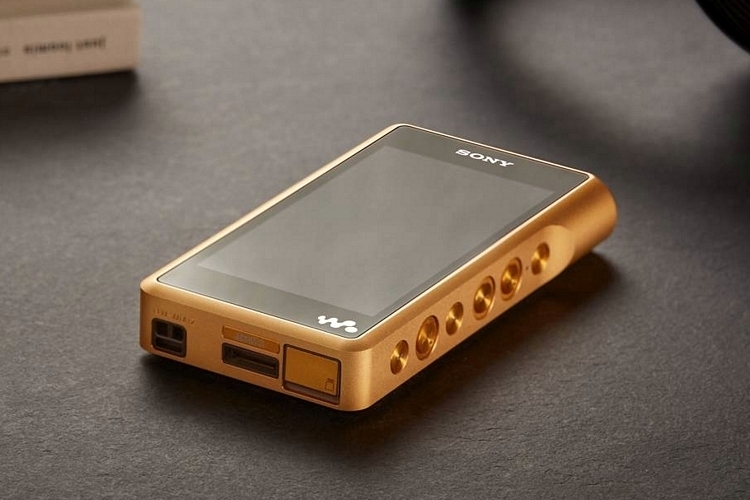
There is one Walkman I would like: a copper body, premium components, and 256 gigabytes of memory. Does anyone have a spare three thousand pounds?

17 February 2017

FERGUS-ON SINGS THE BLUES [42]


Once upon a time, televisions were made in our home town. We owned a few of them, but the most memorable, were two black-and-white portable televisions which, like the others, were made by Ferguson, a major employer in Gosport, Hampshire, and a division of the enormous Thorn-EMI corporation. The cathode ray tube in one TV gave up one day, but the other hung on for a very long time: when the on-off-volume switch fell off, it was replaced by the end of a used chapstick, jammed into the hole to serve for nearly a full decade. Colour television arrived in my bedroom when both progress, and a Christmas present, replaced the Ferguson with a portable Matsui TV.
It turns out that this coming Monday, 20th February, is the twenty-fifth anniversary of the closing of the Ferguson factory, which has since become a business park. The US conglomerate Cyanamid, once owners of brands as disparate as Old Spice and Formica, had a pharmaceutical plant down the road, but it has since moved out, the factory knocked down. The remaining mass employer in Gosport, apart from the Royal Navy, is the Finnish company Huhtamaki, makers of food and drink packaging, and formerly known as the great-sounding Sweetheart International, whose base is big enough for them to sponsor the flowers on nearby roundabouts.


It is too easy to get sentimental about these things, especially the jobs that are lost – I have only worked in my home town for five months out of the last twelve years. However, the reason the last TV was replaced was the same reason the factory closed: competition. In 1987, Thorn-EMI sold Ferguson to Thomson, the French company that already shared production and designs with them, but they themselves pulled out of a market where Ferguson no longer fit.
Back when people rented TVs, because they were often too expensive to buy, Thorn-EMI not only made the TVs, you rented and bought from them too – their Radio Rentals, DER and Rumbelows rental businesses have since become Bright House. Thorn-EMI also made some of the programmes you saw, owning half of Thames Television, and all of EMI Records. Only Sony has gone as far as this since, owning Columbia Pictures and record labels, but they don’t keep their customers tied in to the same extent, as TVs have since become cheap enough to buy, and to throw away – no jamming in any chapsticks there.
If people are looking at bringing back industry the way we used to have it, so long as you are able to innovate and adapt as well as any other part of the world, and you know that the conditions are different from the way they were, then it is certainly possible. Whether it means anyone will buy up Gosport’s KFC drive-thru, knock it down, and build the Cyanamid factory on top of it, is another question all together… one that has the answer, “probably not,” unless plans for the future are being made over a bucket of chicken.

14 January 2017

GIVE US TIME TO WORK IT OUT [37]


I am lucky that my time studying for a degree was before the internet became the place where everybody, and everything, lives. Researching for essays between 2001 and 2004, I had to physically go and look for information, in bookshops and libraries, making copious notes and photocopies, and thinking about what it all means – I am in my thirties, making myself sound old. 
It is not enough knowing where you can go, it’s making sense of what you find. I am still doing that with the world now, let alone all those years ago, and that is how it should be – anyone who thinks they have it all worked out should be checked to see if they are already dead.
What stuck with me since is how the world was interpreted, in the latter half of the last century, as a time of “postmodernity.” Many thinkers, most of them French - Jean-François Lyotard, Claude Levi-Strauss, Jean Beaudrillard, Walter Truett Anderson, and so on - made their own observations, that have coalesced into a theory, borne out by movements in art and architecture at the time.
I can only be brief when describing what it all means here, because the subject is that big, and my decade-plus-old notes are that numerous. If the following makes you want to look further into the subject, my job is done.
As I understand it, postmodernity reacts against the notion of modernity, which embodied constant change, in the pursuit of progress. However, if everything is constantly changing, there is no need for the idea of progress – we are already there. We will still have new ideas, and new developments, but instead of existing to replace and overcome what came before, they now join the old ideas, bumping the out-there with the outdated, high culture and low culture, in a giant smorgasbord of, well, everything.
Everything bubbles to the surface, and what a surface to pick from. Let’s make a building that looks like a grandfather clock, like the AT&T Building in New York, now owned by Sony. Instead of straight lines and blank walls, let’s add old-style adornments, but make our own versions of them, like the eggcups on top of the former TV-am building in London, made for a breakfast TV company. Let’s collide a dystopian city landscape with 1940s film noir, as in the film “Blade Runner”. Let’s contort the human body, playing with conventions of gender, as Grace Jones, Klaus Nomi and David Bowie did. Let’s paint the Coca-Cola logo on a Han dynasty vase, making it more worthy, and worth more, as Ai Weiwei did.
In this small number of examples, there is a deliberate, ironic mixing of styles – everybody knew what they were doing, and were not just mashing things up in the hope of a nice effect. To achieve this ability of feeling that there are no rules, there is an inherent scepticism, or mistrust, of the existing through lines of history that explain all about everything to everyone, referred to as “grand narratives.” Like looking up quotations for an essay, you have to think about who came up with these narratives, why they did, and the choices they made about what to talk about, and what to leave out.
Critics of postmodernism often take this to mean there is no such thing as the truth, only interpretations, and neither does it mean you are incapable of finding the truth: if it was, you could either say whatever you liked, or nothing at all. If you can put aside the usual attempts to find a rational, objective, absolute truth, and think about how truth and knowledge are constructed out of all the discussions and interpretations that led to it, then you will understand it more than just having it handed to you on a plate.
It is generally agreed that postmodernism was no longer the prevailing view of the world by the time I learned of it, and this is at the expense of progress – when technology starts becoming indistinguishable from magic, as Arthur C. Clarke already saw in his lifetime, we are looking at how the world can become better than it already is. Perhaps, this is out of a need to destroy what makes it bad, whether it be a never-ending war against terrorism in all its forms, or mindlessly-written death threats on Twitter from people that can operate a computer, but don’t know how to boil an egg, even if they know where to look it up.
I will continue looking at postmodernism, seeing what more I can understand from it, but If everyone needs to look up right now, I am quite happy to continue looking across, making sense of where we stand.

10 September 2016

WE’RE NOT GONNA SIT IN SILENCE [17]


Well, there was me thinking the most important parts of a pair of headphones were put in your ears. Instead, I have heard people moan that, if they next upgrade to the iPhone 7, they can’t plug in their existing pair.
Apart from going wireless, they could use the headphones Apple provide with the phone – a fact seemingly lost on the most annoyed of people - or use the limp-looking adaptor also bundled with it, possibly put there to head off the complaints. Some people really needed a reason to feel screwed: so, because Apple made something a tiny bit fiddlier, they are being outright hostile to you?
Phil Schiller was mocked online for his use of the word “courage” when explaining why Apple removed the iPhone’s headphone jack but, when you are head of marketing at the biggest consumer electronics company on Earth, and you tell people why their habit of a lifetime probably should change, you have to be sure you’re right.
As someone who, for the last twenty years, hasn’t left the house without a radio or MP3 player, I have untangled enough headphone cords, and had them pop out of my ears after catching them on things, to know there must be a better way.
Having said that, the only reason I still tether myself to my source of anti-silence has been the cost of a decent pair of Bluetooth or wireless headphones, by a reputable brand. That will only change when more people buy them, either by showing why they should have it, or by forcing them to shift over.
Even then, headphones are only as good as their connection, and relying on technology as old as wax cylinders really shouldn’t be tolerated by now. Last month, when I had problems with the sound on my MP3 player cutting out, it was because the contacts that line up with the jack had become dirty. This time, it wasn’t a pulled wire, but in an age of USB and Lightning inputs, should my David Bowie listening be interrupted by bits of grit?
Sony introduced the 3.5 mm headphone jack in 1964, fifteen years before the first Walkman. It was a scaled-down version of the 6.25 mm jack, first introduced in 1878 – yes, one hundred and thirty-eight years ago! - for use in telephone exchanges, as seen in old film footage of people in roller skates, plugging cords into giant walls of holes. However, the bigger jack is still used enough for me to have an adaptor bundled in with a pair of headphones I use at home.
No amount of bass boost, neodymium magnets, or digital whatever, are going to make a bit of difference, unless you can guarantee none of that sound can be lost. That can only happen once we have jacked in the jack, or something like that.