Showing posts with label CD. Show all posts

07 December 2025

LISTEN TO THE MUSIC ALL THE TIME [521]

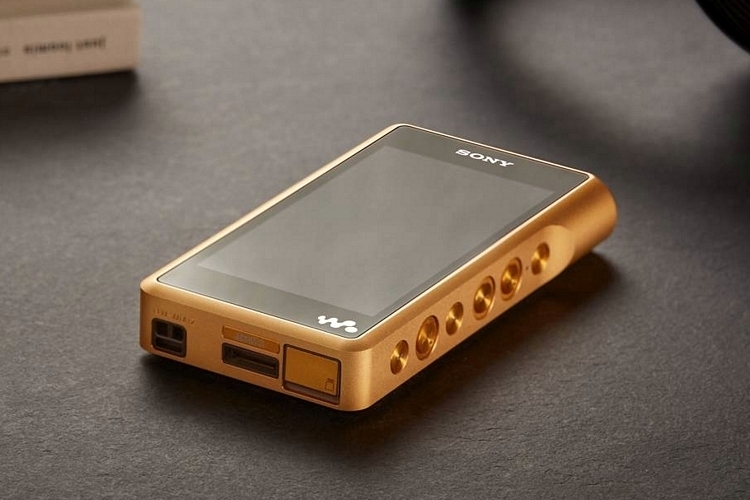
Sony Walkman NW-A45

With my sister deciding to ditch paying Spotify to stop interrupting her music playlists with advertisements, in favour of using an MP3 player to listen in comfort, we were surprised to find that a moderately-priced MP3 player, one that supports high-definition audio, no longer appears to exist, and there is no easy way to fill the gap created by this situation.

When I say “MP3” payer, it may be more accurate to say “personal media player” or, in my case, “Sony Walkman”, having owned an NW-A45 model since 2018 that plays my CD collection in a lossless format that streaming services would require me to pay a premium to access, providing they licenced the songs to begin with.

However, searching Sony’s website reveals that, if the bottom has not fallen out of their MP3 player range, the middle has: apart from low-end, low-storage devices that can only play lossy MP3 and WMA formats, and Android-based wi-fi-compatible models made with premium components that cost hundreds or even thousands of pounds, no mid-range device like my NW-A45 is available, with “Out of Stock” messages  for these being repeated on other online stores to the point where I believe production may have ended. Perhaps Sony are concentrating on publishing and owning the music instead.

Searching elsewhere produced similar results: Amazon either had a number of cheap MP3 players, from unknown brands that give no indication of their quality, or expensive devices by Astell & Kern or Fiio, while UK store chains Currys and Argos had either a cheap in-house brand MP3-only player, or CD players that can play MP3-encoded discs.

Streaming has not killed off the demand for devices that plays the music people own, although I do wonder if some people who junked their records and cassettes in previous years have since deleted their MP3s in favour of streaming. Pretty much everyone has a device that fulfils the job of playing music files stored to it: their smartphone. Apple guaranteed this by adding lossless FLAC playback to iPhones in 2017; discontinuing their final iPod, the iPod Touch, in 2022; and consistently increasing the available internal storage of iPhones into terabyte range. The next question is how to play the files: do you want the Apple Music app to access and subsume them, or play them from “Files”, which lacks the functionality of the dedicated app, or download a third app to keep things separate? 

This circles back to the desire for a dedicated device, and why I have not downloaded my FLAC files to my phone yet. For all that a phone can do in software, and most can do most things well enough, having a dedicated device geared to produce an optimum experience for a specific task is still appreciated where they can be found. The hardware in my Sony Walkman was made like you expect a decent hi-fi system to be made, instead of like a computer that can impersonate one. 

But I know I have not been using my Walkman full-time. I have referenced here a few times that I have used YouTube to listen to music, trading the quality of the audio for convenience, listening to music ad-free there being a by-product of paying to remove ads from videos. In some cases, those songs have been uploaded unofficially by any old person that had their own copy, so I have now found myself recently tracking down and buying CDs of those songs, so I no longer miss out on the quality I am currently sacrificing. Do I save those to my phone or Walkman, and will do so push me to use one or the other in future?

I am prepared to admit that this may all be just me, that I want something that doesn’t exist. But it used to exist.

06 December 2020

I'M RUNNING THROUGH THE WILD LANDS [272]


As I have previously talked about here, here, and here, I cannot leave the house without my Sony Walkman, and I still buy Compact Discs. I may still listen to music online, but if I find myself coming back to the same songs, either by MP3 or on YouTube, it is time to buy them on CD so I can hear them with better sound quality, preserving that in FLAC format on my Walkman without losing a single note – well, it makes sense to me anyway.

I have a number of CDs I need to transfer, and once that’s done, I can spend the rest of the day listening to them:


Yellow Magic Orchestra (YMO): “Yellow Magic Orchestra” / “Solid State Survivor” / “X∞Multiplies” / “BGM” / “Technodelic” / “Naughty Boys”

After uncovering the story behind the song “Behind the Mask” [link], I continued listening to Yellow Magic Orchestra, and I have come to the conclusion that YMO may possibly be one of the greatest bands ever, and that the history of electronic pop music in the Western world cannot be properly understood without them. Their original self-titled album may have been intended as a one-off critique of Western interpretations of Eastern culture, but what they did to Martin Denny’s exotica piece “Firecracker” appears to have kick-started the use of sampling in hip-hop, while their second album, 1979’s “Solid State Survivor,” is a progenitor of both techno and the cyberpunk genre. When the iconic Roland TR-808 drum machine was released in 1980, YMO used it first. Since coming across the band, I have been overcome by the sheer infectiousness of their use of electronic sounds, their driving bass, the tight rhythm, and relentless pace, and their humour: one song starts with what sounds like a rubber duck being squeezed, before the rhythm and a pub piano comes in, and it just happens to be called “Absolute Ego Dance” as well. Of course, I have bought their first six studio albums, because it was inevitable.


Adam Lambert: “Velvet”

I was a fan of Adam Lambert before I heard him sing, but I prefer him singing his own songs than those of Queen. That said, UK radio never plays his songs, as far as I know, so I have only ever heard him on CD, and his latest album made this more difficult. “Velvet,” harking back to funk, rock and glam, was first released as an EP in September 2019, subtitled “Side A,” so I thought I would wait until “Side B,” or a whole album, came along. Six months later, it arrived, but so did Covid-19, and I forgot about it until August 2020. In short, the funkier sound on “Velvet,” and the more forthright lyrics, is what Lambert has needed: his voice now has the more mature, fully realised sound, and songs that no longer have to allude to anything.


The Edge of the 80s

This is another of those cheap £5 CD compilations that you find in a supermarket (which I previously talked about here) that turns out to have very good mastering, while also being another chance for me to mop up any new-wave and pop tunes I might be missing from my Walkman, like “I Know What Boys Like” by The Waitresses, “Mexican Radio” by Wall of Voodoo, and “Icing on the Cake” by Stephen “Tin Tin” Duffy – I’m not likely to have come across these songs unless I already knew of them, so the ability to surprise ifs worth the cost of admission.


You Are Awful... (Showbiz Comedy Titbits of the 60s and 70s)

The only second-hand CD I have bought recently, I sought it initially for two songs seemingly only found here: “Freezin’ Cold in 89 Twoso” by Mike Reid (discussed when I talked about the “CheapShow” podcast [link]), and “Boiled Beef and Carrots” by Lenny Henry. Comedy songs are miscategorised as novelty songs these days, a fault that can be laid at the feet of Hilda Baker & Arthur Mullard’s version of “You’re the One That I Want,” but then there are songs that defy categorisation altogether, like “Dance with Me,” by the ITN newsreader Reginald Bosanquet.


All Time Greats: Quincy Jones / Bill Haley & His Comets

Universal Music have released a number of albums compiling 1950s and 60s artists like Ella Fitzgerald, Chuck Berry, Fats Domino, Tommy Steele and Billy Fury, under the “His Master’s Voice” label. If I come across any of these, I will look for them, especially if they were as cheap as I found these collections - £5 for Quincy Jones, and only £3 for Bill Haley, perhaps a symptom of fewer people buying CDs, the comparative ease of releasing pressed pieces of plastic, and a need to keep making money from your back catalogue through a continuous process of remastering and rereleasing. The Bill Haley collection was worth buying for historical interest – they helped popularise rock and roll, but they were surpassed by Elvis Presley, Little Richard and many more – while Quincy Jones’s work as an arranger and producer is wide-ranging and does not disappoint, so the chance to hear more of his big-band recordings could not be missed. Jones was also the producer that alerted Michael Jackson to YMO’s “Behind the Mask,” which is where we came in.

01 March 2020

IF YOUR MEMORY SERVES YOU WELL [224]


As previously discussed, I like to prefer my own copies of songs and albums instead of streaming them. To that end, my Sony Walkman – I also insist on having my own dedicated music player, instead of just using my phone – is required to hold my CD collection, which was founded in 1996 with Alanis Morrissette’s album “Jagged Little Pill.” Right now, my Walkman holds six THOUSAND, six hundred and ninety-nine individual tracks, with some CDs left to transfer. 

There are duplicates in that total number: I have two copies of Madonna’s “Express Yourself,” two of Devo’s “Working in a Coal Mine,” and three of “Love Potion No. 9” by The Clovers. This is due to a small indulgence I make every so often: buying those cheap CD compilations you find in supermarkets, with titles like “100 Hits: The Best 80s Groove Album,” or “Now 100 Hits – Forgotten 90s.” These collections are usually made up of four or five discs, come in a cardboard sleeve, list no more than track names, artists, song writer credits and copyright information, and will be sold for no more than seven pounds, usually averaging at £5.

This is not simply a case of bulking out my CD collection. For one thing, outside from specialist shows and online streaming, “classic hits” or “gold” radio stations are moving away from older songs – the famous New York station WCBS-FM no longer plays songs from earlier than 1970, and has started playing tracks from the 2000s. There is also a nice feeling to find that a song you considered downloading, like “Good Stuff” by the B52s, turns out to be a song you owned after all.

I mostly prefer buying CDs over downloads due to cost. I may only spend 99p, or 79p, on a single track when a CD is very difficult to get or, in the case of Graham Gouldman’s soundtrack to the film “Animalympics,” it was only ever available on vinyl. However, so long as I can find about six or seven tracks on a compilation that I would consider downloading, I will buy the CD – I will eventually listen to the other seventy to ninety songs anyway, or discover a new favourite among the ones I didn’t realise I already had.

To illustrate, my most recent purchase of this kind was “The Hits Album: The 60s Album,” a four-disc, eighty-song collection from Sony and Universal. Seven songs will put me ahead of iTunes, although the CD quality, greater than MP3 and AAC, has already done that:

“Space Oddity (Deram Version)” – David Bowie: made for a promotional film Bowie made while at his first record label, but not seen or heard until 1984, this feels like a demo of the version everyone knows, recorded four months later, that sounds far more layered, and more confident. It is a moment in time, one that would have dismissed Bowie as a novelty act if it was heard at the time.

“This Wheel’s On Fire” – Julie Driscoll, Brian Auger & The Trinity: also known as the theme tune of “Absolutely Fabulous,” for which Driscoll sang with Jennifer Saunders’ husband, Adrian Edmondson.

“Tainted Love" – Gloria Jones: Soft Cell and Marilyn Manson still have nothing on the original, faster version.

“You Don’t Own Me” – Lesley Gore: a song whose message of emancipation survived its being used in ads by Armani and House of Fraser.

“The Name Game” – Shirley Ellis: Leigh, Leigh, bo-lee, bo-na-na, fanna fo fee, fee fi mo-me. Leigh!

“The More I See You” – Chris Montez: searching the lyrics brought up the Michael BublĂ© version first. Not everything needs the big band treatment.

“Cinderella Rockefella” – Esther & Abi Ofarum: why not?


02 June 2019

BUT I’M NOT LETTING YOU OUT OF MY SIGHT [178]


Never underestimate the toughness of a Compact Disc. I’m not talking about the episode of “Tomorrow’s World” where one still plays after Kieran Prendiville smeared jam on it, because that never happened – a report on the BBC’s “Breakfast Time” showed someone doing that with honey, while Prendiville was presumably safe at home in bed.
What I am talking about is owning a CD playing as perfectly as when it was pressed in 1987, a testament to the error-correction technology built into CD players as long as forty years ago, and the record company printing instructions on how to care for it inside the cover.  
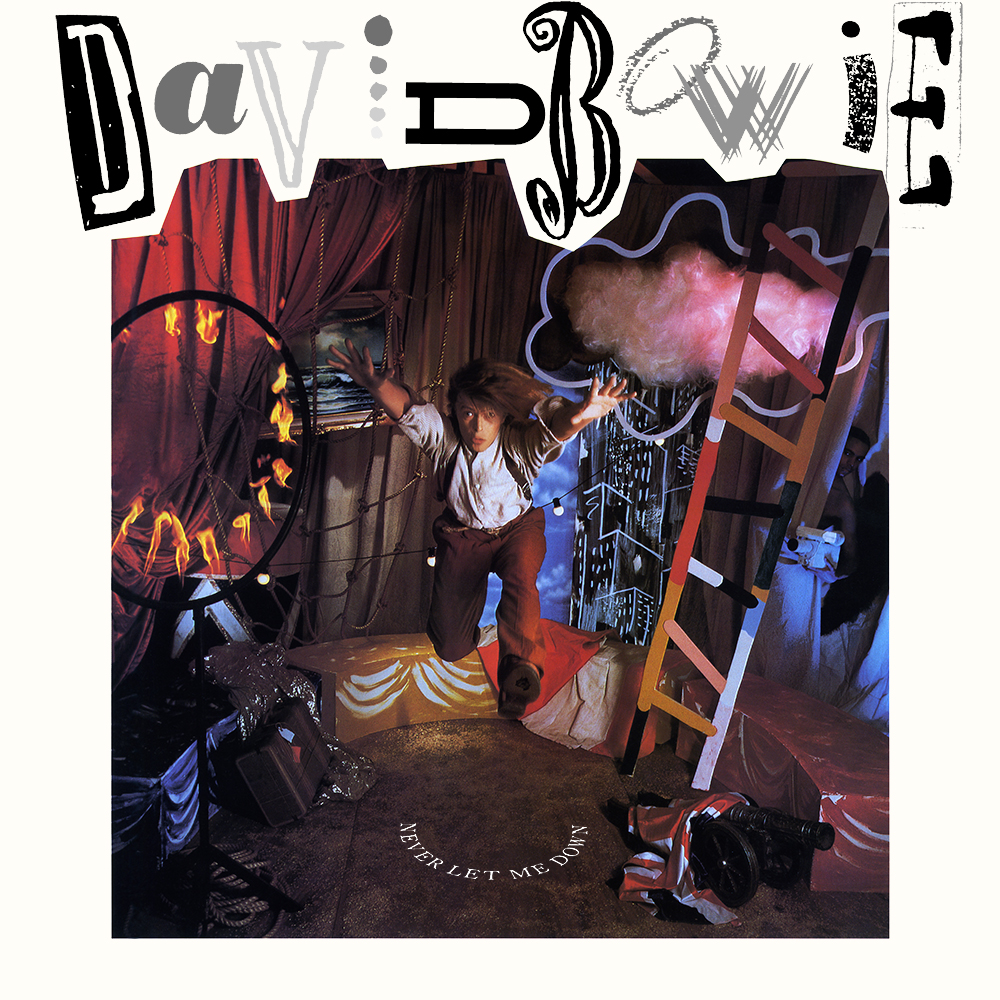
Why do I have a CD as old as this? It is because David Bowie disliked a song on one of his albums so much, it was deleted from all future releases of it, even after his death. Its only other release was a rare promo record in the US, before the record label decided not to release it as a single. 
The song is named “Too Dizzy,” and I quite like it.
When David Bowie released "Never Let Me Down” in 1987, it became one of his biggest-selling albums. Having scored a phenomenal hit with the “Let’s Dance” album, resulting in a scramble for bigger stadiums than usual to play the Serious Moonlight tour, “Never Let Me Down” needed to play to a much wider, much broader audience than would have taken in Major Tom, Ziggy Stardust, and the Thin White Duke.


However, “Never Let Me Down” became one of David Bowie’s least regarded albums, particularly by Bowie himself, who described playing to the broader crowd in the 1980s as his "art-school Phil Collins" period: if the audience should be at a Phil Collins gig, then what was he doing? Like “Let’s Dance,” and 1984’s “Tonight” album, “Never Let Me Down” is less the work of “David Bowie,” which remained a stage name throughout his life, but more the fit, healthy and perfect David Jones, about to get his teeth fixed.

"Never Let Me Down" is the most commercial album David Bowie ever released, in that its polished, smoother sound could have come from other 1980s artists. Its synthesised sound dates the songs, and is reminiscent of Bruce Springsteen's "Born in the USA" album – “Beat of Your Drum” sounds close to “Glory Days.” Lyrics are concerned about social problems - "Day-In Day-Out" talks about poverty, while "Time Will Crawl" deals with ecology and nuclear paranoia after the Chernobyl disaster. Oh, and the actor Mickey Rourke does a rap on one song too - on a David Bowie album...
If anything, "Too Dizzy" is a welcome breeze, following the statement on Margaret Thatcher that was “87 & Cry.” A very upbeat song about 1950s teenage jealousy, and apparently a throwaway song written to see how Bowie worked with instrumentalist Erdal Kizilcay, “Too Dizzy” could either be seen as a breather from the socially aware songs on the album, or a distraction from them – that Bowie was surprised he left it on the album suggests the latter.

With a sound that demands to be played on big speakers as loud as possible, ”Never Let Me Down” feels good on the surface, and is worth a listen in the mood for a hard slap of Eighties, but it doesn’t feel like a David Bowie album. Bowie had always intended to re-record the album at some point, and the group that did so in 2018, for the “Loving the Alien” box set, had been chosen by Bowie before his death. The new version of the album sounds more stripped back and folk-like, more strings and brass in place of synthesisers, which mostly benefitted “Zeroes,” a song about the music of the late 1960s – you can hear the Mellotron now. However, Erdal Kizilcay has been left out of the album entirely, including “Too Dizzy,” and was considering a lawsuit if his arrangements were used without credit or compensation.
Would “Too Dizzy” have fitted among the re-recorded version of “Never Let Me Down”? It has a very peppy sound, with lots of saxophone, so making any change to that would be reductive, even if it would make it fit more with the rest of the album. Perhaps the song could be released as a separate song, but to prevent its release in any form just seems strange.
For me, there does come a point where, if you have put something out into the world, then change your mind on how you think about it, you can't then decide it didn't happen, especially when it really isn't that bad. No wonder Bowie finished the 1980s by submerging his ego in the hard rock of Tin Machine for a while.
I still love David Bowie and his songs, but rock gods are not infallible.

20 January 2019

MAKIN’ FLIPPY FLOPPY, TRYIN’ TO DO MY BEST [146]


So, there I was, looking at the post-Christmas clearance shelves in WHSmith, when it stood out like a sore thumb, that had then been hit by a hammer: a pack of ten 3.5-inch floppy discs, brand new, for £1.99.
The Proustian nostalgia took over: in the days before broadband internet, and when I was studying for my degree, I would download articles from the internet, or more often only the text of a web page, then take a pile of floppy discs home and read them there. I also discovered the Pop Art painter Keith Haring at this time, and still have low-resolution GIF files of his pictures saved from sixteen to seventeen years ago. However, my first encounter with the floppy disc was as part of moving from an 8-bit computer like the Acorn Electron, requiring you to learn BASIC commands to load programmes from cassette tape, to 16-bit models like Commodore’s Amiga line where, once the disc was inserted, the computer knew what to do, and got on with it.
Since then, the nature of computing has changed again, and the achievable ability of a floppy disc, with its maximum 1.44 Mb capacity, was left behind in another decade. Incomprehensible levels of data are flung through the air for every conceivable use. Picture and sound quality for video, music, photographs and apps have dictated the everyday levels of data we expect to have in our grasp – it doesn’t take many lines of code to make an app, but the level of graphics we expect is what takes up the space. If anything is using a floppy disc today, it is something that still has a use, despite something newer being available – something like an old word processer or oscilloscope - or because it is something completely outdated that people want to keep going, much like a Commodore Amiga, or one of those Sony Mavica cameras that had a disc drive inside them.

Of course, I bought the box of discs from WHSmith. I hadn’t seen one in all this time, mainly because I didn’t think they were still being made, but someone must be buying them. I could not find any evidence online that Verbatim, the brand on the box, had made these discs since 2016, which explains why some sellers on Amazon, eBay and the like think they could get away with selling the same box for £20 or more. Other sellers list the discs on their sites as “product unavailable,” most likely not because they no longer offer them, but after having realised they still were.

Now the discs are home, what use can I make of them? Almost none. Saving any picture or sound file to a 1.44 Mb space means you have to take something away from it to make it smaller. Saving a video is a complete non-starter. I took a picture of a disc for this article, and even after cropping it, it was still 2.7 Mb – the picture quality, not just the size, would have to be sacrificed.
Making a song fit a floppy disc was a crushing experience. I chose the one song that everyone appears to like, Toto’s “Africa,” which lasts 4 minutes 55 seconds in its album version. The FLAC version I have of the song, saved from CD without any loss of information, is 34.6 Mb in size – the bitrate is variable, but reaches a maximum of 983 kilobits per second (kbps). This is as good as you are likely to hear “Africa,” without paying extra for a new high-definition master released last year. To reduce it down to an MP3 file of only 1.12 Mb, but while keeping it in stereo, and keeping the same 44.1 kHz sampling rate as the CD, that 983 kbps is reduced to only 32 kbps – the result sounds like you have been placed on hold while on a phone call to your broadband supplier. Saving music to floppy disc is achievable, but at the expense of wanting to listen to the result. In fact, the version of “Africa” I created by converting it to MP3 loses so much of the original, I may be able to claim it as a derivative work, separate from the original.
In truth, only document files can realistically fit on floppy discs – a Microsoft Word document (.docx format) takes up thirteen kilobytes before you add a single word, but you could still fit an average-sized novel before space runs out – “Les MisĂ©rables” might need a second disc. In fact, saving a document of your passwords to floppy disc might be a useful encryption tool – who else will be able to read it? Just don’t save it to a format an Amiga can read.

17 December 2018

IT’S AUTOMATIC, IT’S SYSTEMATIC, IT’S HYDROMATIC [140]


So many ways have been used to get music, TV and films into the home over the years, but there is a reason I am going to talk about Sony’s U-Matic here, apart from it being the world’s first video cassette: it is the nexus point of all that has been, and all that remains, in the last fifty years of audio-visual formats, and that isn’t hyperbole either.
U-Matic, named after how the tape was threaded around a large chrome cylinder that contained the record and playback heads, was first shown off as a prototype in October 1969, and went on sale to the public in 1971, beating Philips’ VCR (Video Cassette Recording, also known as N1500) and Avco’s Cartrivision by a year. Home video recorders were already on sale for nearly ten years by then, but these were open-reel devices, not unlike reel-to-reel audio recorders – U-Matic simply encased the tape in an anti-static cassette, making it easier to handle. Like the EIAJ standard agreed among open-reel machine manufacturers, Sony also persuaded other companies, like Panasonic and JVC, to agree to make their own U-Matic machines.
However, for all the ease the format gave the general user, they were still ruinously expensive to buy, approaching the price of a small family car. However, businesses, schools and colleges could afford them, which caused Sony to move their efforts towards them – the “VO” prefix on the machines’ model numbers already stood for “Video Office.” The failure to get U-Matic into homes led Sony to develop the smaller Betamax format, and much has already been written about the format war between it and VHS, ironically developed by JVC, with help from their owner at the time, Panasonic.


Holding a U-Matic tape in your hands defines “industrial.” While a smaller E-180 (3-hour) VHS tape weighs 195g, a 60-minute U-Matic tape weighs 505g, and that is mostly the tape: while VHS runs at a maximum of 1.3 inches per second (PAL region, Short Play), using tape half an inch wide, U-Matic’s three-quarter-inch tape runs at 3.75 inches per second – 60 minutes is all you can get into the case, unless you make the tape itself thinner. However, more tape per second means higher quality, and rather than people at home using them to record TV programmes, the programme makers themselves were using them instead.
Until U-Matic, if you wanted to go out and record a news report, you needed to take a 16 mm film camera with you, which would have to be developed before you could edit it and show it to anyone. This had begun to change slowly – Sony had developed a “Portapak” system that used open-reel tape, but once the U-Matic S Type (for “small”) cassette was developed, Electronic News Gathering (ENG) took off in the United States from the mid-1970s. It did not matter if the picture was less detailed than film, it did not matter if U-Matic had a problem with making the colour red too saturated, and it did not matter if the S Type cassette only held 20 minutes at most – making the news became easier and faster, and did not need as many people to make it work. It took another ten years for ENG to become commonplace in the UK, as unions argued it put too many jobs at risk – the BBC took a film developing unit to the Falklands War – but technology was moving on.
As UK TV news began using ENG, other formats were becoming available, and even Sony had a replacement for U-Matic: while the cheaper and more convenient VHS beat out the technically superior Betamax, Sony simply reworked their second cassette for the professional sector as well, creating Betacam (later Betacam SP, later DigiBeta). While these became the industry standard, Sony still supported U-Matic, because companies still used it: there is evidence that films like “Star Wars Episode III: Revenge of the Sith” (2005), and the Studio Ghibli film “Ponyo” (2008) had clips issues to TV stations in the US using U-Matic tapes. I couldn’t find the date for when Sony stopped supporting U-Matic but, considering they only stopped making Betamax cassettes in March 2016, it can’t have been that long ago.
While U-Matic was central to the development of video, it was to audio as well: before the Compact Disc, video tape was the only way of recording music digitally, and U-Matic was often used for mastering music this way in the 1970s and 80s, once connected to early PCM adaptors. Because the digital signal would be encoded using the number of lines in a TV signal, a combination of the number of lines that make up the picture, and the number of audio samples made up one line, meant that a total of 44,100 samples could be recorded per second, otherwise known as 44.1 kHz – CDs use the same rate for this reason, and practically everything else has since.

05 November 2018

YOU TAKE YOUR TIME AND TAKE MY MONEY [134]


It took me until October 2016 to subscribe to Netflix, but it didn’t take long from then for me to discover my problem with it.
I had never seen before the 1978 version of the film “Invasion of the Body Snatchers,” with Donald Sutherland, Leonard Nimoy, and a very early appearance from Jeff Goldblum, and I knew I would want to watch it again... until Netflix removed it, possibly after their rights to it expired. The same was also true of “Psycho II” a film far better than that title suggests, and one that disappeared before I could get to it.
In the end, I did the obvious thing – I bought both films on Blu-Ray, so I can watch them whenever I want. From the same publisher, I now also have a copy of the 1980 Italian horror film “Incubo cilla cittĂ contaminata” (English title: Nightmare City), something Netflix was never likely to have. In fact, when I came across the interesting science fiction film “Cherry 2000” on Netflix, I made sure I had my own copy in case it also went away.

For me, it helps to remember that subscription services like Netflix, Amazon Prime, Spotify, Apple Music, Audible, Kindle, and so on, are only effective substitutes for the places you used to hire the same works from: video hire shops like Blockbuster, and libraries – my local library was especially good for foreign films, but I haven’t been there in a long time. You cannot use it as a substitute for your DVD collection, or your music collection, or even your book collection, unless you are the sort of person that lends your stuff to friends without expectation of getting them back.

A couple of weeks ago, I took my Sony Walkman out of my pocket, and my nephew had asked if I had Spotify on it, and if it was connected to the internet – in both cases, the answer was, “it is not a phone.” I had a Spotify subscription once – it came with my phone contract, but I never started paying for it once that was over. Faced with the choice of spending the cost of a CD album with access to a million tracks, I decided I would rather buy the CD I wanted.

Like my DVD collection, I have up to twenty years of carefully curated content at my command, sometimes with a story behind them. For example, Freddie Mercury’s 1985 solo album “Mr. Bad Guy” is out of print, and is quite expensive to buy as a result, unless you researched it and found a reissue as part of a compilation in 2000, and was able to find a copy that way. There is also David Bowie’s album “Never Let Me Down” – Bowie hated the song “Too Dizzy” so much that it is missing from all subsequent releases after 1987, but I am enough of a Bowie fan to find it for myself. My copy of the horrendous Raquel Welch / Mae West film “Myra Breckenridge,” out of print since 2005 and selling for upwards of £40 second-hand, was the result of a speculative bid on eBay, and being lucky with the price: £1.99. This is before I get into all the books I had to buy from the United States, because they’ll never have a Kindle release instead.

There has been much said recently about the impending closure of the arthouse film streaming site FilmStruck (known as FilmStruck Curzon in the UK), and how it reduces the curated spaces for content online. I had almost cancelled my subscription to it due to lack of use, and then its demise was announced. Be assured of this: demand drives the market, and the films will be back again. However, I already have enough stuff like “Citizen Kane,” “Grey Gardens,” “The Blob” and Harold Lloyd’s back catalogue to keep me going until then, because my content is, well, mine.

21 May 2018

AND WHO WOULD HAVE THOUGHT, IT FIGURES [110]


Nine months after promising myself that I would upgrade my iPod nano to a Sony Walkman [link], I have done exactly that, when the iPod stopped working for a few days. I have now launched headlong into the devotional task of loading my CD collection of twenty-plus years onto it – the first purchase, from Virgin Megastore in Portsmouth, was of “Jagged Little Pill,” by Alanis Morrissette, and “Now 35.”
Apparently, my NW-A45 Walkman can play “HD Audio,” which Sony defines as anything above CD quality. I had not looked into this before buying it, as my main intention was to find something that can accept a 200 Gb micro SD card – Sony says it can take a card with ten times that capacity, but none has been made yet. However, if this Walkman is expected to beat CD quality, then I can leave MP3 behind: in 2015, Ryan Maguire reconstructed a version of Suzanne Vega’s atmospheric song “Tom’s Diner,” used in the 1990s as a control when testing the “lossy” codec that compresses sounds into MP3 format, that only plays the sounds that were, in effect, discarded – enough sound is left behind for you to still identify the song as “Tom’s Diner.”
After some research, I now have the definitive advice for converting your CDs, which I will be using on my entire collection: only use FLAC (Free Lossless Audio Codec) format, setting it to 44.1 kHz 16-bit if you have the option, because this matches the settings of the CD.


The “lossless” element of FLAC, a format that has been around since 2001, means all the available information on your CD is being retained. Because of this, you do not set a bitrate of kilobits per second like you would with MP3, because that rate will change with the song. Using the first CD I converted, “Hot Potatoes: The Best of Devo,” there is a difference based on the type of song: “Devo Corporate Anthem,” a simple fanfare, reaches a maximum of 655 kbps, while “Through Being Cool,” a more involved, complicated, recording has a maximum of 871 kbps. A few Bee Gees tracks I have break the 1,000 kbps barrier, louder and richer than the Devo recordings, which proves what you can still get from a CD if it has been mastered correctly.
Put in as simple a manner as I can, CDs use a 44.1 kHz sample rate because it is twice the 20Hz to 20 kHz range of the human ear – it also matched the highest usable rate for recording digital audio on video tape - while the 16-bit pulse-code modulation used to digitise the sound, the latest development of a technology initiated to reduce the noise in long-distance phone calls, means the amount of detail picked out by the technology is more than “enough,” with a grove that won’t wear out like vinyl will.
What this does mean is that, if you have a CD that is “24-bit remastered,” this is talking about the digital master used to make the CD, which will still be 16-bit, even if more detail is available to sample. As an example, I have a 24-bit remastered copy of David Bowie’s album “Never Let Me Down,” but I also have the original 1987 release, because Bowie hated the song “Too Dizzy” enough to leave it off all subsequent reissues. The song “Beat of Your Drum,” with a chorus sounding like Bruce Springsteen’s “Glory Days,” is 34.3 Mb in size when taking a FLAC copy from the 1987 album, but the 24-bit mastered version raises this to 36.6 Mb – the difference is there, but you need a very quiet room to start with.

But with Sony highlighting the enhanced “experience” of HD Audio, the extra resonance adding to the recording, I feel like I have already achieved that, for now, by leaving MP3 behind, regaining the lost layer of sound from my, in some cases, decades-old CDs.

04 August 2017

WALKING ABOUT WITH A HEAD FULL OF MUSIC [67]


Last week, Apple announced they were withdrawing the iPod shuffle and nano after twelve years on sale. In 2005, they were the latest extensions of a product line aiming to cram your music collection into your pocket, definitively doing away with cassettes, discs and vinyl for a generation of people.
And now, over a decade later, vinyl has come back, CDs remain on general release, nostalgia over cassettes exist, and MP3 players have been replaced by smartphones and streaming services like Spotify and, crucially, Apple Music, renting music instead of selling, and not taking up space on devices or on shelves.
Meanwhile Sony, creators of the Walkman personal stereo system in 1979, using their existing 3.5 mm headphone jack they created fifteen years before, will carry on regardless, having kept up with their customers’ needs, changing from cassette players to CDs, DAT, Mini-Disc, Video 8, MP3, and lossless audio, bringing out new formats as the needs arise.
This new situation may be suited to many people’s needs, but not mine: I was given free access to Spotify with a previous phone contract, and bought only a few MP3s of songs in that time, but when I found their rights to stream songs by Prince had ended, I did not begin to pay when the contract ended. (Prince is now back on Spotify, but still missing “Fury,” one of my favourite of his songs.)

I have owned an iPod nano for nearly five years, the latest in an almighty long line of personal stereos, radios and MP3 players, and it has been the most flexible and durable device of them all. Apart from storing nearly two thousand songs, with many more via FM radio, it has been dropped, rained on, thrown, and lost in the snow – earlier this year, a sign was put up on the way out of work, alerting the owner of “Leigh Spence’s iPod,” the name I gave the device to find it on iTunes, to call into the nearby police station.
The relief at getting my iPod back was palpable, even though I would not have lost a single song if I never saw it again. Being without the ability to hear my favourite music exactly when I need it speaks to the deep personal bond we make with music and their artist, be it David Bowie or the Spice Girls. The devotional task of loading all of Bowie’s studio albums onto my iPod, having dug deeper into his music following his death, while doing the same with Kate Bush’s work after being mortified at not owning any of it, can be as special as making a mixtape once was – playing and sharing love of music, to do yourself, and your friends, a massive favour in times to come.
But now, with my iPod filled to its 16Gb capacity, no next-generation model to come, and the larger iPod Touch really just an iPhone without the phone (or FM radio), where can I go next? The only logical answer is back to where it all started: Sony.
Looking for a film or album to buy in HMV, I know that Sony had a hand in creating all the formats I can buy, including Blu-Ray, but not vinyl (except perhaps the turntable to play the discs on). It also shouldn’t be a surprise music labels like Columbia/CBS, Arista, RCA, and Epic, and film companies Columbia, TriStar, MGM and United Artists, are all owned by Sony – this innovative new technology isn’t going to sell itself.
There is one Walkman I would like: a copper body, premium components, and 256 gigabytes of memory. Does anyone have a spare three thousand pounds?

16 July 2016

IT’S ENOUGH TO DRIVE YOU CRAZY IF YOU LET IT [8]


I know it is the twenty-first century, but that didn’t stop me from buying a typewriter. My nephew recently bought a second-hand one – of course, there are no new typewriters anymore – which reminded me of the one we once had at home, before computers overran it over twenty years ago. Looking at examples on eBay, I wound up bidding on a grey and brown Litton Imperial Mercury, a grand name for what used to be a very ordinary machine.
Once I make room for it, how useful will I be when using it? The challenge will be not to make a mistake, and to resist throwing the paper away to start again. If I slip on the wrong key, I should find a way of justifying the mistake, and see where that takes me. Or, I could just let rip:
“The quick brown fox jumped over the lazy dog, and ran to Currys to steal a food blender. He was arrested, and was made to speak the alphabet in a loud, clear voice. ‘A’, the fox said, followed by ‘B,’ then ‘C.’ By ‘J,’ the fox broke. ‘All right, I confess! The kids wanted smoothies, but they are so expensive to buy…’”
Anyway, buying a typewriter also means I can hear that particular clacking of keys and metal rods, a background to life and industry, that is just not heard anymore. This is not nostalgia, as I have grown up with computers, just as vinyl records are mostly being sold to people that grew up with CDs and MP3s. Old technology, if it works, does not have to be rendered obsolete or dead.
I imagine receiving a letter typed on a typewriter will mean more than one printed from a computer: there is still an element of craft on the part of a writer, not as much as writing by hand, but enough of a change to make a difference to the reader. Anyone receiving a letter from me will now know what to expect.
From this, you might expect using a typewriter would give me an ASMR (Autonomous Sensory Meridian Response), the curious, dubious abbreviation now given to the tingling in the back of your head or neck you get in response to a sensory stimulus of some sort.
I only discovered a name has been given to this feeling when, after researching the typewriter I just bought, I found YouTube videos consisting solely of people typing letters, just for the viewer to sense the sound, and the physical act, of the typing. I’m sure it won’t be so great if you had the machine in front of you, engaged in a duel to harness the written word to create a work of great meaning, all the while trying to spell properly. For me, the feeling of release may only come when I stop using it.
Having said that, I am looking forward to getting started!
Meanwhile, the fox has been convicted of theft, and is currently awaiting sentencing.