YouTube has become my main portal for listening to music, apparently by mutual agreement.
I still own a Sony Walkman MP3 player, holding thousands of songs in CD-quality FLAC format, alongside the CD themselves, but I mostly have only my phone while on the move, along with the headphones that connect only to that phone. I also still subscribe to YouTube Premium which, in addition to removing advertising from around all videos, allows uninterrupted listening while my phone is in my pocket. For someone who once said that music is their drug of choice, this is a beneficial arrangement: Google gets my money, and I get unlimited music in good enough quality against the outside noise.
YouTube’s 2024 Recap pegged my listening habits as “The Time Traveller”: “my listening traversed the decades, melodically exploring eras all year long”. The words “lively”, “giddy”, “hopeful” and “rock” were given as overall descriptors. Musical moods were classified, in descending order, as upbeat, uplifting, happy, fun and energising. I was also in the top 0.1 per cent of listeners to Sir Elton John, with Madonna, XTC’s psychedelic pastiche project The Dukes of Stratosphear, and Tears for Fears not far behind. I found myself taking pride in what the data proved and affirmed.
Despite a separate YouTube Music app has been available since 2015, I only use the main app to listen to songs like they were regular videos. Non-music videos are also mostly watched via my television, where I also only get recommended videos based on my subscriptions list, once I blocked several news channels first. This has created, for the YouTube app on my phone at least, an algorithm trained only to recommend music to me – looking at the main page of the app on Friday 4th July 2025 recommended songs to which I had previously listened, songs like them, songs used in other videos I had been watching while using YouTube on my television, or songs I haven’t listened to in a while. The only deviations from this are a strap of the top news stories, from the channels remaining unblocked, and a video titled “Analog[ue] tricks that make a song great”, in case I want to try it myself.
The YouTube algorithm has been so useful to me that the music recommendations it had made has become articles here: “Breaking Down Barriers”, Sir Elton John’s opener from his album “The Fox”, came from recommending the videos made for that album, while a link to his buried psychedelic album “Regimental Sergeant Zippo” alerted me to its existence. My love of the Japanese synth pop group Yellow Magic Orchestra (YMO) was triggered by one track, “Rydeen”, being used as the background to a video of computer-generated animation. I may have heard “Take Me Home”, from Phil Collins’ enormously successful album “No Jacket Required” on the radio first, but listening to it on YouTube led me the ultra-infectious songs “Only You Know and I Know” and “Who Said I Could”.
I haven’t created a single music playlist in all the years I have used YouTube, only using the generic “Favourites” playlist, where songs sit among regular videos. I find myself sometimes going along with the mixes generated automatically by YouTube if I see songs I want to hear, but I most often make last-second decisions on what to hear next, sometimes acting upon the app’s suggestions. A recent lunchtime at work ran as follows: “Injected with a Poison” by Praga Khan (heard on the radio), “Break Out” by Swing Out Sister (YouTube suggestion), “Fire Brigade” by The Move (suggestion, heard previously), and “Hip to Be Square” by Huey Lewis and the News (suggestion, heard previously).
In all these cases, it was down to personal discretion as to which versions of the songs I heard. From searching artist and song names, do I then hear the official upload made fifteen years ago, or the alternative from an unknown channel from only three years ago? Sometimes, you must wade through numerous uploads to find the official one or settle before you get there. Age of video aside, the highest quality of sound available on YouTube, 256 kbps in AAC format, is equal to an iTunes download, and while I have gone on to buy a CD release to have the better quality, like “No Jacket Required” and “Regimental Sergeant Zippo”, there are many cases where I am not there yet.
What I am finding myself increasingly doing is using YouTube for music at home as a shortcut over my Walkman – if everything is there, why go to my own library? If the quality is good enough for right now, why delay satisfaction until you get the best quality sound?
The recommendations themselves may also be of concern. I was recommended Emerson, Lake & Palmer’s version of “Fanfare for the Common Man” – the single edit, thankfully – but follows other recommendations from the 1970s and 80s: ELO, Swing Out Sister, Matt Bianco, Manfred Mann’s Earth Band, ABBA. The Carpenters, the theme to the BBC drama series “Howard’s Way”... Have I created a greatest hits radio station in my phone without realising, and should I consider it a problem?
This is why I always listen to the radio in addition to YouTube – you need to have someone share something new with you, because they won’t know what you have and haven’t heard.
Please see below for the script I used in completing this video:
Coming up, I take a fond look back on how I wrote a song about nostalgia, how it won a song contest, and why this is not case of “this is how _I_ did it” more than “is _that_ how I did it?”
[OPENING TITLES]
[TITLE: “How to Win a Song Contest, apparently” or “Don’t Take a Stand ‘til You Reach for That Landfill”]
Hello there. In May 2021, the “CheapShow” comedy podcast ran the second Urinevision Song Contest, following the success of the previous year’s event in substituting for the pandemic-hit Eurovision Song Contest. This time around, I had an idea for a song, and decided to enter, despite never having properly written, recorded and sung a song before. I effectively sent my entry to answer the question, “is this anything? Does this sound like something I should be doing?” I faithfully watched the ceremony live on Twitch, to see if I had made the shortlist, and I yelled “yes!” when “Nostalgia’s Gonna Get You” appeared as the ninth song out of thirteen, meaning my work would now be judged by a panel of thirteen comedians, actors and singers, and I would find out if I had embarrassed myself or not. But… that wasn’t the end of it.
[“RECONSTRUCTION” caption on screen, waveform in background, as Eli Silverman announces: “The winner of Urinevision 2021 is Nostalgia’s Gonna Get You by Leigh Spence.” I am as open mouthed as I can be.]
I was devastated. I genuinely was not prepared for this outcome, especially after hearing the other entries, songs like “Down at the Spoff & Pickle” by Ukulele Jon, and “Piss Crystals” by L.J. Goody, thinking how much more they fit the themes and energy of “CheapShow” as a podcast, and how much more professionally recorded the other songs sounded, at least to me. I do remember feeling incredibly confident for a while after submitting my song, but that was me thinking, “wow, I made a thing,” not “I’m gonna win this thing.” So, thank you to “CheapShow” for putting on a great show, and for the lovely shirt I won, featuring art by their in-house artist Tony Vorrath, and thank you to everyone for all the nice things they said both during the contest and online afterwards.
Before I go any further, I implore you to listen to “CheapShow” as it is a great podcast, and one I have written about at length. Hosted by Real Ghostbuster Paul Gannon, and pickle of destiny Eli Silverman, “CheapShow” rummages through the charity shops, the bargain bins, the thrift stores, the flea markets, the pound shops and record bins of the known world, to give you the treasure amongst the trash. It also has its own tie-in magazine and merchandise, which may itself be the subject of future discussion in another geneeration’s podcast. It is an absurdist comedy machine with an enjoyably filthy mouth on it, like Derek & Clive meets Blue Peter on the bus home from a night at the Cabaret Voltaire. It is a magazine show: you may have board games and charity shop finds one week, novelty records and weird soft drinks another week, celebrity guests or an audio drama with mad characters the week after – it’s great that there is a podcast I can download each week and not know what form it is going to take, other than in minutes and seconds, and you need to cherish something like that if you find it.
And so, in order to explain “Nostalgia’s Gonna Get You”, I must play it to you first, using the lyric video I created previously. I will be back in a moment.
[PLAY VIDEO]
I should say the reason I am playing the recording instead of singing it live is because…
Singing at my limit is a mountain to climb,
So I broke the lyrics up and sang two lines at a time.
…and edited it together. On the night of the contest, I did like how the presenters visualised the songs by using puppets. [Clip of ostrich.] Here is some of the reactions from the judges…
[Play selection of some, ending with response to Imran Yusuf: if you can pay for it, you can be my guest.]
I will say the response that made me happy immediately was from co-host on the night, Ash Frith: [“Who performed that, that was amazing!”] …I’m going to play that again. [“Who performed that, that was amazing!”]
There was only one rule for the Urinevision Song Contest: your song had to be between one and two minutes long. How I interpreted this was that I would need to fit as much song as I possibly could into two minutes, working out how many bars of 4/4 time I can get when using a hundred and twenty beats per minute, divided by two bars per line. Rather than entirely sounding like a maths exercise, my favourite Eurovision song, “Ding-a-Dong” by Teach-In, which won for the Netherlands in 1975, clatters along at such a pace that it doesn’t need all of the three minutes it was allowed. At the same time, Tony Christie’s song “Avenues and Alleyways,” the theme to the TV drama “The Protectors,” doesn’t have a chorus as such – Christie sings “in the avenues and alleyways” a second time, followed by an entirely new set of lyrics. Therefore, aside from a short intro and outro, I have three whole verses, a vast middle section to list nostalgic things, and exclaim “Nostalgia’s Gonna Get You” – I’ve only since realised I unintendedly wrote “nah-nah-nah-nah-naah-naah, nostalgia’s gonna get you!”
The music itself is kept very simple, performed in C sharp major to stretch to what should be out of reach, and to sing just slightly out of my range, but I deliberately chose instruments that evoked the 1980s: a drum machine, synth chords and a synth bass that jumped up and down by one octave to fill the sound. Far cheaper than spending a few thousand pounds on the real thing, Apple’s BandCamp lets you pick a LinnDrum, one of the first sample-based drum machines, and the machine most associated with Prince, from “1999” to “Purple Rain”, with “When Doves Cry” essentially being a LinnDrum featuring Prince. What also helps is that, if you choose the right drums, you can make a pattern that sounds like a clock.
The chords were played on my Yamaha Reface DX, a proper FM synthesiser like the original DX7, replicating the original Electric Piano 1 setting with the same glassy sound that characterises the era, as Yamaha sold thousands of DX7s to musicians who, apart from Brian Eno, used the same thirty-two built-in patches from piano to bass, to brass to marimba, because it was too hard to program.
I am absolutely happy to be compared to them, but I must admit I was initially perplexed by the comparison to Squeeze made by co-host and TV writer Paul Rose, aka Mr Biffo [“Cool for Cats” quote, followed by Depeche Mode.] My only reason for this was my having been so focussed and influenced during this process by the Eighties-est artist of them all, and a recurring name on “CheapShow”: Phil Collins. Yes, I own the sheet music to the “No Jacket Required” album. What happened was I was listening to a local radio station, Wave 105, on a Sunday morning, and after they played a jingle, there was silence, almost like they fell off air. When a song eventually started, it was the dum-da-da-dum-clap of “Take Me Home”, followed by, yes, chords played on a Yamaha DX7. Having since bought the album on CD, I think “Only You Know and I Know” may be one of the catchiest songs ever devised, even more than “Sussudio,” but what I did find were the demos that Phil Collins made of his songs – they are simply a drum machine, a DX7, and his singing almost in tongues to get the melody and the energy down before writing the lyrics. The simplicity of these demos was what I decided to go with in my finished song, but while I wrote the lyrics, I did have the sound of the Phil Collins demos in my head… [Imitate them using “Nostalgia’s Gonna Get You” tune.]
In terms of the lyrics, I intended to use my three verses to build up into a preposterous situation: start with giving into nostalgia, followed by something weird, then complete all-consuming hysteria – instead of “the greatest hits of yesteryear will do for you now,” it was originally “because there’s no hope for you now.” However, I had the final line “don’t take a stand ‘til you reach for that landfill” from the start as a line that sounds utterly bizarre by itself, but entirely in context by the time you get to it – that is why I was happy for how one of the judges, Tom Mayhew, reacted to it: [Tom Mayhew clip].
I felt it was easy to refer to liminal spaces, hauntology and Jacques Derrida in the song, as they have all been discussed on “CheapShow”, although I didn’t yet know there was a song by Scritti Politti titled “Jacques Derrida”. Dead shopping malls are almost a genre of video on YouTube as people film walkthroughs of places that were once safe and busy, rendered eerie and empty by changing times – while they can be perfect examples of places you have to pass through, but you don’t think that you should be there, I think watching them might be my version of ASMR. Having said that, “That vape shop once sold games on tape for my Spectrum Plus” was the hardest line to condense, and then sing – I only realised later that Sinclair made a computer branded as a Spectrum+, because I was originally working down from Spectrum Plus 2. I also originally wrote “once sold cassette games for my Spectrum Plus,” proving you need to be as clear as you possibly can – this was why I had to change “Birds Eye Potato Waffles, still alive”, which I like, to “Findus Crispy Pancakes, still alive” which I hate – it has to be dah-dum, dah-dum, dah-dum, not dum-dah...
The middle section was always meant to be a list, but I then had to find items that were a stretch to be nostalgic about, like Polaris, which was Britain’s nuclear deterrent at the time, maintaining a base in my home town, but then also had to rhyme with each other, like The Naked Gun and “Pebble Mill at One,” thanks to my pronunciation of “wun” instead of “won.” I loved how the BBC’s daytime TV show, a forerunner of “The One Show”, also made it into another song in the contest, “Watching Shit Old Daytime TV” by the Electric Chair Orchestra. By the way, I was meant to sing “didn’t die” instead of “still alive”, until I had to sacrifice the alliteration when I realised I was singing “die, die, die” all the way through.
My favourite verse is obviously the last one – once I worked out how to talk about the monotonous “rhythm” of the nightly news, the alternate 1985 of “Back to the Future Part II” came to mind very quickly, an easy way to say “what went wrong?” and retreat into the past. “Tomorrow’s World Is Cancelled” both means exactly that, and the fact that the BBC’s science show of that title ended in 2003, the same year that Concorde flew for the last time, as if our idea of what the “future” was, and where you would find it, had ended.
If I had one regret with the song, it was not following Stephen Sondheim’s rule of no half-rhymes all the way through, having left “sounds” rhyming with “around” in the first verse. I think, by that point, I had to stop writing, and put my pen down.
So, what happened next? The Urinevision Song Contest 2021 album is available to listen to and download on Bandcamp – I never expected to be found on the home of vaporwave, so that is mind-blowing in itself. Entering the contest was the best thing I could have done, it has been the highlight of 2021 for me, and if I ever do anything as successful or as popular again, I will remember that it started with “Nostalgia’s Gonna Get You” - it’s as simple as that.
What this experience also confirmed for me is that, within strict legal definitions, I can apparently sing, and I have music confirmed as one more outlet, one I intend on making much more of, after writing a new opening and closing theme for this show. [Closing theme starts.] All I know for sure is this: if you enter your song into a contest, and it moves someone to say [Ash Frith clip] “who performed that, that was amazing,” you must be doing something right.
Thank you for watching. Comment, like and subscribe to let me know what you think, and until next time, the nostalgia culture crisis continues at www.leighspence.net, the new home for dancing with the gatekeepers.
Original 1985 release - the orange tint is to indicate the energy of the music
I have been attempting to write a song, an entry for a competition, and I decided to write what I know: it is titled “Nostalgia’s Gonna Get You,” and crams in as many nostalgic references I can while still rhyming – Stephen Sondheim once said you should not leave half-rhymes in your songs, at the danger of giving your audience a fraction of a second of doubt. I also add in lines like, “if hauntology is your pathology,” and “if your kind of place is a liminal space.” For someone who has never properly attempted to write a song before, the result most definitely sounds like only I wrote it.
Naturally, the musical arrangement needed to be based in the 1980s. To that end, I used a Yamaha Reface DX, with its “LegendEP” preset evoking their DX7’s famous “Piano 1” sound, and constructed a drum track using sampled sounds from a LinnDrum machine, most famously used by Prince on the “1999” and “Purple Rain” albums – the drum line on “Let’s Go Crazy” sounds so much like a ticking clock, only a LinnDrum was going to be appropriate.
In learning how best to construct a 1980s pop sound, I found myself copying what Orson Welles did ahead of directing “Citizen Kane” – just as he watched John Ford’s film “Stagecoach” forty times, I wound constantly listening to tracks from a defining Eighties album, almost an archetype for the sound of that decade: “No Jacket Required,” by Phil Collins.
Released in 1985, “No Jacket Required” was Collins’s third solo album, but while his previous albums yielded, for me at least, one identifiable hit each – “In the Air Tonight” from 1981’s “Face Value,” and the Supremes cover “You Can’t Hurry Love” from “Hello, I Must Be Going!” (1982). His first US number 1, “Against All Odds (Take A Look At Me Now),” was made separately for a film soundtrack.
“No Jacket Required” had three hits I knew straight away: “Sussudio,” “One More Night” and “Take Me Home,” with a fourth that was used as a B-side, “Only You Know and I Know,” becoming a firm favourite, along with “Who Said I Would,” which sounds a little like “Sussudio” in the same way that “Sussudio” sounds like Prince’s song “1999”: you can hear the influence there. Collins had deliberately made a more dance-oriented album than before, in order to take himself out of his comfort zone, something that appears not to have been repeated, except with his next album back with Genesis, “Invisible Touch”.
2016 reissue cover
The five songs I mentioned all use FM synth keyboards, most obviously the Yamaha DX7 used on “One More Night” and “Take Me Home,” with arpeggiators filling in the sound like a rhythm guitar would in a band, and a punchy keyboard-based bass on “Sussudio.” The fuzz of analogue synthesis is replaced by the more glass-like polish of FM synth, which changed the overall sound of pop music until the advent of General MIDI and sample-based synths at the end of the decade. Despite its distinctiveness, it immediately dates any song made using these sounds, and creating a mood and moment from which nostalgia can be drawn when used again by other artists in the future (I hope).
There are also the distinctive sounds of certain drum machines: on “One More Night,” Collins programs the Roland TR-808, whose synthesised sound is so distinctive it gave its name to a group (808 State), and an album (Kayne West’s “808s and Heartbreak,” which uses it on every track). The other songs use the more sample-based LinnDrum and Roland TR-909, the hand claps of the latter being very prominent on “Take Me Home,” this song also demonstrating Collins’ use of these machines as a basis on which to provide more intricate drum arrangements.
Most importantly for me, the deluxe edition of “No Jacket Required” includes demo versions of “Only You Know and I Know,” “One More Night” and “Take Me Home.” Having also heard the demo of “Sussudio” elsewhere, these works-in-progress show that Phil Collins essentially improvised what is still his most successful album and, with over twenty-five million copies sold, one of the biggest-selling albums of all time. He laid the drums, switched on the arpeggiator, and poked out some chords from his DX7 – Collins’s liner notes for the album say, “I’m a lousy keyboard player, but I can make what I like to think is a ‘nice noise.’” He sings the melody for each song, but the words are not there yet, so he almost sings in tongues, with snatches of Ehglish, anything to get the melody recorded. But this is where the lyrics ultimately appeared: the line “One More Night” was improvised while listening to the rhythm of the TR-808, while the non-word “Sussudio” turned out to be a happy accident, prefaced in the completed song by “just say the word.”
It was heartening to hear how these songs turned out to be more spontaneous and personal than you think the mainstream music industry would allow. It certainly made me feel happier about my own efforts at writing a song. All I need to do now is see if I can sing a C sharp above middle C.
With my tastes in music saturated with synthesisers, Eric Clapton rarely makes my playlist, but I always make an exception for “Behind the Mask,” released in 1987. It is a rare Clapton song where the main drive is the synth chords and powerful drums, his own guitar playing used for extra flourish here, but the production is tight, and the call-and-response chorus, with the backing singers seemingly the ones in charge, is immensely effective.
I had never questioned where “Behind the Mask” came from, letting it stand by itself, but having stumbled across its origin, I am not only far more informed, I have a new favourite version of it too.
Two weeks ago, the YouTube algorithm suggested I listen to “Rydeen,” by the Japanese electronic group Yellow Magic Orchestra, itself sounding like a splinter group of the Electric Light Orchestra. I was already listening to music from a different Japanese group, the jazz fusion band Casiopea –in particular the tracks “Space Road,” “Midnight Rendezvous” and “Swallow,” all from their 1979 debut album, practically inspiring computer game music for the following decade – but “Rydeen” came up after its use in a different video I had watched. Yellow Magic Orchestra were influenced by Kraftwerk and Giorgio Moroder, but their use of synthesisers, sequencers and drum machines as a mainstream pop group at this still-early stage predated the development of synth pop and techno music in the 1980s.
Their eponymous first album, from 1978, sold well in the United States, but their second, 1979’s “Solid State Survivor,” on which “Rydeen” is found, sold two million copies worldwide. In Japan, “YMO” were as popular as when Beatlemania hit the US in the 1960s, even though they initially started as a joke band satirising Western ideas of “exotic,” “Oriental” Japanese music – a sarcastic cover of Martin Denny’s “Firecracker” ironically became a major hit in its own right, reaching number 60 in the US Billboard singles chart, and number 17 in the UK chart, before sampled by everyone from Afrika Bambaataa and 808 State to De La Soul and Jennifer Lopez (for the song “I’m Real”).
Naturally, I ordered a copy of “Solid State Survivor,” and have been obsessed with “Technopolis” and “Absolute Ego Dance,” but noticed it also had a track titled “Behind the Mask.” It could be a different song – Fleetwood Mac released a song and album named “Behind the Mask” in 1990 – but when I heard it begin, it sounded like a simpler, electronic version, with only one side of the chorus sung, using a vocoder. Like the version of The Beatles’ “Day Tripper” on the album, until I realised the dates didn’t match up.
The basic structure and melody of “Behind the Mask” was written in 1978 by YMO member Ryuichi Sakamoto for a TV commercial, advertising Seiko watches. (I was unable to find the original ad for myself, as searching “1978 Japan Seiko watch commercial” only brings up a separate ad starring Kate Bush, the watches intercut with her dancing and singing of “Them Heavy People”.) This was developed into a full song after YMO was formed, with the British lyricist Chris Mosdell adding verses inspired by Japanese Noh masks, and by the W.B. Yeats poem “The Mask”. Mosdell has talked about the lyrics representing a society that is very impersonal and controlled, with the immobile mask presenting a cold, unemotional state, but Japanese Noh theatre itself relies on codified gesture and expression, the traditional masks presenting different moods depending on how they are tilted.
(I must mention at this point that the Ryuichi Sakamoto I mentioned above is the same one that, as an actor, appeared alongside David Bowie and Tom Conti in the film “Merry Christmas Mr. Lawrence,” in addition to writing its score – he also wrote the music for “The Revenant” and “The Last Emperor,” for which he won an Academy Award.)
The YMO version of “Behind the Mask” was released as a single in the UK in 1980, and was included on the US and European version of “×∞Multiplies,” released there as the second YMO album instead of “Solid State Survivor.” Record producer Quincy Jones heard it, and shared it with the singer whose next album he was producing. In an alternate world, “Behind the Mask” would have been a song on Michael Jackson’s “Thriller,” the biggest-selling album of all time, and one of the most culturally-significant albums ever made, but a failure to agree over royalties, prompted by the extra lyrics and melody written by Jackson meant it was not included.
The Jackson lyrics turn what was a meditation on emotion – “Is it me, is it you / Behind this mask, I ask / Is it me, is it you / Who wears another face” – into a storyline about someone spurned by a duplicitous lover, hiding behind a mask, with lines like, “sit behind the mask where you control your world,” and “camouflage the truth, indulge your fantasy.” The second verse of Mosdell’s lyrics are adapted into a chorus that makes clear how the meaning has been changed:
Mosdell version: “There is nothing in your eyes / That marks where you cried / All is blank, all is blind / Dead inside, the inner mind”
Jackson version: “There is nothing in your eyes, that's the way you cry, girl / All is grand, all is bright, you're just studying my mind”
It is clear that the disagreement over the Jackson version was purely contractual: Ryuichi Sakamoto released his own version in 1987, with Jackson’s lyrics sung by Bernard Fowler, in an arrangement ironically rockier sounding than Eric Clapton’s version. Jackson had recorded his lyrics, remaining unreleased until 2010’s posthumous album “Michael,” where a new arrangement of the music, mixing in YMO’s original version, was overlaid with the original 1982 track.
The nearest we have to what the original Jackson version could have sounded like is found on the 1984 album “Pulse” by Greg Phillinganes, a musician that has performed with Stevie Wonder, Laura Brannigan, Bruno Mars, George Benson, Kenny Loggins, and Michael Jackson and The Jacksons, working with them on every album from 1978 onwards, the highlight of which was creating every keyboard part on the song “Thriller,” from the opening chords, the base lines, and the pipe organ accompanying Vincent Price. Phillinganes affects a couple of Jackson’s signature sounds, but his playing skills is reflected in what is still an entirely electronic score, singing against a vocoder in the chorus.
Greg Phillinganes also plays keyboards on Eric Clapton’s version of “Behind the Mask,” having introduced the song to him, although you can hear more “real” sounds – the vocoder has been replaced with backing singers, one of which is the song’s producer Phil Collins, whose tight drumming is essentially replicating a programmed machine. As mentioned, this version remains led by synthesisers, whereas the Ryuichi Sakamoto / Bernard Fowler version relegates them to playing background chords behind a fuzzy guitar lead. Sakamoto would make a further version with Yellow Magic Orchestra, again using Jackson’s lyrics, this time sung by a UK electro-pop group, and released on a 1993 EP titled “YMO Versus The Human League”. This time around, it sounds like a standard UK dance song from 1993, and even though YMO were involved, there is nothing in the recording to distinguish it from a Human League song of the time, especially when you compare it to their later hit “Tell Me When”.
Of the seven versions of “Behind the Mask” I have now heard, picking a favourite involves splitting it two ways: the original Yellow Magic Orchestra version from “Solid State Survivor,” is the best of all, and Greg Phillinganes’ version is the best that uses Michael Jackson’s additional lyrics, because it is closer musically to the YMO original. Even better, Yellow Magic Orchestra has emerged as a favourite band with me, although their version of Archie Bell & The Drells’ “Tighten Up,” retitled “Tighten Up (Japanese Gentlemen Stand Up Please!)” is a bit of an acquired taste.
Never underestimate the toughness of a Compact Disc. I’m not talking about the episode of “Tomorrow’s World” where one still plays after Kieran Prendiville smeared jam on it, because that never happened – a report on the BBC’s “Breakfast Time” showed someone doing that with honey, while Prendiville was presumably safe at home in bed.
What I am talking about is owning a CD playing as perfectly as when it was pressed in 1987, a testament to the error-correction technology built into CD players as long as forty years ago, and the record company printing instructions on how to care for it inside the cover.
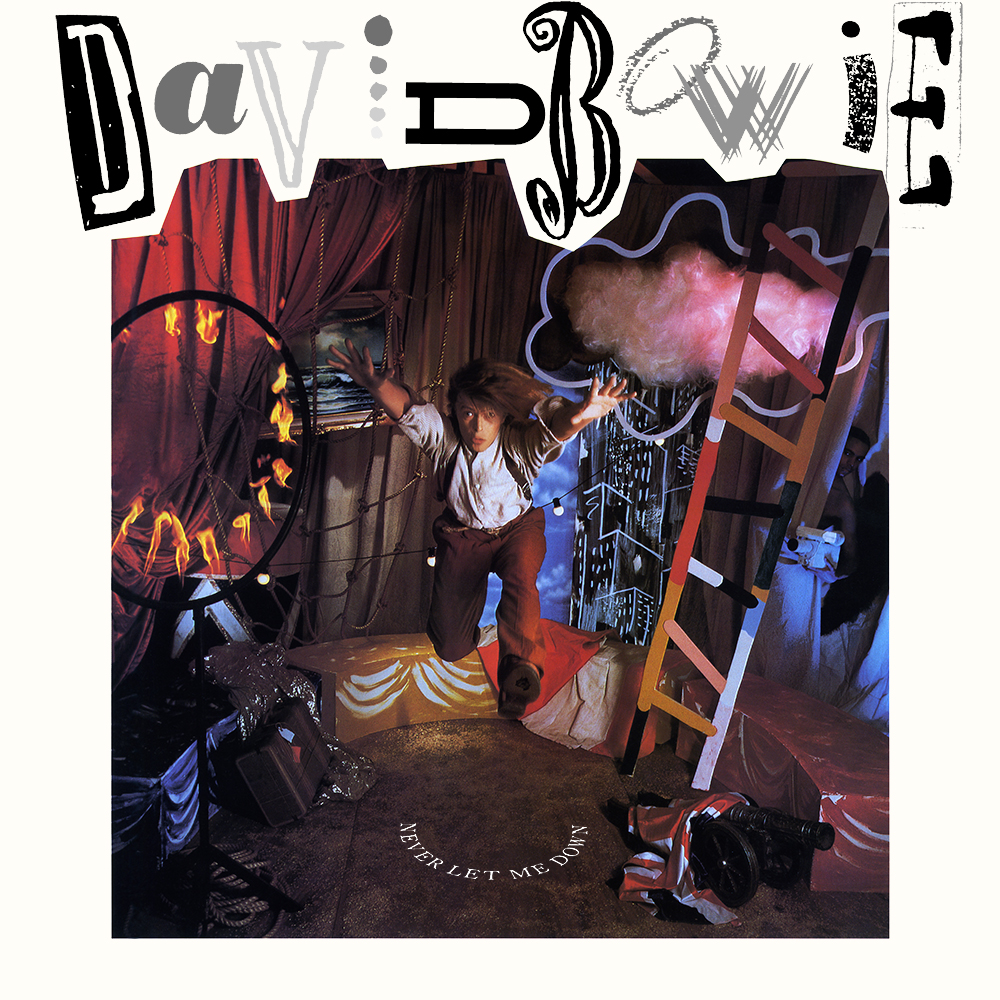
Why do I have a CD as old as this? It is because David Bowie disliked a song on one of his albums so much, it was deleted from all future releases of it, even after his death. Its only other release was a rare promo record in the US, before the record label decided not to release it as a single.
The song is named “Too Dizzy,” and I quite like it.
When David Bowie released "Never Let Me Down” in 1987, it became one of his biggest-selling albums. Having scored a phenomenal hit with the “Let’s Dance” album, resulting in a scramble for bigger stadiums than usual to play the Serious Moonlight tour, “Never Let Me Down” needed to play to a much wider, much broader audience than would have taken in Major Tom, Ziggy Stardust, and the Thin White Duke.
However, “Never Let Me Down” became one of David Bowie’s least regarded albums, particularly by Bowie himself, who described playing to the broader crowd in the 1980s as his "art-school Phil Collins" period: if the audience should be at a Phil Collins gig, then what was he doing? Like “Let’s Dance,” and 1984’s “Tonight” album, “Never Let Me Down” is less the work of “David Bowie,” which remained a stage name throughout his life, but more the fit, healthy and perfect David Jones, about to get his teeth fixed.
"Never Let Me Down" is the most commercial album David Bowie ever released, in that its polished, smoother sound could have come from other 1980s artists. Its synthesised sound dates the songs, and is reminiscent of Bruce Springsteen's "Born in the USA" album – “Beat of Your Drum” sounds close to “Glory Days.” Lyrics are concerned about social problems - "Day-In Day-Out" talks about poverty, while "Time Will Crawl" deals with ecology and nuclear paranoia after the Chernobyl disaster. Oh, and the actor Mickey Rourke does a rap on one song too - on a David Bowie album...
If anything, "Too Dizzy" is a welcome breeze, following the statement on Margaret Thatcher that was “87 & Cry.” A very upbeat song about 1950s teenage jealousy, and apparently a throwaway song written to see how Bowie worked with instrumentalist Erdal Kizilcay, “Too Dizzy” could either be seen as a breather from the socially aware songs on the album, or a distraction from them – that Bowie was surprised he left it on the album suggests the latter.
With a sound that demands to be played on big speakers as loud as possible, ”Never Let Me Down” feels good on the surface, and is worth a listen in the mood for a hard slap of Eighties, but it doesn’t feel like a David Bowie album. Bowie had always intended to re-record the album at some point, and the group that did so in 2018, for the “Loving the Alien” box set, had been chosen by Bowie before his death. The new version of the album sounds more stripped back and folk-like, more strings and brass in place of synthesisers, which mostly benefitted “Zeroes,” a song about the music of the late 1960s – you can hear the Mellotron now. However, Erdal Kizilcay has been left out of the album entirely, including “Too Dizzy,” and was considering a lawsuit if his arrangements were used without credit or compensation.
Would “Too Dizzy” have fitted among the re-recorded version of “Never Let Me Down”? It has a very peppy sound, with lots of saxophone, so making any change to that would be reductive, even if it would make it fit more with the rest of the album. Perhaps the song could be released as a separate song, but to prevent its release in any form just seems strange.
For me, there does come a point where, if you have put something out into the world, then change your mind on how you think about it, you can't then decide it didn't happen, especially when it really isn't that bad. No wonder Bowie finished the 1980s by submerging his ego in the hard rock of Tin Machine for a while.
I still love David Bowie and his songs, but rock gods are not infallible.
When it began in 1981, MTV had few videos to show. The first video, the Buggles’ “Video Killed the Radio Star,” was already two years old by that point, and was played twice on the first day – Phil Collins’ “In the Air Tonight,” released earlier in the year, was played five times, as was “Just Between You and Me,” by Canadian hard rock band April Wine, and The Who’s “You Better You Bet.” Therefore, if you made a video for your song, no matter what type of video it was, and no matter what genre of pop music it was, it could end up in heavy rotation.
Meanwhile, Donald Fagen, of the jazz-rock duo Steely Dan, began the eight-month process of recording his first solo album, “The Nightfly.” It is a brilliant combination of fun and perfectionism – more bouncy, free and personal than Steely Dan, but still cut with a laser, and remains considered as one of the best engineered and recorded albums ever made. This success was down to Fagen’s persistence with recording his album entirely digitally, one of the first done so, while using the precision of a 16-bit version of “Wendel,” an electronic sampler and drum machine originally developed for Steely Dan by their producer, Roger Nichols, a former nuclear engineer who also patented the rubidium nuclear clock, to synchronise the digital studio equipment even more.
Two singles came from the album, both taking from Fagen’s childhood view of the future, as seen from the early 1960s: “I.G.Y.” – “What a beautiful world this’ll be / What a glorious time to be free” – and “New Frontier,” the latter of which had a video made for it. “New Frontier,” taking a phrase from John F. Kennedy’s speech accepting the US Presidency, is about a teenage boy inviting his girlfriend back home for a party in his family’s nuclear fallout shelter, the polar opposite to the “graphite and glitter” of “I.G.Y.”
The video for “New Frontier” was made by British animation company Cucumber Studios, run by Annabel Jankel and Rocky Morton, before they created “Max Headroom” and directed “Super Mario Bros.” It combines live action footage, of the couple dancing in the shelter, with animation harking back to the early Cold War era... and then you remind yourself the Cold War was still going on at the time.
Jankel and Morton already demonstrated mastery of different animation styles with their videos for Elvis Costello’s “Accidents will Happen,” and Tom Tom Club’s “Genius of Love,” and therefore the animation for “New Frontier” is a giddy mix of styles, evoking Soviet propaganda posters, advertising, cartoons and album artwork, all evoking nostalgia in a point in history that, with hindsight, turns to horror. Fagen’s lyrics are by turns corny and sarcastic, both deliberately so – “She loves to limbo that much is clear / She’s got the right dynamic for the new frontier,” while also referencing, “the key word is survival,” and “prepare to meet the challenge.” Much of the imagery in the video is in time with the song’s lyrics, including Ambush fragrance and Dave Brubeck, and the brisk pace of the song is matched with the changes in imagery too.
Of course, on MTV, it was in heavy rotation, but Donald Fagen, who is only seen on a poster in the video, did not tour his album, and did not release any further music for ten years, having fallen into depression and writer’s block after feeling he exposed too much of himself on “The Nightfly.” It remains a brilliant album, even if Fagen once claimed not to have heard it since he made it.
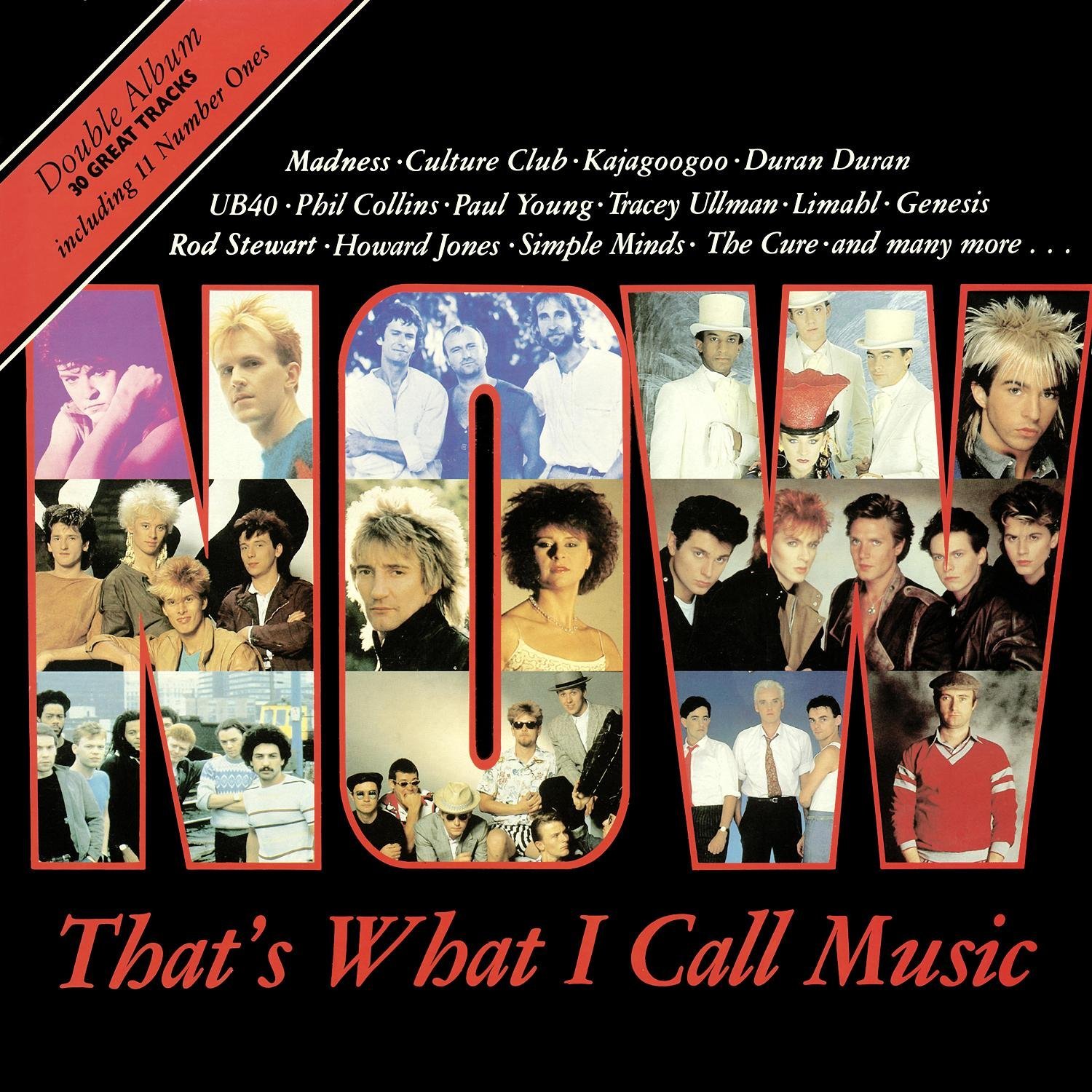
Walking around an antiques store in a nearby village, I came across a selection of vinyl records and magazines. At the top of the display were old 1980s copies of “NME” magazine, still billed as “New Musical Express” on the cover. Working my way down, expecting another magazine, I struck gold: from 1983, I found the original “Now That’s What I call Music” album.
The “Various Artists” compilation album was the preserve of cheaper labels like K-Tel or Ronco, or for when a record label wanted to round up the best of its own releases, like the “Motown Chartbusters” series. Instead, “Now” was the first collaboration between two labels, the biggest in the UK: Virgin Records, which originated the idea, and EMI, which also pressed and printed the records. If you bought “Now” when it came out on 28th November 1983 – it eventually spent five weeks at number 1 in the charts – chances are you went to either EMI’s record chain, HMV, or to Virgin Megastore.
The name “Now That’s What I Call Music” came from an unlikely source, and one I thought had been randomly stuck to the back of the album sleeve: Richard Branson, Virgin’s founder, knew his cousin Simon Draper, managing director of Virgin Records, was grumpy before breakfast, and loved to have eggs in the morning, leading to Branson hanging a 1920s poster, used to advertise Danish bacon, behind Draper’s desk: under the caption, “Now, that’s what I call music,” a pig leans on a wall, listening to a clucking chicken, an egg lying in front of them. After listing the music labels that assisted Virgin and EMI – CBS, Epic, Charisma, Polygram, Capitol and so on – the kind permission is noted of Danish Agricultural Produces in allowing the poster to be used. The pig acted as a mascot for the following four albums.
The first “Now” album has thirty songs, arranged roughly in order of release date, eleven of which (mostly from EMI) reached number 1 when released as singles – a note in the gatefold lists the only five other songs to reach the top of the charts in 1983. In some cases, like Madness’s “The Sun and the Rain,” you are told it had reached number 9 when the compilation was released, and “Victims,” by Culture Club is listed as, “almost certain No. 1 by the time you have this LP” – I am not planning to overwrite the “1” with a “3”. However, the album is redeemed by another choice, “just released at time of compilation,” which was “destined to be a smash hit” – “Let’s Stay Together” proved to be Tina Turner’s biggest hit to date.
A wide range of musical styles are found on the album, ranging from New Romantic bands like Duran Duran, Human League and Culture Club, the big influencers at the time, to R&B, soul and rock groups, all down to including the hits – Bonnie Tyler’s “Total Eclipse of the Heart,” “Wherever I Lay My Hat” by Paul Young, “Down Under” by Men at Work, and New Edition’s “Candy Girl” are all here. A 2015 scientific study, by Queen Mary University London and Imperial College London, of 17,000 pop songs revealed that 1983 was an epochal year, as synth-based music became big in the United States, led by a procession of British bands – in the same year, both Eurythmics and Dexys Midnight Runners would have US number 1 songs. However, the same study also found that the accompanying drum machines and sampling led to more songs sounding similar by 1986, before hip-hop broke through by 1991.
Some bands, or lead singers, do rather well on this album. In addition to “Victims,” Culture Club also feature with “Karma Chameleon,” the biggest-selling song of the year. UB40 also have two songs, “Please Don’t Make Me Cry” and “Red Red Wine.” Genesis features with “That’s All,” but a solo Phil Collins had the first number 1 of 1983, “You Can’t Hurry Love.” (Phil Collins also features twice on the front cover – once with Genesis, and once by himself.) However, “Now” had more faith in Kajagoogoo than most, including not just “Too Shy” and “Big Apple,” but also Limahl’s solo single, “Only For Love” – the band broke up in 1985, having already fired Limahl earlier in 1983, but have since reformed.
Out of thirty singles, only seven come from artists outside the UK – apart from Tina Turner, you get Rock Steady Crew, with that one hit they had; “Safety Dance,” by the Canadian band Men Without Hats; and “Kissing with Confidence,” a disco novelty song, based around self-help guides, by “Will Powers,” with lyrics by an uncredited Carly Simon, who is pictured in the album with hand on hip, waiting for herself to write “Coming Around Again” and “Let the River Run.” The current Ofcom license for BBC Radios 1 and 2, the biggest stations in the UK, require 45% of the songs they play to come from UK artists, so seven songs out of thirty may have just been down to the available space on the records.
I do have a record player, and “Now” sounded exactly as I expected – a bit quiet. The premium, heavier, 180-gram vinyl found more often today means you can cut deeper grooves into your record, allowing for a louder sound, and reduced surface noise. However, these records weigh 130g each, and in jamming up to eight songs onto each side, the grooves have to be packed more tightly, and cannot cut too deeply. Strangely enough, the first “Now” album I ever bought, 1996’s “Now 35,” turned out to be the last released on vinyl – cassette sales ended with “Now 63” in 2006, digital downloads having started one album previously.
“Now 100” will be released around July 2018, cementing the series’ reputation as the hits compilation of record for the British charts, far outliving the labels that started it – EMI bought Virgin Records in 1992, but Universal Music, which joined the “Now” group in 1990, after ending their own competing series, bought EMI in 2013, with its music publishing arm being snapped up by Sony. Universal and Sony now run the show together, but give it another thirty years, and we may be saying something else again.