
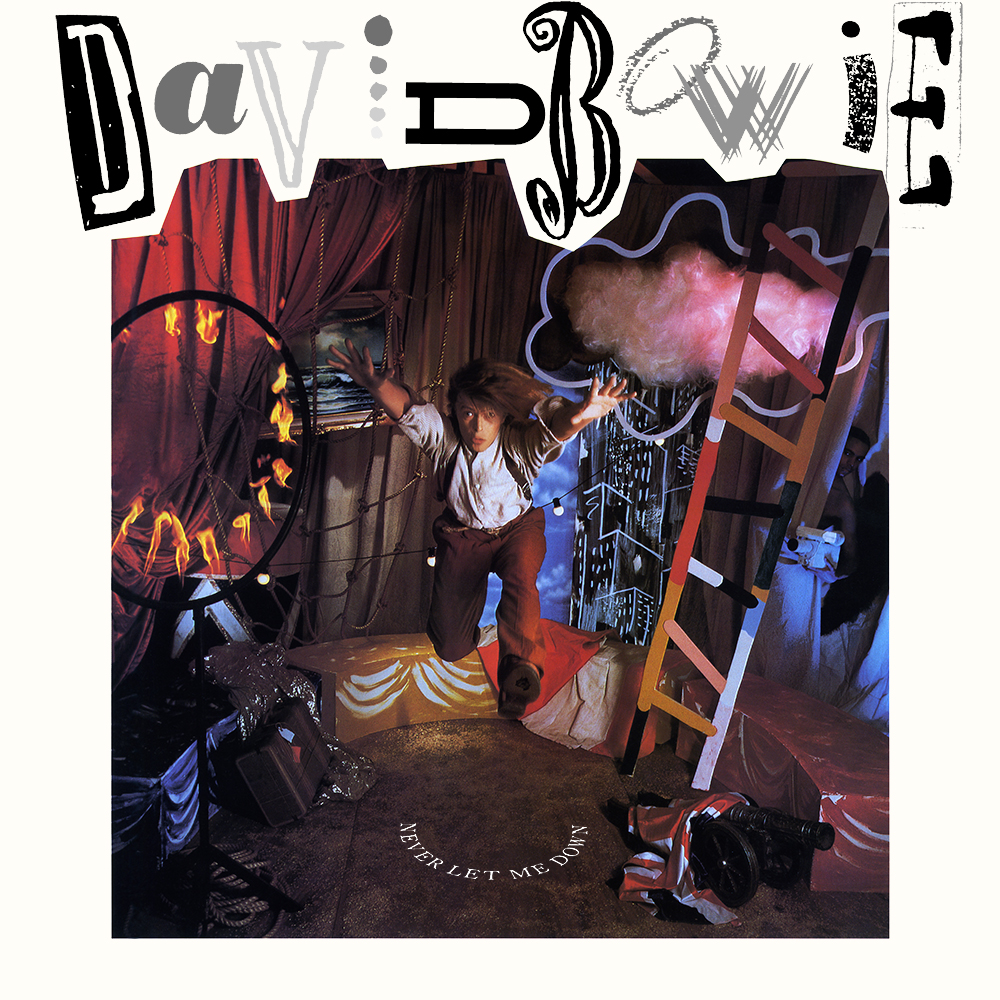
Never underestimate the toughness of a Compact Disc. I’m not talking about the episode of “Tomorrow’s World” where one still plays after Kieran Prendiville smeared jam on it, because that never happened – a report on the BBC’s “Breakfast Time” showed someone doing that with honey, while Prendiville was presumably safe at home in bed.
What I am talking about is owning a CD playing as perfectly as when it was pressed in 1987, a testament to the error-correction technology built into CD players as long as forty years ago, and the record company printing instructions on how to care for it inside the cover.
Why do I have a CD as old as this? It is because David Bowie disliked a song on one of his albums so much, it was deleted from all future releases of it, even after his death. Its only other release was a rare promo record in the US, before the record label decided not to release it as a single.
The song is named “Too Dizzy,” and I quite like it.
When David Bowie released "Never Let Me Down” in 1987, it became one of his biggest-selling albums. Having scored a phenomenal hit with the “Let’s Dance” album, resulting in a scramble for bigger stadiums than usual to play the Serious Moonlight tour, “Never Let Me Down” needed to play to a much wider, much broader audience than would have taken in Major Tom, Ziggy Stardust, and the Thin White Duke.

However, “Never Let Me Down” became one of David Bowie’s least regarded albums, particularly by Bowie himself, who described playing to the broader crowd in the 1980s as his "art-school Phil Collins" period: if the audience should be at a Phil Collins gig, then what was he doing? Like “Let’s Dance,” and 1984’s “Tonight” album, “Never Let Me Down” is less the work of “David Bowie,” which remained a stage name throughout his life, but more the fit, healthy and perfect David Jones, about to get his teeth fixed.
 If anything, "Too Dizzy" is a welcome breeze, following the statement on Margaret Thatcher that was “87 & Cry.” A very upbeat song about 1950s teenage jealousy, and apparently a throwaway song written to see how Bowie worked with instrumentalist Erdal Kizilcay, “Too Dizzy” could either be seen as a breather from the socially aware songs on the album, or a distraction from them – that Bowie was surprised he left it on the album suggests the latter.

"Never Let Me Down" is the most commercial album David Bowie ever released, in that its polished, smoother sound could have come from other 1980s artists. Its synthesised sound dates the songs, and is reminiscent of Bruce Springsteen's "Born in the USA" album – “Beat of Your Drum” sounds close to “Glory Days.” Lyrics are concerned about social problems - "Day-In Day-Out" talks about poverty, while "Time Will Crawl" deals with ecology and nuclear paranoia after the Chernobyl disaster. Oh, and the actor Mickey Rourke does a rap on one song too - on a David Bowie album...

With a sound that demands to be played on big speakers as loud as possible, ”Never Let Me Down” feels good on the surface, and is worth a listen in the mood for a hard slap of Eighties, but it doesn’t feel like a David Bowie album. Bowie had always intended to re-record the album at some point, and the group that did so in 2018, for the “Loving the Alien” box set, had been chosen by Bowie before his death. The new version of the album sounds more stripped back and folk-like, more strings and brass in place of synthesisers, which mostly benefitted “Zeroes,” a song about the music of the late 1960s – you can hear the Mellotron now. However, Erdal Kizilcay has been left out of the album entirely, including “Too Dizzy,” and was considering a lawsuit if his arrangements were used without credit or compensation.
Would “Too Dizzy” have fitted among the re-recorded version of “Never Let Me Down”? It has a very peppy sound, with lots of saxophone, so making any change to that would be reductive, even if it would make it fit more with the rest of the album. Perhaps the song could be released as a separate song, but to prevent its release in any form just seems strange.
For me, there does come a point where, if you have put something out into the world, then change your mind on how you think about it, you can't then decide it didn't happen, especially when it really isn't that bad. No wonder Bowie finished the 1980s by submerging his ego in the hard rock of Tin Machine for a while.
I still love David Bowie and his songs, but rock gods are not infallible.


