Showing posts with label NES Classic Mini. Show all posts

24 October 2020

PLAYING PING PONG ALL NIGHT LONG [266]


For what is both an exercise in nostalgia, and a way to continue exploiting old intellectual property, it is remarkable that the Atari Flashback series of games consoles, begun in 2003 by Atari themselves and continued under license by AtGames, has now lasted longer than the original production run of the Atari Video Computer System, later renamed the Atari 2600, on which it is based.

The original console was in production for a mere fifteen years (1977-92), withstanding numerous redesigns and cost-cutting, competition from far more advanced machines, an insatiable public demand for more complex and involved games, and the bankruptcy of its parent company.

But the games are amazing. Atari’s catalogue, along with games made for the console by other publishers – Pong, Breakout, Adventure, Battlezone, Centipede, Yars’ Revenge, Space Invaders, Pac-Man, Pitfall! – form a canon that proved the viability of an industry. The Fairchild Channel F may have been the first games console with interchangeable cartridges, but the 2600’s games had the playability to put the technology under televisions in millions of living rooms.

I have previously written about the Atari 2600, and how difficult it is to program [link], and I have walked through my reasons for buying the Nintendo NES Classic Mini, recreating a console I never played before [link]. I also used the Nintendo GameBoy to explain how something cannot be “retro” if you never experienced it before [link]. But the 2600? We never had one at home, but we had something similar.

“Pong console” is a generic name for the glut of clones of Atari’s original Pong home console, moving elements around the screen to recreate different sports. We had one at home in the 1980s, probably imported into the UK under the Binatone or Grandstand name,  playing all games onto a green background, using orange joysticks hard-wired into a wood-laminated unit. The games were basic, but addictive. You did not require your imagination to get past the blocky screen resolution and rudimentary graphics – you are controlling only a short line on screen – because you have a clear objective: to get your pixel of a ball past your opponent’s line. A good game doesn’t need brilliant graphics.

The Atari Flashback X, the tenth in the line, is the first console in the series to closely replicate the original 2600 “Heavy Sixer” in miniature, previous versions being only similar in shape, their yellow buttons now replaced by more authentic silver switches for game select, game reset and difficulty levels – these options are on the control pads of newer consoles, but the Flashback uses that space on its player 1 joystick for further menu and game save features. The previous flashback model had an SD card slot to play extra games beyond the built-in games – a similar slot could have utilised the space replicating the 2600’s cartridge slot, but it is possible to update the firmware and play extra games via USB, if you’ve played through the 110 built-in games.

The games included speak for themselves – they have been endlessly released on every console going, even the latest PlayStation, X-Box and the Nintendo Switch, hilariously using high-power processors to recreate its “primitive” blocky graphics perfectly; they have been shoehorned into many hand-held and plug-and-play machines, and are baked into popular culture – even if you have never played “Adventure,” seeing the film “Ready Player One” knows you are playing a dot in a maze, sometimes carrying a key bigger than yourself. “Pong” is rote as far as video game history is concerned, although the 2600’s “Video Olympics” game, providing fifty-seven different variations on a theme, is played against a very pleasing Seventies brown background. However, the version of "Space Invaders" more closely resembles Taito's original arcade version than the 2600 version, thereby making it easier on the eyes, as the trickery required to produce the necessary bank of aliens on the 2600 produced an awful flicker on the screen.

Before spending £70 on my Flashback X, I had considered trying to emulate the games on my PC – the basic graphics should be very easy to replicate – but I realised that emulation throws everything into the ether. Unless you have something to touch that is identifiable as having come from the original, you are not playing the game as intended. The satisfaction of flipping the “Reset Game” switch on the Flashback X, ready to play again, won’t have been the same if I had to select a key on my keyboard, or use my mouse to select “Reset” from a menu. Apart from the modern menu to select the game, I am playing a 2600, and the inclusion of two classic joysticks completes the effect...

...but the original 2600 also came with two paddles, essential for games like “Pong,” “Atari Circus” and “Breakout.” Because the latter game is my favourite so far, I decided to buy a pair of paddles – the Flashback series is compatible with original 1970s and 80s Atari controllers. I attempted to play “Breakout” with the joystick, but you can only go left a bit, right a bit – it isn’t easy to get your line where you need it to bounce the pixel ball away. The paddles, however, are perfect – you can nudge yourself along very slowly, or swipe your line along in one jolt.

As someone that rarely played video games, before finding that the type I like were the shorter, simpler games that were made for the 2600, I find that Atari’s paddles are the best game controllers I have used, and something I wish could have been used more widely on other consoles – if I knew about this as a child, I might have played video games more often. Like the volume control knob on a radio, the paddle houses a potentiometer. The effect on voltage produced by the paddle is registered in the console as a value that happens to also be used for controlling the horizontal position of an on-screen sprite, so game programmers can simply copy that value onto the screen to move your game piece along the screen, without any extra code to interpret what is coming from the joystick. I feel more connected to the game than when using a joystick, or a D-pad.

In short, I like the Atari Flashback X, I enjoy playing the games, but definitely buy some paddles for it.


08 March 2020

WE CAN’T REWIND, WE’VE GONE TOO FAR [225]


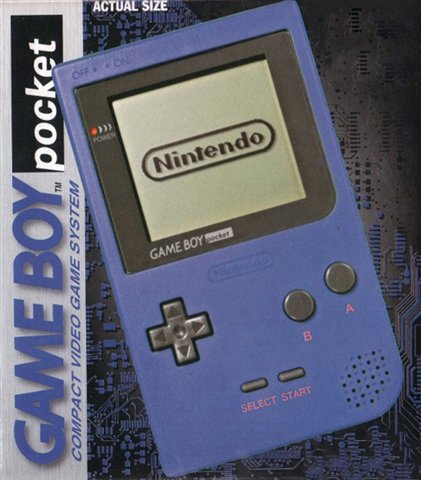
Having owned a Nintendo Game Boy for around a year now, my favourite game has been one I bought a few months ago. “Alleyway,” a clone of the arcade game “Breakout,” was part of the console’s launch line-up in 1989, and was designed by the console’s creator, Gunpei Yakoi. Having since played “Super Breakout” for the Game Boy Advance, I can appreciate the variations made on the original game, rearranging the blocks, adding bonus levels, and increasing the angles at which you can hit the ball.


When I have mentioned this to someone, either in passing at work or elsewhere, the terms “retro” or “old school” will be included amongst the reminiscing about when they owned a Game Boy, or from when they were a child. Having never been interested at the time, nothing about my playing “Alleyway” now has any level of nostalgia or irony to it. For my small collection of game cartridges, including “Tetris,” “Space Invaders” and “Game & Watch Gallery” – my small collection favours straightforward games that take little time – I am playing them in the best possible manner, on the proper hardware, with the proper controls. I am merely being sensible, as far as I know.


Can something be considered “retro” if I am still using it now? The word “retro,” describing something imitative of the recent past, led me to think it was related to going backwards, as in the word “retrograde,” instead of simply looking back, as in “retrospective” – in fact, I was right the first time, if you count things that imitate obsolete objects, like Nintendo’s NES Classic Mini. For something to be “retro,” it should appear to have been replaced, or overcome, by new ways of working, or thinking, but it is not affected by the longing for something lost that characterises nostalgia, because there has to be some level of irony for returning back to the object. No exaggeration of the obsolete object’s importance should have to be made, but there must some knowing reason for bringing it up.

If I was deliberately using a Game Boy to make some statement about how much better playing one is over using your phone, the Game Boy would be rendered as retro. I guess it could still be a retro item by my having chosen it over all the options available to me, having never owned a game console before, but having made my choice, I didn’t think anything more of it – I just put my money down.

The same reasoning appears to be behind the Evercade, a new portable games console launching in May 2020. It is similar in form to the Game Boy Advance, and uses cartridges that hold multiple games, but they add more modern innovations like an LED screen, and HDMI connection to your TV. However, they know their target audience: the cartridges will feature collections of games from Atari, Namco and Interplay, and their promotional Twitter handle is @evercaderetro, but it is hard to be cynical with another way to play “old school” arcade games.

12 January 2020

TAKE ON ME, TAKE ME ON [216]


A question has been plaguing me for weeks: should I buy a Yamaha reface DX? 


One new year’s resolution for me is to make more music. I can read music, and play the piano a bit, but there Is much space for improvement. Music is just one of those things it feels like I should be able to do. But when a particular idea plants itself, one that will require a substantial commitment from me, in terms of time and financial outlay, in order to justify itself, it is a decision I could not take lightly – it has been in the back of my mind for months.

The Yamaha reface DX is one of a series of four music keyboards, released in 2015, that aims to replicate other keyboards in Yamaha’s history and, like the Sega Mega Drive Mini and Nintendo NES Classic Mini, give users the experience of using the original hardware, with authentic knobs, switches and sliders – the CP is an electric piano, the YC a combo organ, and the CS is a synthesiser representing the late 1970s / early 1980s period when sounds where carefully shaped through adjusting many different levels, meaning it is the only keyboard in the range with no sound presets.


The reface DX aims to capture a very specific period in pop music that was defined by the original Yamaha DX7, known as an “FM synth,” as Frequency Modulation Synthesis, in the most basic sense, involves using the frequency of a sound wave to alter the sound of another one. The programming of a DX7, which could use up to six operating frequencies at once, was notoriously difficult, meaning most musical artists and groups stuck to the original thirty-two preset “patches” it came with. Therefore, from the DX7’s release in 1983 to the end of 1980s, by which point keyboards became more sample-based, the carefully-shaped sounds of pianos, bass and tubular bells could be heard in songs by A-Ha, Kraftwerk, Talking Heads, Jan Hammer, Genesis, Supertramp, Steve Winwood, Vangelis, Toto, Elton John, Queen, Level 42, Beastie Boys, Stevie Wonder, U2, Donald Fagen, Yes, Jean-Michel Jarre and Dire Straits – the last one is mainly the opening bit to “Money for Nothing.” Brian Eno used the DX7 extensively, but unlike most people, he mastered the programming.

Why wouldn’t I like to join that list buy buying a reface DX? The nostalgia from that period in music is intoxicating, because it sounds unlike anything that came both before and after it, as sampling slowly returned a more natural sound into the 1990s. The FM Synth sound is something to which people keep returning, both because it evokes a particular setting, or time period, as much as being part of a musical palette. I would like to do something with that.


Justifying the cost is one thing when you both consider its deliberately smaller form figure, made to accompany bigger set-ups for performing artists, makes it look like a toy keyboard. Korg also make the Volca FM, one of their series of portable synthesisers, but it was too complex for me – the reface DX uses touch-sensitive sliders and USB downloading for programming its sounds, making them far easier to contemplate than the original DX7. Most of all, the ability to emulate any old sound using computer programs and apps make the idea of spending a single penny sound pointless.

What could I do? Over the last few months, I have read countless articles, and watched numerous videos, from people talking about the reface DX, going over every possible subject from what samples have been included – the link to more recent drum ‘n’ bass and EDM music has been made as much as 80s pop – to what happens If you run a factory reset. I know I will need to make space at home for the new keyboard, and I will make time every day to practice making music on it. Even as part of making a trip to London, I looked in at Yamaha’s showroom in Wardour Street to try playing one...

Yes, of course I bought one. As soon as I hit an “F” note using the Tubular Bell preset, that was it. I may have committed to this like I was owning a pet for the first time, but I know I am going to enjoy using it.

29 May 2019

WITH SO MANY LIGHT YEARS TO GO, AND THINGS TO BE FOUND [177]


On 30th May 2016, I published the first article of “Leigh Spence is Dancing with the Gatekeepers,” and while I have largely kept to the “nostalgia culture crisis” theme, I have been impressed by ability to lurch from one subject to the next.
The plan has always been to plug the gaps in my own knowledge, report my findings, and improve my writing ability. I just wasn’t expecting culture wars, Brexit and Donald Trump to flare up at the same time – hell, David Cameron was still Prime Minister when this site began. If you have dropped in along the way, wondered where this was all going next, and took a second look, you have my thanks.
For the first time, I present the top ten most read articles from the first three years and 176 articles – it turns out one trademark of this site is my ability to lurch from one subject to the next!


1. THAT’S A BEAUTIFUL SPEECH, BUT NOBODY’S LISTENING [link] (published 21/09/2017)
As “Dada” is an art form that needed its own word to reject one way of seeing the world, I needed a word for when “alt-right” people call themselves “performance artists” – the random word turned out to be “jackanapes.”

2. JUST A DREAM AND THE WIND TO CARRY ME [link] (published 05/10/2017)
The story of the ocean liner SS America, later to take “Ten Pound Poms” to Canberra as the cruise ship Australis, and ultimately shipwrecked over Fuerteventura – more famous as a wreck than it could have hoped as a floating hotel.


3. NOR ANY DROP TO DRINK [link] (published 25/02/2018)
I received a free packet of water with a magazine - I later discovered micellar water works just like washing-up liquid. The French knew what they were doing all along.

4. WHAT THE WORLD WANTS TODAY IS THE REAL THING [link] (published 18/02/2018)
Coca-Cola once advertised itself with a woman in a beach suit, and the word “yes” – perhaps they should have put speech marks around it, like I just have.


5. I’VE GOT PAC-MAN FEVER [link] (published 25/06/2018)
My review of the Nintendo NES Classic Mini, having never owned or played the original - the Sega Master System was more popular in the UK than the NES.

6. TRUE BLUE, BABY I LOVE YOU [link] (published 26/03/2018)
With British passports to change from red to blue covers following Brexit, the contract to make them went to a French-Dutch company, causing the “Daily Mail” to implode with jingoistic bile. The paper has since found a new editor.

7. THERE’S A MAGICAL PLACE, WE’RE ON OUR WAY THERE [link] (published 02/04/2018)
The rise of the “dead mall,” when closing stores create nostalgia for the big, empty spaces left behind. It comes with vaporwave, its own electronic, alienating soundtrack.  


8. WHO SAYS A MISS WAS MADE TO KISS? [link] (published 21/11/2016)
I’ll just leave this here: “Donald Trump will be President of the United States from 20th January 2017, and the weight of that office demands respect. However, the holder of that office cannot afford to be given the benefit of the doubt, especially when Trump has never appeared to need it before. He will be given the opportunity to govern in the way he sees fit, but he will be under constant scrutiny, for every single decision, for every public utterance, for the rest of his life...”

9. I AIN’T GONNA STAND FOR IT [link] (published 05/08/2016)
“Ain’t” is a real word, appeared from two different places, and can be written down - Marvin Gaye & Tammi Terrell did not sing “There Is No Mountain High Enough.”

10. WATCH OUT, BEADLE’S ABOUT [link] (published 11/11/2016)
A portrait of Jeremy Beadle - fact collector, writer, broadcaster, concert promoter, charity fundraiser - through a series of “did you know” facts. I am sure he would have approved.

25 June 2018

I’VE GOT PAC-MAN FEVER [115]


Nintendo made headlines when they announced the NES Classic Mini, the limited-edition nostalgia machine and cash cow for scalpers on eBay, would be re-released on Friday 29th June. Anxious not to miss out a second time, I pre-ordered my console directly with the company. I’m still extremely surprised to have received mine in the post ten days early, but if Nintendo wanted me to write a review it, they knew what to do... I have no evidence of that, of course.
Firstly, I have never owned a games console before this one. In fact, I never really play video games – I still call them “video games.” I remember wanting a Sega Master System once, which was more successful in the UK and Europe than the NES – it might have been the games available, and the general noise Sega made at the time. Moreover, our family owned proper computers, which the British gaming industry still targeted more in the 1990s – we had a Commodore Plus-4, then two Acorn Electrons, followed by an Amiga 500, before my brother joined the PlayStation bandwagon, and I switched to PCs for school work.

Why did I buy a games console now, and why the NES Classic Edition? I have never been interested in the immersive experience that comes with the big, expensive games released these days on the PC, PlayStation or Xbox, and I have no intention of spending hours playing a game to get all of the story it wishes to tell – these needs have already been met for me by the cinema. At the same time, outside of Tetris and Angry Birds, I would appreciate a game that could keep me entertained for a few minutes, something the Atari 2600 could not do with its restrictive set-up.
Therefore, the NES Classic Mini, regardless of the attention to detail in reproducing a miniature version of the original Nintendo Entertainment System, a box of grey textured plastic intended to resemble a 1980s video cassette recorder (down to the front-loading cartridge slot), and irrespective of the nostalgia of playing the first two “Legend of Zelda” games, “Duck Hunt” and a brace of games with “Mario” in the title, it is a machine that presents the right type of game to someone that never plays games. This is meant to be your childhood, but for me, it is brand new.
I know of “Super Mario Bros,” and have seen people play it, and I surprised myself in completing the first level at my first try. However, as with the other games I have played so far – the original “Mario Bros,” “Donkey Kong” and “Pac-Man” - I have yet to get much further: all the sprites moving about on screen, and the screeching square-wave music and sound effects, have meant I have only played for half an hour at a time so far. I could turn the volume down, but the noises help you know what you have done.

It has to be said, I have played the first level of “Pac-Man,” one of the simpler video games there could possibly be, about twenty times now, and I have only reached the first level twice. That should be endlessly frustrating to me, but because Nintendo repurposed the cartridge “Reset” button on the console as a way to save your progress, returning to the main menu and pick another game, I can remain in control. While the short cable for the game controller has meant I have plugged the console into the spare HDMI port on my PC monitor, it does mean I can keep that “Reset” button close at hand.
I can imagine the one major problem that affected game consoles years ago was the cathode-ray tube televisions into which they were plugged: there was always an audible hum that came when a computer-generated signal was displayed on a TV, plus it was never possible to match up lines of pixels with the TV’s scan lines. Therefore, playing on a new TV or monitor, the admirable reproduction of the original NES graphics is as sharp as they can be – the optional “CRT” feature, if you need it, feels reductive and futile, and I have never turned it on. What is more, because the difference between the old PAL and NTSC TV systems meant NES games played slower on the old 50Hz PAL system - while I can play these old games at the 60Hz speed they were made to run, Super Mario’s legs are no longer.

For the last few weeks, an original Nintendo Entertainment System console, with one controller and no cartridges, has been on sale in an electronics shop in my local high street for £110. Meanwhile, I bought the NES Classic Mini, a spare controller, and a power supply for £68, and I have thirty solid, memorable and enjoyable games, that remained so without needing to be updated, just as the same can be said of Monopoly, Scrabble and Ouija boards. Nintendo could have provided access to their Virtual Console service, but that provide competition against is other consoles – unlike the upcoming Atari VCS, the NES Classic Mini is all it needs to be, without trying to play PC games too.
Despite the wait from 2016, I am happy the NES Classic Mini lived up to the hype, proving to be my perfect games console - and, at the rate I’m progressing through Pac-Man, Nintendo may release a Wii Classic by the time I finish all the games.