Social media has become as much of a bête noire for myself this website as the 45thPresident of the United States came to be, so I must now also write it out of my system until further notice.
Social media is just another form of traditional media, and should be understood as such. Marshall McLuhan, the philosopher whose work created the field of media studies, was forty-one years old when regular television broadcasts started in his native Canada in 1952, making him well-placed in commenting on television’s impact on communication and our world. The focus of his book “Understanding Media” was how we should study media more than the content it carries, and the impact of a new medium will be more than that of the content. For social media, which became part of everyday life during my twenties, content is fuel for the algorithm of the site, and providing content to the site is both amplification of your message and the price of admission. The “social” side is an impression created by the content.
If everyone uses social media, we are essentially all in the media business and, therefore, we all should receive media training to fully understand the uses and effects of media, so that we can use it most effectively and mindfully. I think this would press home the importance of acting professionally in the public space created by a media that requires us to act intimately in order to receive the content required to run it. Organisations specialising in media training offer communication skills, interview technique, provide experience in dealing with PR and media relations, and provide “key message development” for the messages you want to get across.
It sounds not far away from preparing for a job interview, as you prepare to create the greatest possible impression of yourself, until I saw that one company, PA Mediapoint, also offers “crisis media training” in how to deal with intense media scrutiny – their website states that “the focus is on equipping comms teams and spokespeople with the essential techniques and strategies to limit reputational damage.”
For all that you can hate about what Piers Morgan says on Twitter, his account can be viewed as the same collection of safe press release announcements and off-the-cuff pronouncements that define a brand-building social media account that keeps on the right side of the site’s terms of service, because Morgan knows how to play the social media engagement game. Whenever Twitter has been used in a controversial fashion, mostly by people since banned from using the platform, the “social” side of social media is not applicable.
Something that is slanderous if spoken between two people is counted as libel on social media because it is media, it is recorded, it is written down. Putting yourself on public view carries an element of risk for anyone, celebrity or not, at any point, and whether it is worth putting on that off-hand comment, to be deleted later, or to target someone or something anonymously, carries its own risks.
I therefore use Twitter and Instagram primarily to link to my website, and to share things I like, because that is as much as I want to use it. I could decide to play the game, building social capital through likes and followers, but I think I prefer it more when that happens as a coincidence of one thing I posted about what I write elsewhere.
As everyone now has access to the media, we must not just get used to having a separate private and public face, but the management of that is now a life skill. That essentially makes it impossible to get it out of my system.
On Friday 7thJanuary, Britain’s Culture Minister, Chris Philp, said that the national anthem should be played more frequently by the BBC, and by other public service broadcasters: “[the] more we hear the national anthem sung, frankly, the better.” This followed a comment the day before in the House of Commons by Conservative MP Andrew Rosindell that, with 2022 being the year of the Queen’s platinum jubilee, “will the minister take steps to encourage public broadcasters to play the national anthem and ensure the BBC restores it at the end of the day’s programming before it switches to News 24?” The minister in the Commons, Culture Secretary Nadine Dorries, could be heard saying “fantastic” in response.
Far from just being ridiculed in comments online, this reactionary step, in the literal sense that it is trying to return to something people used to do, is completely unenforceable: “God Save the Queen” has only been the official national anthem of the United Kingdom through tradition and use, with no law ever having been put into place, and any attempt to make it law now will, no doubt, inspire similar derision. In terms of TV channels, only BBC One and ITV – except for Thames, Granada, Central, Yorkshire and Border - have ever played the national anthem when they closed down for the night, and stopped doing so when they stopped closing down. BBC Two and Channel 4 have never played it, and Channel 5 launched with a 24-hour schedule from the start. Furthermore, BBC News 24 has been called the BBC News Channel since 2009.
My initial reaction to this non-starter was to think of “An Audience with Billy Connolly”, the 1985 stand-up special that ended by arguing that the parlous state of the country was due to the national anthem being boring, which I agree, and that it should be replaced by the theme from BBC Radio 4’s “The Archers”, with everyone singing “dum-de-da-de-dum-de-dah” instead of writing lyrics for it. The option of Simon May’s “EastEnders” theme since arisen, but far better the maypole dance of Arthur Wood’s “Barwick Green” than Eric Spear’s plodding “Coronation Street” theme. BBC Radio 4 is the one station that still closes the day by playing the national anthem, just before 1.00am each night.
Meanwhile, rearrangements of “God Save the Queen”, like Benjamin Britten’s blockbuster production, and Philip Sheppard’s arrangement for the 2012 Summer Olympics held in London, make me feel there is not much more that can be done with such a simple tune – Sheppard explained that his arrangement was designed to add tension, including an E minor chord that gave the impression the entire piece was in a minor key.
Having no official anthem means we have always had a choice. “Land of Hope and Glory”, “Jerusalem”, “Flower of Scotland”, “Scotland the Brave”, “Land of My Fathers” and “Londonderry Air” have all been used by the nations of the UK in different capacities, and despite the creation of national parliaments outside of England, none of these have become official. Another option could have been “Zadok the Priest”, written by Georg Frideric Handel for the coronation of King George II, and possibly the first national anthem, but its having been used by the UEFA Champions League since 1992 has probably ended any chances of that. The use of “Jerusalem” for England at the Commonwealth Games, however, came from a public vote held by the Commonwealth Games Council for England in 2010, polling just over half of the votes – “God Save the Queen” came third.
Personally, I would choose the second-placed song in the poll, Edward Elgar’s Pomp and Circumstance March No. 1, “Land of Hope and Glory”, with lyrics by Arthur C Benson. The lyrics referencing God mean about as much to me as singing about God saving the Queen, but it doesn’t matter in a song that, even more than “Rule Britannia”, must be played and sung as loud as possible. In an era where the “drop” is as important in pop music as the chorus, the approach and “drop” before the second chorus of “Land of Hope and Glory” makes me feel more patriotic for my country than anything, or anyone, can possibly do. The use of the word “hope” is also good.
So often a shortcut definition for British humour, I needed a reminder of the revelation “Monty Python’s Flying Circus” was on first viewing. Targeting the eccentricities and authorities found in British life was not new, but it was among the first comedy shows to play to an audience that grew up with television, comfortable with its bold fragmentation and abandonment of sketches, and stretching of established TV show formats. It didn’t second-guess the intelligence of its audience: an explanation of the philosopher Immanuel Kant was not required, whether he was a real pissant or not. The show’s dynamic style and form was also among the first comedy shows its audience would have seen in colour, although the first four episodes were broadcast in black and white before BBC One switched to colour in November 1969.
Despite having seen bits of the team’s later films, I knew none of this when I first saw the first episode of “Monty Python’s Flying Circus” in July 1994, the BBC starting a repeat run to mark the show's 25th anniversary. I was eleven years old – I had seen the first series of “The Smell of Reeves & Mortimer”, but the first episode of “The Fast Show” was still two months away. I didn’t yet realise that what I was about to watch would reflect the attitudes of its time, despite that being the show’s target in 1969. I got the interview sketch about Arthur “Two Sheds” Jackson, Terry Jones’s composer whose nickname overshadowed his work, who is kicked off the arts programme when he complains – then John Cleese’s interviewer shouts, “get your own arts programme, you fairy.”
My immediate deduction from this was that the character, or the writer of that line, was scared of fairies. I had never heard the word “fairy” used in this context before, and have only heard it used in other TV and radio shows of the period, into the 1970s, and on other episodes of “Flying Circus”: when a journalist is asking the opinion of the man in the street, Terry Jones appears as on a house roof, saying, “I’m not in the street, you fairy,” while a display of an army units “camp square-bashing” chants, “we all know where you’ve been, you military fairy!”
Even after realising it was meant as an insult to gay men, one that appeared in the UK between the world wars after being coined, to describe particularly effeminate gay men, in the Bowery section of New York as early as the 1870s, I couldn’t take offence to something that sounded so bizarre. With homosexuality only having begun to be decriminalised in the UK in 1967, it was a current subject that appeared in “Flying Circus”, other episodes in the first series featuring a writer telling his son to go back to Yorkshire over “you and your coal mining friends”, a “Panorama” parody documentary on what makes a man want to be a mouse, and a sketch where a man, having been told by a police officer they can’t help over a lost wallet, asks the officer if he wants to go back to their place – the officer says, “yes, alright”, the audience laughs, the show carries on. Times were changing. I would love to have known Graham Chapman’s thoughts as these shows were first broadcast.
Comedy ages poorly, until it doesn’t: in September 2021, the Chinese government announced that broadcasters must "resolutely put an end to sissy men and other abnormal esthetics,", as they are failing to encourage Chinese men to be more masculine. This limp step is apparently aimed at pop stars and internet celebrities but, as if to show how much times have changed, I haven’t heard the word “sissy” used in years either. The pejorative slang for effeminate men in China, as used by their government, was “niang pao” – seeing as that means “girlie guns” in English, that term is just begging for reappropriation by those who were called it, just like “fairy” and “sissy” were here.
On Monday 27thDecember 2021, I watched “The Matrix Resurrections” at my local cinema, eighteen years after going there to see “The Matrix Reloaded” and “The Matrix Revolutions”, and over twenty years since buying “The Matrix” on VHS cassette. Not only was “Resurrections” the film we deserved in this particular moment, but it symbolised why I have named this new year “Twenty Twenty 2: This Time It’s Personal”, before the “My Brother, My Brother and Me” podcast names it officially.
On the surface, “Resurrections” can be viewed as a cynical sequel and reboot exercise by Warner Bros. to exploit their dormant intellectual property and catch the nostalgia of its audience, much as they did with “Space Jam: A New Legacy”, a film in which “Matrix” characters also appeared [link]. The “Matrix” of the original trilogy is portrayed as a video game, developed by Thomas Anderson (Keanu Reeves) based on memories of himself as Neo, that Warner Bros. is also to be rebooted, either with or without the involvement of its original creator, a situation that mirrored real life before “Resurrections” entered production. Trinity (Carrie-Anne Moss) is Tiffany, a married mother with no connection to Anderson, but was unknowingly the basis for the character.
At this point, we are meant to believe this is the “real world” outside of the “story”, such as stories can be real. “Resurrections” begins with an on-screen “modal error”, referencing both the “modal” Anderson is using to test an element of a game he is programming, but also the philosophical concept of a “modal error”. Anderson’s explanation for his newly recurrent flashbacks to the events of “The Matrix” is because he is in it, but the world he is in is one where that proposition is the least attractive – it is one where the actual answer is to keep taking the blue pill, to keep him where he is. We can see where the error is, but the subject is kept in a place where they can only be wrong. It’s the kind of world where conspiracy theories work most easily, and people can spout about the system being “rigged”, because it is in their interest that the best explanation for why a proposition is possible or necessary must always have the opposite power.
I read a bizarre review of “Resurrections” in “The Times” newspaper on Christmas Eve 2021, describing the action as being “frequently muddy and dull,” “littering” the film with flashbacks “as if [director Lana Wachowski] has no faith in the film’s narrative power,” with a screenplay that “mistakes self-referentiality for sophistication.” What was new in the original “Matrix” trilogy has become the standard in any blockbuster film that wishes to add any level of thoughtfulness to its relentless action, from the Marvel Cinematic Universe to the works of Christopher Nolan. To miss the psychological and philosophical arguments over consciousness and representation of the original trilogy, then dismiss the same being done in “Resurrections” as “oddly preachy and [warning] audiences not to be ‘programmed’ by society”, is maddening, as it also skips over how audiences, with time, have become more used to more complex concepts being explored in mainstream cinema. To make a new “Matrix” film is to comment on what has happened to our representation of the world in the last eighteen years, because that is the only acceptable way to do it.
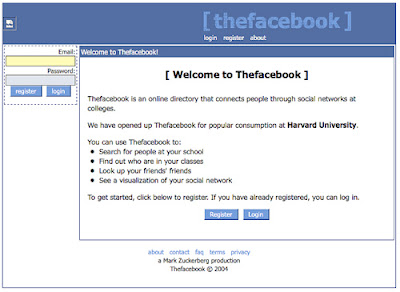
What begins as Neo and Trinity being recaptured in the Matrix, despite the end of “The Matrix Revolutions”, becomes crystal clear by the film’s end. Despite the peace between humanity and the machines, the Matrix was rebuilt, producing more power than ever if humans are kept running high emotionally - the fact that Facebook opened for business in 2004, the year after “Revolutions” was released, was not lost on me. Neo and Trinity were resurrected by the Analyst (Neil Patrick Harris) for study, finding they allow the Matrix to work most efficiently when they are kept close, but without their memories.
I then remembered a certain incident on Twitter in May 2020. Elon Musk said, “take the red pill”, a major “Matrix” motif misappropriated by alt-right fascists. Ivanka Trump pipes in with, “Taken!” Lilly Wachowski, her work having been misread, replied, “Fuck both of you.” “The Matrix Resurrections” feels like a remake of that Tweet on a budget of $190 million. Its plot came from a dream Lana Wachowski had in response to the death of both her parents and a friend. Lilly Wachowski also revealed in August 2020 that the films were an allegory for being transgender, amid the sisters’ own personal journey: "I'm glad that it has gotten out... That was the original intention but the world wasn't quite ready.” I wish it had been. They may not own the intellectual property of “The Matrix”, but to make a “Matrix” film without either of its creators would be unacceptable.
“The Times” gave “The Matrix Resurrections” one star out of five. I will just recommend that you see it, because you will leave the cinema wanting to delete all your social media accounts to take back control – whether you follow through on that is another question.
I had already co-opted the tagline from “Jaws: The Revenge,” titling the new year as a sequel, “Twenty Twenty 2: This Time It’s Personal”, because it came from an anxiety that, culturally, the 2020s have not yet begun, and I need to get the decade underway for myself, so it feels like we are making progress of any sort.
“Cultural decades” never started on time: the 1950s only got started with rock ‘n’ roll in 1954, while Beatlemania and the Kennedy assassination began the 1960s in 1963-64. Civil unrest and the Beatles’ breakup start the 1970s pretty much at 1969-70, while the New Romantics and the rise of home computing, the fall of the Iron Curtain and Nirvana’s “Smells Like Teen Spirit”, the World Trade Center attack, the Arab Spring and quality for LGBT+ people caused successive decades to begin culturally around a year or so after the calendar marked it.
Right now, it feels like we cannot move forward culturally, kept in a holding pattern by events that need to be resolved: the COVID-19 pandemic, the culture wars, and political deadlock. These will eventually pass, particularly when the end of the pandemic makes meeting people in person, and not through the mediation of the online realm, less of a strange experience. I have no idea what the cultural moment that properly begins the 2020s will be, but it won’t be found through social media, or through a Zoom or Microsoft Teams call. As much as you can create in isolation, or recycle what has been proved to work, that human connection will show you where to go next, and I’ve always preferred talking to someone in person.
Until then, it feels like we are in our own Matrix, and we are fine with it - but it all feels a bit too 2010s for me.
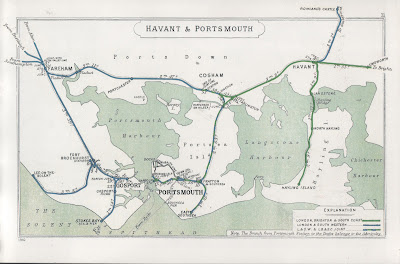
Here are the facts: my home town of Gosport, Hampshire, has an estimated population of eighty-five thousand people. It is a dormitory town, so most of its inhabitants work outside of it, making the main A32 Fareham Road and the B3334 Rowner Road gridlocked at least twice a day. The last passenger train left Gosport on 8thJune 1953, a whole decade before the Beeching cuts that severely reduced the UK’s rail network, but the first motorway in the UK, the Preston bypass, now forming part of the M6, opened on 5thDecember 1958. Rowner and Bridgemary, two major areas of Gosport, were built into suburbs in the 1960s without any further major roads being built in and out of the town.
The train line continued to be used for freight until 1969, and while the southern half continued to be used to move naval ordnance until 1991, the rest was converted to a cycle track. Eventually, public transport returned to the northern half in 2012, the tracks replaced by a busway removing one type of vehicle from gridlock – an extension to this busway opened in December 2021, using up part of the converted cycle track, reducing the length of the average bus journey by two minutes. Gosport Train Station was redeveloped into housing in 2010, having been left derelict for fifty years.
The reason any of this has been on my mind is because, having rolled around local history in my mind for so long, the fact there was a gap between the end of passenger trains in Gosport and the opening of the first motorway meant that no-one would have thought to plan for when reliance on roads would continue to increase: the nearby M27 motorway between Southampton and Portsmouth did not begin to be constructed until 1972.
It doesn’t necessarily mean I think a motorway needs to be cleaved into the town to reduce the time taken to get in and out, because the upheaval caused by attempting something like that now would carry its own cost over that of the concrete, tarmac and labour. While there is a bypass nearing completion in nearby Stubbington, where the land is available to build one, it serves to highlight the reliance on cars in Gosport, as I have mentioned previously on how a number of industries have left the town in the last thirty years [link].
I am not certain if trains should be reintroduced to Gosport, especially now that buses have taken over the track, but this is only because I am not sure trains were the answer to begin with. Gosport Train Station was opened in 1841, outside the town walls when they were still there, because it was less of a security risk to build there than in the home of the Royal Navy at Portsmouth Harbour, a situation which had changed by 1876. Branch lines to Stokes Bay and Lee-on-the-Solent had died out by 1914 and 1930 respectively – the former is now also a cycle track, while Lee-on-the-Solent station has been used an amusement arcade for so long that any indication of its previous use is almost accidental. If it wasn’t used so much for naval ordnance, the track probably would have closed to passengers before World War II.
You might be surprised that people continue to use Microsoft Internet Explorer but, these days, there are people that will never have used it. Since I registered www.leighspence.net, Internet Explorer accounts for only 1.3% of all access to this site so far – two thirds of access was made by Safari for iOS and iPadOS, distantly followed by Google Chrome, Mozilla’s Firefox and the desktop version of Safari. Hardly anyone used Opera to access this site, despite it now being used on more desktop computers than Internet Explorer, which held a 95% share of all desktop computer web browsing in 2003.
I have only just found out that Microsoft is finally withdrawing Internet Explorer on 15th June 2022 – people who upgraded to Windows 11 have already found it has disappeared, and it will not work if a re-download is attempted, but considering the last major update to the browser was made in 2013, you are only looking to continue using it if you need it. Microsoft’s other browser, Edge, retains an “Internet Explorer” mode so people can continue to access older systems, in some cases the server access sites they need to continue working from home. My moving from PC to Mac means that compatibility issues are both expected, and accounted for – if I work from home, signing into one web page starts a program that will bridge any gaps between my computer and the server at work – but forcing progress on PCs has been slow.
The “Internet Explorer” mode on Edge was meant to have been provided from 2015, when Windows 10 and Edge first appeared, before it was decided to push the browser as the new one that people should be using, despite the untidy situation created of supplying an operating system with two web browsers. What causes the difference is the browser engine used, which renders the HTML code used by the browser into a viewable page: Internet Explorer used its own proprietary engine, MSHTML, while Edge, which originally also used its own engine, now uses an open-source engine also used by Google Chrome, Opera, Amazon and Samsung. Decisions on which engine to use determine how the internet develops, as proved when Apple announced they would not support the Flash plug-in on its browsers in 2011, forcing developers to use alternatives for web graphics.
I know I can download any browser I want, but I use Safari on my phone and computer because it was simply the browser those devices came with, and I have not had a specific reason to need a different one. In bundling Internet Explorer with later updates to Windows 95, then Windows 98 onwards, and insisting new computers using Windows came with the software, Microsoft created the impression that a web browser is part of your device’s operating system, before it became the most used part of it. Even if Windows is not the only operating system anymore, and a PC is not the only computer, this perception persists, as viewers to my site have perhaps proven.
Please see below for the script I used in completing this video:
Coming up, I take a fond look back on how I wrote a song about nostalgia, how it won a song contest, and why this is not case of “this is how _I_ did it” more than “is _that_ how I did it?”
[OPENING TITLES]
[TITLE: “How to Win a Song Contest, apparently” or “Don’t Take a Stand ‘til You Reach for That Landfill”]
Hello there. In May 2021, the “CheapShow” comedy podcast ran the second Urinevision Song Contest, following the success of the previous year’s event in substituting for the pandemic-hit Eurovision Song Contest. This time around, I had an idea for a song, and decided to enter, despite never having properly written, recorded and sung a song before. I effectively sent my entry to answer the question, “is this anything? Does this sound like something I should be doing?” I faithfully watched the ceremony live on Twitch, to see if I had made the shortlist, and I yelled “yes!” when “Nostalgia’s Gonna Get You” appeared as the ninth song out of thirteen, meaning my work would now be judged by a panel of thirteen comedians, actors and singers, and I would find out if I had embarrassed myself or not. But… that wasn’t the end of it.
[“RECONSTRUCTION” caption on screen, waveform in background, as Eli Silverman announces: “The winner of Urinevision 2021 is Nostalgia’s Gonna Get You by Leigh Spence.” I am as open mouthed as I can be.]
I was devastated. I genuinely was not prepared for this outcome, especially after hearing the other entries, songs like “Down at the Spoff & Pickle” by Ukulele Jon, and “Piss Crystals” by L.J. Goody, thinking how much more they fit the themes and energy of “CheapShow” as a podcast, and how much more professionally recorded the other songs sounded, at least to me. I do remember feeling incredibly confident for a while after submitting my song, but that was me thinking, “wow, I made a thing,” not “I’m gonna win this thing.” So, thank you to “CheapShow” for putting on a great show, and for the lovely shirt I won, featuring art by their in-house artist Tony Vorrath, and thank you to everyone for all the nice things they said both during the contest and online afterwards.
Before I go any further, I implore you to listen to “CheapShow” as it is a great podcast, and one I have written about at length. Hosted by Real Ghostbuster Paul Gannon, and pickle of destiny Eli Silverman, “CheapShow” rummages through the charity shops, the bargain bins, the thrift stores, the flea markets, the pound shops and record bins of the known world, to give you the treasure amongst the trash. It also has its own tie-in magazine and merchandise, which may itself be the subject of future discussion in another geneeration’s podcast. It is an absurdist comedy machine with an enjoyably filthy mouth on it, like Derek & Clive meets Blue Peter on the bus home from a night at the Cabaret Voltaire. It is a magazine show: you may have board games and charity shop finds one week, novelty records and weird soft drinks another week, celebrity guests or an audio drama with mad characters the week after – it’s great that there is a podcast I can download each week and not know what form it is going to take, other than in minutes and seconds, and you need to cherish something like that if you find it.
And so, in order to explain “Nostalgia’s Gonna Get You”, I must play it to you first, using the lyric video I created previously. I will be back in a moment.
[PLAY VIDEO]
I should say the reason I am playing the recording instead of singing it live is because…
Singing at my limit is a mountain to climb,
So I broke the lyrics up and sang two lines at a time.
…and edited it together. On the night of the contest, I did like how the presenters visualised the songs by using puppets. [Clip of ostrich.] Here is some of the reactions from the judges…
[Play selection of some, ending with response to Imran Yusuf: if you can pay for it, you can be my guest.]
I will say the response that made me happy immediately was from co-host on the night, Ash Frith: [“Who performed that, that was amazing!”] …I’m going to play that again. [“Who performed that, that was amazing!”]
There was only one rule for the Urinevision Song Contest: your song had to be between one and two minutes long. How I interpreted this was that I would need to fit as much song as I possibly could into two minutes, working out how many bars of 4/4 time I can get when using a hundred and twenty beats per minute, divided by two bars per line. Rather than entirely sounding like a maths exercise, my favourite Eurovision song, “Ding-a-Dong” by Teach-In, which won for the Netherlands in 1975, clatters along at such a pace that it doesn’t need all of the three minutes it was allowed. At the same time, Tony Christie’s song “Avenues and Alleyways,” the theme to the TV drama “The Protectors,” doesn’t have a chorus as such – Christie sings “in the avenues and alleyways” a second time, followed by an entirely new set of lyrics. Therefore, aside from a short intro and outro, I have three whole verses, a vast middle section to list nostalgic things, and exclaim “Nostalgia’s Gonna Get You” – I’ve only since realised I unintendedly wrote “nah-nah-nah-nah-naah-naah, nostalgia’s gonna get you!”
The music itself is kept very simple, performed in C sharp major to stretch to what should be out of reach, and to sing just slightly out of my range, but I deliberately chose instruments that evoked the 1980s: a drum machine, synth chords and a synth bass that jumped up and down by one octave to fill the sound. Far cheaper than spending a few thousand pounds on the real thing, Apple’s BandCamp lets you pick a LinnDrum, one of the first sample-based drum machines, and the machine most associated with Prince, from “1999” to “Purple Rain”, with “When Doves Cry” essentially being a LinnDrum featuring Prince. What also helps is that, if you choose the right drums, you can make a pattern that sounds like a clock.
The chords were played on my Yamaha Reface DX, a proper FM synthesiser like the original DX7, replicating the original Electric Piano 1 setting with the same glassy sound that characterises the era, as Yamaha sold thousands of DX7s to musicians who, apart from Brian Eno, used the same thirty-two built-in patches from piano to bass, to brass to marimba, because it was too hard to program.
I am absolutely happy to be compared to them, but I must admit I was initially perplexed by the comparison to Squeeze made by co-host and TV writer Paul Rose, aka Mr Biffo [“Cool for Cats” quote, followed by Depeche Mode.] My only reason for this was my having been so focussed and influenced during this process by the Eighties-est artist of them all, and a recurring name on “CheapShow”: Phil Collins. Yes, I own the sheet music to the “No Jacket Required” album. What happened was I was listening to a local radio station, Wave 105, on a Sunday morning, and after they played a jingle, there was silence, almost like they fell off air. When a song eventually started, it was the dum-da-da-dum-clap of “Take Me Home”, followed by, yes, chords played on a Yamaha DX7. Having since bought the album on CD, I think “Only You Know and I Know” may be one of the catchiest songs ever devised, even more than “Sussudio,” but what I did find were the demos that Phil Collins made of his songs – they are simply a drum machine, a DX7, and his singing almost in tongues to get the melody and the energy down before writing the lyrics. The simplicity of these demos was what I decided to go with in my finished song, but while I wrote the lyrics, I did have the sound of the Phil Collins demos in my head… [Imitate them using “Nostalgia’s Gonna Get You” tune.]
In terms of the lyrics, I intended to use my three verses to build up into a preposterous situation: start with giving into nostalgia, followed by something weird, then complete all-consuming hysteria – instead of “the greatest hits of yesteryear will do for you now,” it was originally “because there’s no hope for you now.” However, I had the final line “don’t take a stand ‘til you reach for that landfill” from the start as a line that sounds utterly bizarre by itself, but entirely in context by the time you get to it – that is why I was happy for how one of the judges, Tom Mayhew, reacted to it: [Tom Mayhew clip].
I felt it was easy to refer to liminal spaces, hauntology and Jacques Derrida in the song, as they have all been discussed on “CheapShow”, although I didn’t yet know there was a song by Scritti Politti titled “Jacques Derrida”. Dead shopping malls are almost a genre of video on YouTube as people film walkthroughs of places that were once safe and busy, rendered eerie and empty by changing times – while they can be perfect examples of places you have to pass through, but you don’t think that you should be there, I think watching them might be my version of ASMR. Having said that, “That vape shop once sold games on tape for my Spectrum Plus” was the hardest line to condense, and then sing – I only realised later that Sinclair made a computer branded as a Spectrum+, because I was originally working down from Spectrum Plus 2. I also originally wrote “once sold cassette games for my Spectrum Plus,” proving you need to be as clear as you possibly can – this was why I had to change “Birds Eye Potato Waffles, still alive”, which I like, to “Findus Crispy Pancakes, still alive” which I hate – it has to be dah-dum, dah-dum, dah-dum, not dum-dah...
The middle section was always meant to be a list, but I then had to find items that were a stretch to be nostalgic about, like Polaris, which was Britain’s nuclear deterrent at the time, maintaining a base in my home town, but then also had to rhyme with each other, like The Naked Gun and “Pebble Mill at One,” thanks to my pronunciation of “wun” instead of “won.” I loved how the BBC’s daytime TV show, a forerunner of “The One Show”, also made it into another song in the contest, “Watching Shit Old Daytime TV” by the Electric Chair Orchestra. By the way, I was meant to sing “didn’t die” instead of “still alive”, until I had to sacrifice the alliteration when I realised I was singing “die, die, die” all the way through.
My favourite verse is obviously the last one – once I worked out how to talk about the monotonous “rhythm” of the nightly news, the alternate 1985 of “Back to the Future Part II” came to mind very quickly, an easy way to say “what went wrong?” and retreat into the past. “Tomorrow’s World Is Cancelled” both means exactly that, and the fact that the BBC’s science show of that title ended in 2003, the same year that Concorde flew for the last time, as if our idea of what the “future” was, and where you would find it, had ended.
If I had one regret with the song, it was not following Stephen Sondheim’s rule of no half-rhymes all the way through, having left “sounds” rhyming with “around” in the first verse. I think, by that point, I had to stop writing, and put my pen down.
So, what happened next? The Urinevision Song Contest 2021 album is available to listen to and download on Bandcamp – I never expected to be found on the home of vaporwave, so that is mind-blowing in itself. Entering the contest was the best thing I could have done, it has been the highlight of 2021 for me, and if I ever do anything as successful or as popular again, I will remember that it started with “Nostalgia’s Gonna Get You” - it’s as simple as that.
What this experience also confirmed for me is that, within strict legal definitions, I can apparently sing, and I have music confirmed as one more outlet, one I intend on making much more of, after writing a new opening and closing theme for this show. [Closing theme starts.] All I know for sure is this: if you enter your song into a contest, and it moves someone to say [Ash Frith clip] “who performed that, that was amazing,” you must be doing something right.
Thank you for watching. Comment, like and subscribe to let me know what you think, and until next time, the nostalgia culture crisis continues at www.leighspence.net, the new home for dancing with the gatekeepers.