15 March 2020

SPARKS WILL FLY WHEN THE WHISTLE BLOWS [226]


Looking through a second-hand shop, I bought a copy of Grace Jones’s 1985 album “Slave to the Rhythm” – the title track is a brilliant, lushly orchestrated song, and Jean-Paul Goude’s cut-and-paste cover, comically elongating Jones’s hair and mouth, is iconic. I was already aware that the album reworks the same song in different ways, but looking up further details later revealed something that left me feeling dissatisfied – the CD copy I bought was an abridged version, nine minutes shorter than the original release.

I thought it would be easy, these days, to find the album on Spotify, or iTunes, or Amazon, to stream or download, but it was nowhere (at least, in the UK) – the title track is on Spotify, but as part of a 1980s best-of compilation, and not listed alongside Grace Jones’s other albums. Therefore, if I wanted to hear the album as originally intended, I would have to buy the vinyl LP, or track down the original US release on CD, from 1987. I saw one copy listed on Amazon as “dispatched from USA,” but did not state version it was – fortunately, it was the right one.

“Slave to the Rhythm” was a concept album produced by Trevor Horn, assisted by Stephen Lipson, and the song was written by them alongside Bruce Woolley and Simon Barlow... yet it couldn’t be more about its singer if it tried, and is credited as such: “Breath, Blood and Voice: Grace Jones.” Knowing this project was originally announced as Horn’s next collaboration with the band Frankie Goes to Hollywood, before being recorded by Jones while taking a break from her new film career, doesn’t sound right – I thought Jones had written it.

The two versions of the album I have are as follows: the 1987 CD release by Island Records, (catalogue number 422-842 612-2), and the UK reissue as part of the “Island Masters” series, from 1989-90 (IMCD 65). Both albums have eight tracks, with the nine-minute reduction coming from cutting sections out of almost all the songs. This is done by mostly excising the spoken-word content of the album: fitting the album’s subtitle, “A Biography,” Grace Jones is interviewed by music journalists Paul Morley, formerly of the “NME,” and Capital Radio’s Paul Cooke. Morley asks the more searching questions, and Cooke says to Jones, “I’m sure a lot of people expect you to be very intimidating, but I think you’re great fun” – an enduring image from British television is Grace Jones slapping the TV interviewer Russell Harty for turning his back on her to talk to someone else.
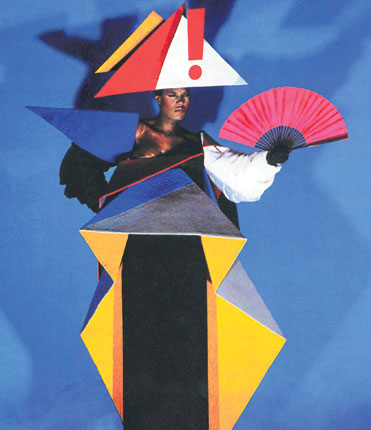

The songs themselves were produced at the rate of once a week, cutting up Jones’s performance into different ways. The lyrics are brief and pointed - “Work all day / As men who know / Wheels must turn / To keep the flow” – almost designed to be cut and pasted in any order. The track closest to the single release known as “Slave to the Rhythm” is actually titled “Ladies and Gentlemen: Grace Jones” on the album, and has the most complete performance of the lyrics. A rockier version, “Jones the Rhythm,” also released as a single, cuts the first verse, but features a spoken introduction by the actor Ian McShane, taken from Jean-Paul Goude’s biography “Jungle Fever” – McShane also reads from this on the track “The Frog and the Princess,” talking about using Jones as “the ideal vehicle for my work” – Jones does not feature on this track herself. In contrast, “Operattack” is only Jones’s voice, sampled and contorted through all the “work to the rhythm / dance to the rhythm” sections, punctuated by a wail of “SLAVE!”   

The tracks were produced at the rate of one a week, and the cost of studio time, and use of an orchestra, was pushed to $385,000 – that may be the equivalent of $926,000 in 2020, but many rappers’ videos have larger budgets. I do not know if the album came as a result of deciding to release all versions as one collection, instead of having to choose one for a single, or if the interviews and spoken sections were used to create a theme. What I do know is that Grace Jones, both as a performer and a personality, could carry a more conceptually challenging work like this, and make it a commercial success too, without having the pressure of breaking the mould with every album, which was expected of David Bowie.

In short, the “Island Masters” removes most of the spoken sections, some of them being printed as liner notes, alongside the album credits – Paul Morley and Paul Cooke are no longer credited for their contribution, as they are no longer heard, and Ian McShane’s sections are cut back. One track, “The Crossing (Ooh The Action...),” is turned into an instrumental by the cuts. Perhaps this is to make the reissue more successful commercially, by making it sound more like a regular album. There does exist an album titled, “Highlights from Jeff Wayne’s Musical Version of War of the Worlds,” which makes the original sound like it was similar in scale to Wagner’s Ring cycle, but hacking away much of Richard Burton’s narration makes the “Highlights” version weaker. Every word on “Slave to the Rhythm” is about Grace Jones, even if it not her saying them.

If it is not clear enough that I consider the original version of “Slave to the Rhythm” to be the full, proper, correct version, it is the most avoidable aspect of the “Island Masters” reissue – the spelling errors. The final track is given the title “Ladies and Gentleman: Grace Jones”, and Stephen Lipson is credited as Steven Lipson, while the Synclavier, an early sampling synthesiser used throughout the album, is confused with fish eggs: “The synclaviar was used extensively during the compilation of this biography: acknowledgement to New England Digital.” The Synclavier would later be overrun by computers like the Commodore Amiga 1000 and the Atari ST, but that’s beside the point.

08 March 2020

WE CAN’T REWIND, WE’VE GONE TOO FAR [225]


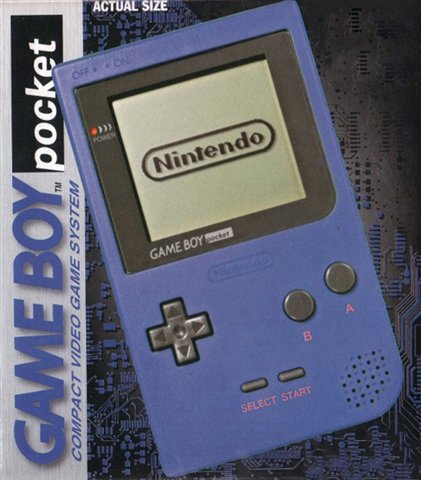
Having owned a Nintendo Game Boy for around a year now, my favourite game has been one I bought a few months ago. “Alleyway,” a clone of the arcade game “Breakout,” was part of the console’s launch line-up in 1989, and was designed by the console’s creator, Gunpei Yakoi. Having since played “Super Breakout” for the Game Boy Advance, I can appreciate the variations made on the original game, rearranging the blocks, adding bonus levels, and increasing the angles at which you can hit the ball.


When I have mentioned this to someone, either in passing at work or elsewhere, the terms “retro” or “old school” will be included amongst the reminiscing about when they owned a Game Boy, or from when they were a child. Having never been interested at the time, nothing about my playing “Alleyway” now has any level of nostalgia or irony to it. For my small collection of game cartridges, including “Tetris,” “Space Invaders” and “Game & Watch Gallery” – my small collection favours straightforward games that take little time – I am playing them in the best possible manner, on the proper hardware, with the proper controls. I am merely being sensible, as far as I know.


Can something be considered “retro” if I am still using it now? The word “retro,” describing something imitative of the recent past, led me to think it was related to going backwards, as in the word “retrograde,” instead of simply looking back, as in “retrospective” – in fact, I was right the first time, if you count things that imitate obsolete objects, like Nintendo’s NES Classic Mini. For something to be “retro,” it should appear to have been replaced, or overcome, by new ways of working, or thinking, but it is not affected by the longing for something lost that characterises nostalgia, because there has to be some level of irony for returning back to the object. No exaggeration of the obsolete object’s importance should have to be made, but there must some knowing reason for bringing it up.

If I was deliberately using a Game Boy to make some statement about how much better playing one is over using your phone, the Game Boy would be rendered as retro. I guess it could still be a retro item by my having chosen it over all the options available to me, having never owned a game console before, but having made my choice, I didn’t think anything more of it – I just put my money down.

The same reasoning appears to be behind the Evercade, a new portable games console launching in May 2020. It is similar in form to the Game Boy Advance, and uses cartridges that hold multiple games, but they add more modern innovations like an LED screen, and HDMI connection to your TV. However, they know their target audience: the cartridges will feature collections of games from Atari, Namco and Interplay, and their promotional Twitter handle is @evercaderetro, but it is hard to be cynical with another way to play “old school” arcade games.

01 March 2020

IF YOUR MEMORY SERVES YOU WELL [224]


As previously discussed, I like to prefer my own copies of songs and albums instead of streaming them. To that end, my Sony Walkman – I also insist on having my own dedicated music player, instead of just using my phone – is required to hold my CD collection, which was founded in 1996 with Alanis Morrissette’s album “Jagged Little Pill.” Right now, my Walkman holds six THOUSAND, six hundred and ninety-nine individual tracks, with some CDs left to transfer. 

There are duplicates in that total number: I have two copies of Madonna’s “Express Yourself,” two of Devo’s “Working in a Coal Mine,” and three of “Love Potion No. 9” by The Clovers. This is due to a small indulgence I make every so often: buying those cheap CD compilations you find in supermarkets, with titles like “100 Hits: The Best 80s Groove Album,” or “Now 100 Hits – Forgotten 90s.” These collections are usually made up of four or five discs, come in a cardboard sleeve, list no more than track names, artists, song writer credits and copyright information, and will be sold for no more than seven pounds, usually averaging at £5.

This is not simply a case of bulking out my CD collection. For one thing, outside from specialist shows and online streaming, “classic hits” or “gold” radio stations are moving away from older songs – the famous New York station WCBS-FM no longer plays songs from earlier than 1970, and has started playing tracks from the 2000s. There is also a nice feeling to find that a song you considered downloading, like “Good Stuff” by the B52s, turns out to be a song you owned after all.

I mostly prefer buying CDs over downloads due to cost. I may only spend 99p, or 79p, on a single track when a CD is very difficult to get or, in the case of Graham Gouldman’s soundtrack to the film “Animalympics,” it was only ever available on vinyl. However, so long as I can find about six or seven tracks on a compilation that I would consider downloading, I will buy the CD – I will eventually listen to the other seventy to ninety songs anyway, or discover a new favourite among the ones I didn’t realise I already had.

To illustrate, my most recent purchase of this kind was “The Hits Album: The 60s Album,” a four-disc, eighty-song collection from Sony and Universal. Seven songs will put me ahead of iTunes, although the CD quality, greater than MP3 and AAC, has already done that:

“Space Oddity (Deram Version)” – David Bowie: made for a promotional film Bowie made while at his first record label, but not seen or heard until 1984, this feels like a demo of the version everyone knows, recorded four months later, that sounds far more layered, and more confident. It is a moment in time, one that would have dismissed Bowie as a novelty act if it was heard at the time.

“This Wheel’s On Fire” – Julie Driscoll, Brian Auger & The Trinity: also known as the theme tune of “Absolutely Fabulous,” for which Driscoll sang with Jennifer Saunders’ husband, Adrian Edmondson.

“Tainted Love" – Gloria Jones: Soft Cell and Marilyn Manson still have nothing on the original, faster version.

“You Don’t Own Me” – Lesley Gore: a song whose message of emancipation survived its being used in ads by Armani and House of Fraser.

“The Name Game” – Shirley Ellis: Leigh, Leigh, bo-lee, bo-na-na, fanna fo fee, fee fi mo-me. Leigh!

“The More I See You” – Chris Montez: searching the lyrics brought up the Michael BublĂ© version first. Not everything needs the big band treatment.

“Cinderella Rockefella” – Esther & Abi Ofarum: why not?


23 February 2020

WE HAD IT WITH YOUR DISCIPLINE [223]


I recently read "Live From New York," an oral history of "Saturday Night Live," filled with anecdotes about making, and almost ruining, a TV show that has become a cultural institution in the United States. "SNL" has only just begun showing in the UK, on Sky Comedy – previously, it could only be seen in sections officially posted on YouTube, and when other channels occasionally showed compilations of old sketches. Despite this paucity, everyone is almost expected to know what “SNL” is, and its hold on the landscape of US comedy.

"SNL" is a ninety-minute mix of comedy sketches, stand-up, and music, aired on NBC since 1975. The first episode had only about five sketches, and the second had just one, but the quality of the performance and writing meant the other "variety" elements, which included short films and the Muppets, were edged out in favour of the "Not Ready for Prime-Time Players," initially Dan Ackroyd, John Belushi, Chevy Chase, Gilda Radner, and Jane Curtin, later joined by Bill Murray. 

They starred in what has since been characterised as a "comedy college," crafting their future stardom. They were expected to help write their sketches, perform them live, and put in the hours of preparation necessary to achieve this, most notoriously in an overnight rewrite of the show into every Wednesday morning that requires even the guest host to attend, regardless of whether you are Alec Baldwin, Tom Hanks or John Goodman – as of February 2020, these examples have presented seventeen, nine and thirteen times each, so they were all aware of what was required of them, and they kept coming back.


As the original stars left, the new class came in: Harry Shearer, Eddie Murphy, Billy Crystal, Martin Short, Julia Louis-Dreyfus, Jon Lovitz, Robert Downey Jr. (yes, for a year from 1985), Damon Wayans, Mike Myers, Ben Stiller, Rob Schneider, Adam Sandler, Will Ferrell, Jimmy Fallon, Seth Myers, Chris Farley, David Spade, Chris Rock, Sarah Silverman, Tina Fey, Amy Poehler, and so on. All of American comedy over the last forty years, particularly those coming from comedy groups like The National Lampoon, Second City, The Groundlings and the Upright Citizens Brigade, has six degrees of separation to "SNL" like no show in the UK has managed, unless you count appearing on "Have I Got News for You."

However, the above people have only achieved greater fame after leaving "SNL," prompting a constant raid for new talent. From a business point of view, taking your old characters with you as you leave - "The Blues Brothers," "Wayne's World," "Coneheads" - is even worse for NBC, and when you are a TV network that no longer has the likes of "Friends," "Will & Grace" and "The Office," you need all the help you can get. The comedy college needed to start its own graduate programme.

Reportedly, from 1999 onwards, the contracts for new "SNL" actors, usually up to five or six years anyway, state they can be taken out of the show by NBC at any point after their second year, and be put into a pilot for a NBC sitcom - the actor can refuse the first two pilots, but must accept the third, all while putting themselves up for up to three roles in films produced as spin-offs to "SNL".


Few results from this set-up have reached the UK. The film "Mean Girls," produced by "SNL" creator Lorne Michaels, and written by the show's former head writer, Tina Fey, was released in 2004. Two years later, "30 Rock" appeared, a sitcom written by and starring Fey as the host of a show like the show she left, named after the building in which her old show is based - that it was also well done was purely down to talent, including Alec Baldwin again. It took until 2019 for another “SNL” cast member to have a high-profile series, when the BBC showed “Shrill,” starring Aidy Bryant.

The rest has stayed mostly in the US: "MacGruber," a 2010 parody of "MacGyver" starring Will Forte, who later starred in the sitcom "The Last Man on Earth"; “Portlandia,” a sketch show starring Fred Armisen; the expansion of producer Michaels into weekdays with "The Tonight Show Starring Jimmy Fallon" and "Late Night with Seth Myers," and numerous other things that are due to come out, or were previously abandoned, like “Mulaney,” “Up All Night” and “Sons & Daughters,” a sitcom unrelated to the Australian soap opera.

Looking at the earlier list of alumni, Eddie Murphy only returned to the show as a guest in 2019, upon the release of his “comeback” film “Dolemite is My Name,” having hated the show by the time he left in 1984; Adam Sandler and Sarah Silverman were fired; and Julia Louis-Dreyfus and Robert Downey Jr. were not given enough to do, only becoming stars after they left. Furthermore, they all had contracts that allowed them to choose what they did next, for good or worse.

Many of the sketches from "Saturday Night Live" are worth watching on YouTube, particularly anything involving Matt Foley, Stefon, Debbie Downer, or Christopher Walken. However, the live nature of “SNL,” and the inevitable corpsing from some actors – particularly Jimmy Fallon, when he was there – may leave you hankering for something more carefully crafted.


16 February 2020

JUMP UP AND DOWN AND MOVE IT ALL AROUND [222]


Now I am producing the occasional “Dancing with the Gatekeepers” video in addition to these articles, I am considering how to add further elements to them – the writing is fine, the presentation will only become more confident with further practice, but the series, such as it is, currently has no music, and no opening titles. I have keyboards, and some tunes in mind, but creating opening titles appeared to be something well outside my abilities.

However, I remembered that, if I played more towards a nostalgia angle, creating effective titles suddenly becomes much easier. Before computers revolutionised visuals on UK television in the early 1980s, there would be departments at TV companies dedicated to moving construction paper and Letraset around our screens. If you wanted animation, it will be hand-drawn – television and film advertising in Britain was shaped and influenced by names like Richard Williams, Halas & Batchelor, Wyatt Cataneo, Bob Godfrey, Aardman, and so on. Very strong, very nostalgic, but still very difficult for me to replicate.

A possible answer has turned out to be something for which I cannot have any nostalgia, because we never saw it in the UK, mostly because the technology was far too expensive at the time. A major part of 1980s imagery, as reproduced in the present day, is landscapes made of pink grids and purple mountains, often looking a bit hazy – it evokes early computer animation, but American TV audiences were seeing views like this since the 1970s, and it was down to “Scanimate,”a name originally describing the computer system created by the Denver, Colorado-based Computer Image Corporation, but is now used to group together the images created using similar processes.


Very simply, Scanimate is analogue computer animation, using video synthesis. The easiest way to break this down is knowing that a synthesiser, in terms of music, is used to refer to a keyboard that is creating sounds through manipulating a sound wave, either by shaping the wave, or modulating it with other waves. Before this became a digital process, with the Yamaha DX7, synthesisers would have banks of levers, knobs and switches, all devoted to oscillating, amplifying and filtering sound. Now, change the sound wave for a TV picture, manipulating images you have scanned into your computer, using similar knobs and switches to increase and decrease image size, move them around, make them glow, change their colour, and break them apart. This all happens in real time, in buttery-smooth video, instead of animating individual frames.

The original intended use of Scanimate was to animate TV shows, with Computer Image Corporation making a test of a scene from “Scooby-Doo Meets the Harlem Globetrotters” – having watched it online, I can only assume that the smoothness of the animation jars with the limited movement of Hanna-Barbera’s style at the time. However, Scanimate found a niche in creating company and TV station logos, music videos, and opening title sequences for shows, over time creating an aesthetic based in flying logos and glowing landscapes, usually against a black background. 


Seeing demo reels of companies like Computer Image Corporation, Dolphin Productions and Image West, with many colourful works smashing into each other, I began to imagine an alternate universe where Terry Gilliam was working on one of these instead for “Monty Python’s Flying Circus”. However, Scanimate never really made it to the UK – there may have been artists working with analogue video synthesis on a small scale, but we never saw it introducing programmes on the BBC or ITV. Instead, the UK had to leap into computer animations pretty quickly – the first routine use of computer graphics on a British TV programme was in 1983, for the weather forecasts on the BBC’s “Breakfast Time,” using a Quantel Paintbox computer paid for with a special government grant. Back in the US, Scanimate had fallen out of favour by the mid-1980s, although one machine is kept running – more information can be found at www.scanimate.com.


So, how do I replicate Scanimate? It will be a case of observing exactly how objects are moved on screen, what colours are used, and applying a video tape filter to the finished image. However, at least I don’t have to draw anything, or cut up construction paper.

09 February 2020

WHO CARES WHAT PICTURE YOU SEE [221]


Talking about business when talking about art feels vulgar, but “Hollywood” means both, and its success is measured in box office figures and, perhaps soon, subscribers.

Each media conglomerate – behemoths like Disney; Comcast, owners of Universal Pictures, Sky TV and NBC; AT&T, recent buyers of Warner Bros. and HBO; and ViacomCBS, which includes Paramount Pictures – will soon have their own streaming services, requiring you to opt in to their service to get the shows they make, and the films they own. Netflix are already concentrating on their own productions as a result, saddling themselves with debt in the process. The entry of a phone company, AT&T, into this industry is not unusual, with technology and IT infrastructure companies already running their own services, like Google, Amazon and Apple.

Hollywood is now part of a vertically-integrated media industry, as in one company will now own the entire process from making a film to releasing it, controlling access to it at each stage. Ironically, the Hollywood studios were engaging in this themselves over seventy years ago, to the point where it was outlawed. 


Paramount Pictures is singled out in Classical Hollywood history for this, only because the name of the court case, “United States v. Paramount Pictures, Inc,” named the largest studio, but all the main studios were caught up in what became known as the “Paramount Decree,” which separated film studios from the theatre chains they owned. 

Through these chains, the studios were able to engage in practices such as “block booking,” which tied theatres into showing a number of films from one studio for a particular time – this could also be tied into “blind buying,” where the block could be bought without the theatre knowing what the films were. Other short films that made up a programme, like documentaries or cartoons, could be included as part of the block that had to be shown alongside the main features.

Theatre chains and film studios were linked for a number of reasons. Paramount started their own chain, while Warner Bros bought one that gave them a share in a bigger studio, First National, which they also bought. Meanwhile, the Loew’s theatre chain bought one film company to provide them with films, then bought another to increase the quality, then hired a manager for both of them by buying out their company as well – this became Metro-Goldwyn-Mayer, in that order.


As early as 1925, the Loew’s, Paramount and First National chains, and the film studios that made and distributed their films to them, were being described as a “film trust,” the same kind of trust that established Hollywood as the centre of the film industry in  the first place: the enforcement, by the Motion Picture Patents Company, of Thomas Edison’s patents for film cameras led to an exodus of many producers from New York by 1915, when it was deemed to have been illegally restraining the filmmaking trade, particularly in attempting to restrict films to one reel in length (about 11-16 minutes).

Like the “Edison trust,” the theatre practices were broken both by progress, and a court case. The US federal government took Paramount, MGM, Warner Bros, 20th Century-Fox, RKO (another studio founded by a theatre chain), Universal, Columbia and United Artists to court over the control they exerted as theatre owners, or through block booking their films. The new rules established in 1943, but only enforced after the case reached the Supreme Court in 1948, was that block booking would be limited to five films in each block, with no shorter films included, and studios had to screen films to exhibitors so they knew what they were booking... and the studios had to sell their theatres.

[Warner Bros sold their pre-1950 library to a.a.p. in 1956, for just $21m. 2019 value: $197.3m]

That this happened in 1948 is more crucial, as this was when television started properly entering homes, and the first full schedules of programming appeared on TV networks. Film studios made numerous deals to sell the rights for their films to TV – in some cases, studios like Warner Bros left themselves with no rights to their films prior to 1950, as there was no other way to make money from them at the time. Warner Bros would finally buy those rights back in 1996, after the home video boom, but ahead of online streaming.

Ultimately, the “Paramount decree” made it easier for independent film companies, previously reliant on the bigger studios for exposure, to put films into cinemas. One such company had always believed its films were worth more than what RKO had been paying them, never having sold them away to TV, eventually setting up their own distributor in 1953, named Buena Vista [“good view”] Film Distribution Company, since renamed Walt Disney Studios Motion Pictures.

02 February 2020

IT’S ONLY TEENAGE WASTELAND [220]


Halley’s Comet, last seen crossing our skies in 1986, will next appear in 2061. Until then, I watched “Night of the Comet,” a more modern version of one of those teenage drive-in sci-fi films – that is, modern for 1984.

Having spent the first ten or so minutes setting up the characters and situation, the main event, the flash of a comet in the night sky, seemingly turns all the people watching all the people watching it into to a red dust, apart from Catherine Mary Stewart’s character Reggie, her boyfriend, and a zombie, who appeared behind a door that had a poster for the film “Red Dust” attached to it.

“Night of the Comet” is a testament to the effectiveness of applying to cordon off a few areas of a city, and adding a red filter top the top half of a camera lens: instant desolation is created. Having established what pervades the sky throughout the film, the characters that survive – Reggie, her sister Sam, a man named Hector, and two children – behave very matter-of-factly, with the kind of stiff upper lip more often found in a British war film. You have moments when they realise who they have left behind, but they have no option but to move on, making the tonal shifts from gun target practice to trying out clothes in a shopping centre almost necessary.


The science in this film is also just about right for a drive-in-type plot – those that survived were in structures that contained steel, like a cinema projection room, a shed, or a truck, which repelled the cosmic effects of the comet, and that’s pretty much it. Because the location is Los Angeles, you imagine the skyscrapers would still be teeming with people, but because it was Christmas, and outside of business hours, presumably everyone was outside watching the comet.

A scientific institute, based underground, has also been affected by the cosmic dust they breathed in via the air-conditioning system, although what makes them a threat to the survivors, heard by them on the radio interrupting a pre-recorded show still playing from the night before, is their decision to take them for their healthy blood. One of the scientists, White, played by Mary Woronov, is almost grandstanding in her display of exasperation at the irrational rationalising of her colleagues, and she is the one who sacrifices herself when she sees no help for herself, after killing a colleague that could threaten a survivor.

I was surprised to find this was a rather thoughtful film, with no evidence of the shlock I would have expected to find. The writer/director of “Night of the Comet,” Thom Eberhardt, surveyed teenagers about what they would do in a post-apocalyptic situation, and once it was clear that the sticking point would begin with dating, the matter-of-fact tone must have made itself clear. The character of Reggie also inspired “Buffy the Vampire Slayer,” the story of another hero who has no option but to get on with it.