16 July 2018

LIVING TOGETHER, WORKING TOGETHER [118]


When I say I had been subjected to “stimulus progression,” it does not mean I built up my body to have ripped abs and guns – the term sounds like it comes from an intensive CrossFit-like exercise, as alien to me as the words “abs” and “guns.” Neither does “stimulus progression” mean I have been blind to the machinations of some deep state, as conspiracy theorists would have me believe. No, this sinister-sounding team is to do with music, mixed with a large dollop of business and psychology.

Once upon a time, most music heard outdoors, particularly in the background of shops and other public places, could have been provided by the Muzak Corporation, whose name hoped to evoke the new technology demonstrated by companies like Kodak. The name originally had more to do with how you heard the music: George Owen Squier, inventor of multiplexing for telephone lines as early as 1910, wanted to adapt the process to transmit multiple channels of music, as a way of competing with radio. However, as radio took off in the 1920s and 30s, a series of takeovers built Muzak into a well-known provider of piped music. It benefitted from being owned for a time by Warner Bros., whose vast music archive, built by the film studio as they introduced sound to film in the 1920s, was among the music provided.

“Stimulus Progression” was the next stage of Muzak’s development, after the company was bought in 1947 by William Benton, publisher of the Encyclopaedia Britannica (last printed edition published 2012, continues online). The new process grouped specially-recorded orchestral versions of existing songs into fifteen-minute chunks, during which the tempo of the songs played would speed up, and the brass-led instrumentation would become louder and brassier. Each programme would be separated by fifteen minutes of silence, so the listener could not become fatigued. Indeed, the intended effect was to speed up productivity in factories and offices, meaning a bit of ebb and flow was needed. A similar effect was attempted on BBC radio in the UK, as “Music While You Work” provided half-hour programmes of brass-led music from 1940 to 1967, although the music stayed at the same pace, and there were fewer attempts to accuse the BBC of mind control and brainwashing.


The downside of the exercise is how the original intention of the song is squeezed out of it. A Muzak instrumental I wanted to buy, from the ominously-titled album “Stimulus Progression 5” (sounding like “Stimulus Progression, Level 5”) turned out to be a version of “Living Together, Working Together,” a song written by Burt Bacharach and Hal David for the 1973 remake of the film “Lost Horizon.” I thought a Bacharach tune could be spotted from a mile off, until now, the changed tempo and unsubtle arrangement turning it almost into its own entity. It’s OK, but it’s no longer what it was.

“Stimulus Progression” ended in 1984, when Muzak, taken over by another firm, began programming other peoples’ songs again, in answer to shifting tastes. These days, what is left of Muzak, which has been in and out of bankruptcy, is now available to download by the general public for nostalgia purposes, which is a very recent event. However, anyone listening to their favourite songs hopes for a certain outcome, whether it is “Stimulus Progression” or not.

09 July 2018

BLANKETY BLANK, BLANKETY BLANK [117]


An iconic scene of British television exists almost entirely without explanation. The scene, replayed whenever the stars met, is of Kenny Everett bending and breaking Terry Wogan’s long wand of a microphone on the BBC game show “Blankety Blank.” What must have initially been an impulsive move, the result of Wogan’s pointing it in the wrong direction for a moment, became a procession of breakages, most notably with a pair of garden shears, as Wogan presented the opportunity each time they met. The phallic connotations of the pranks were definitely not lost on the audience, or on Wogan, who would present the rest of show with his microphone cruelly cut down or bent out of shape.
Anyway, why did Terry Wogan have that microphone? It is a question I have never seen asked, let alone answered – it just seemed to be accepted. I think I know the answer, and it stretches back over fifty years.

For the uninitiated, “Blankety Blank” is based on “The Match Game,” an American game show format made by Mark Goodson-Bill Todman Productions, which made their name with the panel game “What’s My Line?” This show spawned sequels “To Tell the Truth” and “I’ve Got a Secret,” while other Goodson-Todman shows also remade for British TV include “The Price is Right,” “Password,” “Blockbusters” and “Call My Bluff” – yes, at one point, “Call My Bluff” was being played for money.
“The Match Game” began back in 1962, with two teams of three, each headed by a celebrity, attempted to match their teammates’ answers to simple questions like, “what word is most often used when you talk,” or “what word would you use to describe Nikita Khrushchev.” If you did ask someone to fill in a blank, it would be something like, “to a rich man, [blank] dollars is nothing.” So much, so pedestrian. The show was in danger of being cancelled, which emboldened the staff writing the questions. Once statements like, “John liked to put butter on his [blank],” ratings picked up. However, the refined dinner party atmosphere, for that was how everyone on US TV in the 1960s dressed, kept the show in check.

Proceeding over “The Match Game” until it ended in 1969 was Gene Rayburn. Like Terry Wogan, Rayburn had presented on radio, except his shows on New York’s WNEW with Jack Lescoulie, and later Dee Finch, defined what we now know as a “breakfast show,” before Wogan turned his BBC Radio 2 breakfast show in a Beachcomber-esque subversive fantasy in the 1990s. Rayburn was also the original announcer of NBC’s “Tonight Show” in 1953, before becoming a game show host – watching Rayburn, stood behind a lectern on the remaining recordings of the 60s “Match Game,” microphone hung around his neck, he looks hemmed in. You wait for the veneer of respectability to crack, and for Rayburn to jump into the middle of the floor. He would get his chance.

When “Match Game” returned in 1973, just after the Watergate hearings and titled, erm, “Match Game 73,” it was like night and day. If sensibilities had changed, “Match Game” was there with double entendres to match: “Though Sam was eighty years old, he still liked to [blank],” “Mary never told anyone her [blanks] were fake,” “Raquel preferred to [blank] in the dark,” “Mary has never seen John’s [blank],” and “everyone watched in amazement as Tonto [blanked] the Lone Ranger” – after reading the last one, the returning Rayburn fell in laughter onto the stage’s orange shag carpeting.

This time, Rayburn was free to roam. He originally had a lapel microphone, but 1970s technology meant a wire trailed through a door to it. This would be replaced by a Sony EMC-51 microphone that Rayburn would have to hold, but when Richard Dawson, the show’s first permanent celebrity panellist, realised the handle was telescopic, he left it for Rayburn to pick up at the start of one show, and almost take his eye out. From there, it became a prop – a conductor’s staff, a magic wand, a doctor’s saw, anything it needed to be, at any length it needed, until constant wire pulling meant a long mic was cut to size.

The answers, this time from a panel of six celebrities not unlike the nine of “The Hollywood Squares” (retitled “Celebrity Squares” in the UK), were about as bad: one answer involving Batman and Robin was “queer,” with alternatives of “divine,” “married” and “fairies” – the contestant got three queers. These shows were going out as early as 11:30am, but with the filth residing in the minds of the audience, this version of the show became the number one show on US daytime TV, beating all other game shows, all of the soap operas, and the news.


This version of “Match Game,” which lasted until 1982, is worth finding, and is readily available online. If you imagine the more refined and polished primetime show that “Blankety Blank” was, “Match Game” was rough, randy and raucous. As said by one frequent celebrity panellist on the game, the theatre director and actor Charles Nelson Reilly, “this is not a show, this is a social engagement”: the shows were recorded at the weekend, and the lubricated condition of the celebrities made it clear which ones were recorded after their lunch break.

(The best answer I have ever seen on “Match Game” was a 1976 episode. The statement was, “Clive the lion tamer treats his wife like one of the lions – each night he makes her [blank].” The answer given was, “put his head in her mouth.” That answer was given by actress Mary Wickes, best known for playing a nun, in “Sister Act.” The show was broadcast, uncut, at 3:30pm.]

This does sound like I am describing a different show to what the BBC made of it – “Blankety Blank” could be watched by the whole family, but Terry Wogan’s tenure as host was more “cheeky” than Rayburn was on “Match Game” – Wogan was less likely to grab hold of cameras or climb over the audience. Thankfully, someone noticed the potential of the prop microphone, although the BBC’s answer was to stick a lapel mic on a car radio aerial. However, “Blankety Blank” has the better theme tune, almost a British answer to the 1960s “Batman” theme.

The demise of “Blankety Blank” appears to have been the prizes – not allowed or able to afford tens of thousands of pounds in cash, the BBC relied on things like TVs, crock pots and wicker furniture, and once that becomes the focus of the gags, especially once Les Dawson took over from Wogan in 1984, things start going amiss. Dawson’s wordplay is unmatched, but once you have someone who takes the prime prop of the show, and deliberately breaks it themselves on their first appearance, you know something has been lost.
In a parallel universe, “Blankety Blank” would be on the air, just as “Match Game” is on US TV right now, presented by no less than Alec Baldwin, with a cordless version of the stick mic – why RuPaul or Ice T have not done an Everett with it is beyond me.

02 July 2018

LIFE’S A GAS [116]


So much for adults teaching children where food comes from, for we did not realise on what we relied for our drink.


The UK’s shortage of carbon dioxide has remained among the top news stories for the last two weeks, due to demand outstripping supply. However, just as when KFC ran out of chicken when changing their distributor [link], the disruption in CO2 supply could have been foreseen: summer plus World Cup equals beer and barbecue, with CO2 used to provide fizz to the beer, while food has a longer shelf life free of mould.
Heineken was the first company to warn of problems, although competitor AB Inbev, owners of Budweiser, Stella Artois and Foster’s, are less affected because their brewing process reuses CO2. Coca-Cola announced it was reducing production for a while, as carbonated water is only added to the US-made syrup at the bottling plants, and supermarkets started rationing sales of some products as a precautionary measure.

However, once Warburtons, the UK’s largest producer of crumpets, halted production at two of its four plants after running out altogether, and once the Food and Drink Federation starts to say, "If a similar issue were to affect the water industry... then you feel government would be acting with far greater urgency," you do have to wonder why this headless-chicken-running doesn’t happen more often.

There are lessons to be learnt by everyone here, as I had never given thought to the process by which a gas – one of the two I can make myself - is produced en masse, let alone how finds its way into my Diet Coke.

Five plants in the UK produce the majority of the CO2 it uses, based in Ipswich, Manchester, Ince, Wilton and Billingham. However, the primary use of these plants is to produce ammonia, a compound of nitrogen, from air, and hydrogen (NH3), where CO2 is a by-product of the process used to create it – the gas captured is then purified and sold as gas, refrigerated liquid or dry ice. The ammonia is used in fertiliser – and here is the problem, because ammonia is the reason for building the plants, with CO2 becoming a lucrative side business.

At the time of writing, the plants are reopening, following a shutdown period for maintenance purposes – the plants in Manchester and Ince have restarted, with the others to follow. The shutdown was planned, as only so much ammonia is required by the fertiliser industry, but the increased demand for CO2 means the food and drink industry is relying on the production cycle of the fertiliser industry. This is not in the same manner as any industries relying on electricity, as electricity is still as much of a utility as gas and water, despite the industry required to fulfil that need – the CO2 is needed, and it’s just as well that someone can provide it.

It is inefficient to distil CO2 from air, but the race is on to improve: for example, the Swiss start-up company Climeworks opened the first direct air capture plant in June 2017 with the intention of proving the concept is worth pursuing.  The plant currently feeds its CO2 back into a greenhouse to increase food production, but the eventual goal is to assist in producing carbon-neutral fuels. Other methods being developed focus on producing cells that can replicate photosynthesis. However, the current production cost of producing a ton of CO2 is $600 for Climeworks, versus $80 per ton using the capture method deployed at the ammonia plants, while competing with other fuel sources require that amount to be virtually zero.


The alternative is less useful – you can buy canisters of “food fresh nitrogen” (N
2) to use in food packaging, the most well-known example being bags of Walkers crisps, while users of Tupperware already know storing food in a vacuum is also effective. However, while the slightly tart taste of “sparkling” carbonated water is due to CO2 bonding with some water molecules to form carbonic acid (H2CO3), too much nitrogen in water is harmful to life, and is never added, with only a few milligrams of nitrates found in mineral water.

In the UK, all we can do right now is wait for fertiliser production to reach normal levels, and probably find something else to drink and eat in the meantime.

25 June 2018

I’VE GOT PAC-MAN FEVER [115]


Nintendo made headlines when they announced the NES Classic Mini, the limited-edition nostalgia machine and cash cow for scalpers on eBay, would be re-released on Friday 29th June. Anxious not to miss out a second time, I pre-ordered my console directly with the company. I’m still extremely surprised to have received mine in the post ten days early, but if Nintendo wanted me to write a review it, they knew what to do... I have no evidence of that, of course.
Firstly, I have never owned a games console before this one. In fact, I never really play video games – I still call them “video games.” I remember wanting a Sega Master System once, which was more successful in the UK and Europe than the NES – it might have been the games available, and the general noise Sega made at the time. Moreover, our family owned proper computers, which the British gaming industry still targeted more in the 1990s – we had a Commodore Plus-4, then two Acorn Electrons, followed by an Amiga 500, before my brother joined the PlayStation bandwagon, and I switched to PCs for school work.

Why did I buy a games console now, and why the NES Classic Edition? I have never been interested in the immersive experience that comes with the big, expensive games released these days on the PC, PlayStation or Xbox, and I have no intention of spending hours playing a game to get all of the story it wishes to tell – these needs have already been met for me by the cinema. At the same time, outside of Tetris and Angry Birds, I would appreciate a game that could keep me entertained for a few minutes, something the Atari 2600 could not do with its restrictive set-up.
Therefore, the NES Classic Mini, regardless of the attention to detail in reproducing a miniature version of the original Nintendo Entertainment System, a box of grey textured plastic intended to resemble a 1980s video cassette recorder (down to the front-loading cartridge slot), and irrespective of the nostalgia of playing the first two “Legend of Zelda” games, “Duck Hunt” and a brace of games with “Mario” in the title, it is a machine that presents the right type of game to someone that never plays games. This is meant to be your childhood, but for me, it is brand new.
I know of “Super Mario Bros,” and have seen people play it, and I surprised myself in completing the first level at my first try. However, as with the other games I have played so far – the original “Mario Bros,” “Donkey Kong” and “Pac-Man” - I have yet to get much further: all the sprites moving about on screen, and the screeching square-wave music and sound effects, have meant I have only played for half an hour at a time so far. I could turn the volume down, but the noises help you know what you have done.

It has to be said, I have played the first level of “Pac-Man,” one of the simpler video games there could possibly be, about twenty times now, and I have only reached the first level twice. That should be endlessly frustrating to me, but because Nintendo repurposed the cartridge “Reset” button on the console as a way to save your progress, returning to the main menu and pick another game, I can remain in control. While the short cable for the game controller has meant I have plugged the console into the spare HDMI port on my PC monitor, it does mean I can keep that “Reset” button close at hand.
I can imagine the one major problem that affected game consoles years ago was the cathode-ray tube televisions into which they were plugged: there was always an audible hum that came when a computer-generated signal was displayed on a TV, plus it was never possible to match up lines of pixels with the TV’s scan lines. Therefore, playing on a new TV or monitor, the admirable reproduction of the original NES graphics is as sharp as they can be – the optional “CRT” feature, if you need it, feels reductive and futile, and I have never turned it on. What is more, because the difference between the old PAL and NTSC TV systems meant NES games played slower on the old 50Hz PAL system - while I can play these old games at the 60Hz speed they were made to run, Super Mario’s legs are no longer.

For the last few weeks, an original Nintendo Entertainment System console, with one controller and no cartridges, has been on sale in an electronics shop in my local high street for £110. Meanwhile, I bought the NES Classic Mini, a spare controller, and a power supply for £68, and I have thirty solid, memorable and enjoyable games, that remained so without needing to be updated, just as the same can be said of Monopoly, Scrabble and Ouija boards. Nintendo could have provided access to their Virtual Console service, but that provide competition against is other consoles – unlike the upcoming Atari VCS, the NES Classic Mini is all it needs to be, without trying to play PC games too.
Despite the wait from 2016, I am happy the NES Classic Mini lived up to the hype, proving to be my perfect games console - and, at the rate I’m progressing through Pac-Man, Nintendo may release a Wii Classic by the time I finish all the games.


18 June 2018

KEEP IT UP, KEEP IT UP [114]


In the desert, the large metal head of the singer Grace Jones rises from the horizon. Twisting right, its mouth opens, and a car speeds out across the sand, before screeching to a halt. We glimpse the driver, but the car screeches away. We see the driver again: it is Jones herself. “Yeah,” she sings. Once more, a tone higher, “Yeah!!” Higher still: “Yeahhh!!!” Under the car, a caption appears: “Nouvelle CX2.” The car speeds back into the mothership’s mouth, which twists back, hiccups – a hand covers the mouth from the after-effects of eating the car – and the head moves back down. 
When this advertisement appeared in 1986, the Citroën CX had already been on sale for twelve years, and will be for another five, but the refresh completed on the car was designed to reinforce its image as one of the most distinctive and unique cars on the road, alongside the 2CV [link]. It was a company car, a family car, a grand tourer, and the limousine for a number of heads of state, from Jacques Chirac to Nikolai Ceausescu. Grace Jones was seen to be driving it, but Grace Kelly also drove it in real life.

However, it was amazing anyone really got the change to buy one, let alone drive it. In 1974, when the CX was going on sale, Citroën were being rescued from bankruptcy: under the direction of the French government, Peugeot started buying shares in the company, before taking full control in 1976, creating PSA Peugeot Citroën. The cars would continue, but later sharing of parts and design with Peugeot diluted what made Citroën different for many years, until its recent resurgence with the C3, C4 Cactus, and the DS line. The CX is considered to be the final “real Citroën.”
What makes it special? The CX replaced the DS, the goddess-like (“déesse”) space-age saloon, itself on sale for twenty-years. The CX updated the DS’s design with sleeker, lower lines, achieving a low drag co-efficient (usually written as Cx), and influencing later cars like the Rover SD1, Ford Sierra [link] and even the current Audi A5, which is even the same length as the CX. It updated the hydragas suspension from the DS, giving each wheel its own sub-frame to eliminate practically all bumps on the road – the estate model was used to film horse racing, matching speed with a stability of picture that matches what Steadicam would achieve later. This suspension would later be licensed by Rolls-Royce to use on its own cars. Power steering was also standard, but that was because two-thirds of the car’s weight was over the front wheels.

Inside, the dashboard was more reminiscent of a spaceship, presenting the driver with an array of buttons and levels, instead of the usual dials and control stalks. The driver had control of raising and lowering the suspension – there is little that is cooler than seeing a car rise up before it drives away – but they also had to turn the indicator lights off after they made their turn. These two abilities were enough to ban them from being sold in the US, where they were required to be automatic. These regulations have changed since, but at a time where you couldn’t even make the headlights aerodynamic to fit flush with the lines of the car, the CX was restricted to private imports.
Despite all the engineering packed into it, the bankruptcy of Citroën remained the key problem for the CX throughout its time on sale. The CX was meant to have a rotary engine inside, instead of a regular piston engine, but that project was cancelled before it could appear. The company was short of cash, but it bought Maserati, and co-developed the SM coupé, the lessons of which would be included in the CX – Maserati was sold in 1975, after the Italian government stepped in to stop Citroën from liquidating the company.


With Citroën only making either tiny cars, like the 2CV, or massive cars, Peugeot was adept at filling the mid-size market alongside Renault, but with both Peugeot and Citroën
having the big car market between them in France, so it could only take sales off itself. With the next Peugeots being the priority, all the advantage the CX had would slip away. The update in 1986 was more cosmetic, and more conventional, but was also expected to happen about five years earlier, sales having already dropped off by then. When a replacement did appear, in 1989’s Citroën XM, it was based on the Peugeot 605. When that car ended production in 2000, it took five years for the CX-like C6 to even appear.

The last CX was made in 1991, and we can now look at it without the problems that blighted its production. Fortunately, many other car makers have too, influencing their designs to this day, and in projecting the image Citroën strives to meet today. Having said that, my father once hired a Citroën C4 Cactus, and for all the touch-screen controls, having rear windows that could wind down would have been nice.

11 June 2018

A COFFEE, A SANDWICH AND YOU [113]


By now, I thought this story would have been resolved, but apparently not – at least, not yet.
While the United States has learned that the restaurant chain IHOP (International House of Pancakes) is temporarily rebranding itself as “IHOB” to highlight the other food on offer, like Burgers, Heinz has left the UK wondering whether it will carry out its threat, announced last week, that it was thinking of changing the name of its salad cream to “Heinz Sandwich Cream,” to reflect how the way it is most often used has changed, since its introduction in 1914. Immediately, I had my suspicions, partly because we have been in the same situation with salad cream before, but because it is part of the company’s history, and because salad cream is already used in “Heinz Sandwich Spread,” a tangy-tasting relish not unlike coleslaw.
Heinz invented salad cream, and it was the first product they created for the UK market, having already started making baked beans in the US. It is not common outside the UK, but it is easiest to describe it in relation to mayonnaise: while both condiments have the same base ingredients, salad cream will also include mustard, salt and sweetener for a tangier taste, and while mayonnaise is at least 70 per cent oil, salad cream is only 25 to 50 per cent oil – this made salad cream a popular alternative when wartime rationing in the UK reduced access to oil, while also making it a lower-calorie substitute for mayonnaise.
I should also say that I love salad cream, using it on everything: as a vinaigrette on salad, as a dipping sauce and, especially when it comes to Quorn and other vegetarian replacements for meat, as a replacement for the juices for meat – it helps that I don’t like gravy. Therefore, I am not the subject of Heinz’s PR department, making me more irritated by any change they are planning to make to a product that I already believe to be perfectly fine.

Today, Heinz are not really in a position to change the name of salad cream: having defined it, it has been copied by many other companies, who will not change their name to match. More likely, other brands could then lay claim to being the definite article. Like Marathon bars, Jif and Oil of Ulay, people may hesitate when finding the right product, meaning Heinz has created distance between themselves and their customers.
However, there has already been the inevitable outcry on social media, and the resulting publicity in news stories, at little or no cost to Heinz, will have resulted in increased sales of salad cream. The last time Heinz caused this much of an outcry was in 1999, when they threatened to withdraw sales of their salad cream altogether – with no social media to engage, people had to protest more actively, but when Heinz began a £10m advertising campaign in 2000, you can conclude they were not going to spend this much without knowing the demand was out there. A later series of ads, in 2005, included taglines like, “Not just for salads,” and “Think outside the bottle,” sounding very similar to the thinking behind today’s possible change.
In 2010, the BBC was required to reduce costs, and proposed to close Radio 6 Music, its alternative music station – the resulting publicity from the outcry increased its audience, destroying the original argument for closing it down. Someone at Heinz must be a listener.

04 June 2018

TELL ME ALL THE THINGS YOU WANT TO DO [112]


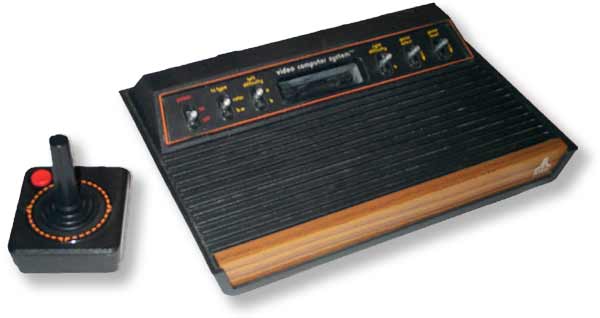
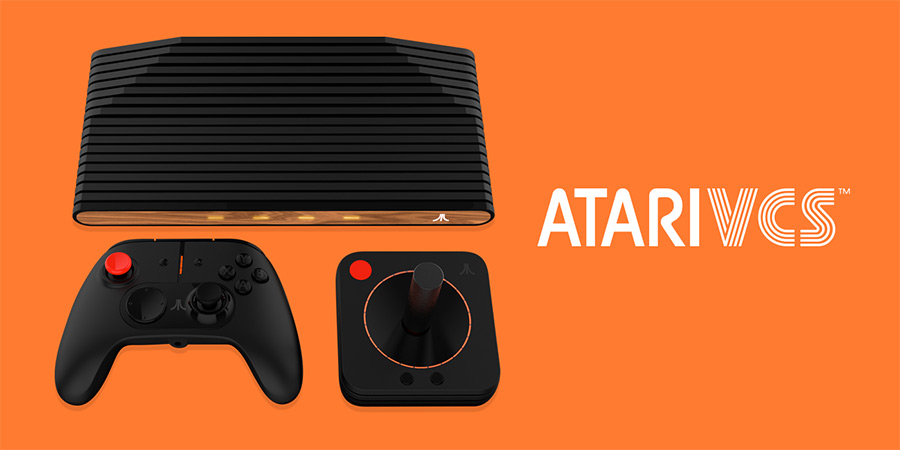
The Atari 2600 games console was originally named the VCS, for “Video Computer System,” when it launched in 1977, and “VCS” is the name given to the neo-2600 that Atari – now probably about the fifth company to have used that name – will launch in 2019, having raised $2 million in its first day of crowdfunding and pre-orders.
The new VCS evocates the ridged black plastic and woodgrain design of the original console, except using real wood this time, while the voice-activated, Linux-based system with ARM processor is expected to play high-end PC games, along with the original 2600’s games, in addition to streaming video services.
In other words, the new VCS is a standard modern computer, but in a box designed to make you feel nostalgic for a forty-year old machine whose abilities were so limited, and so notorious for how it was programmed, it may make those that did program those games want to throw it against a wall.

Put simply, a computer will usually have a “frame buffer,” driving the display, with its own dedicated memory to store each frame before it is sent out. However, computer memory was very expensive in 1977, with the latest new home machines, like the Apple II and Commodore PET, offering only 4 kilobytes (4096 bytes) of RAM – this was also the capacity of the 2600’s game cartridges. In order to reduce the cost of the 2600 as much as possible, only 128 bytes of RAM were made available for all the variables of your game, and no frame buffer was provided at all. Making the most efficient use of the available space will also involve writing each byte in assembly language, using hexadecimal code, to be read directly by the processor.

What are you supposed to do? The answer is you have to tell the machine what to draw on each individual line of the picture you see on your TV screen. This uses only 20 bits (2.5 bytes) of the RAM each time a line is drawn, but you have to keep it going, and time your program correctly, or otherwise your picture falls apart. Furthermore, you can only draw the left-hand side of the screen, with the 2600’s Television Interface Adaptor (TIA) chip enabling you to copy or flip it to the right side. The TIA, also responsible for the sound and reading the instructions given by joysticks and paddles, also provides the two on-screen player sprites, two “missiles,” and one “ball” to make your game – when the most people have played at home is “Pong,” that really is all you needed.


In time, people knew how to exploit the opportunities created by “racing the beam,” attempting to create more detail on screen by timing each line to draw multiples of sprites before the end of each line is reached – this means the bank of alien spaceships required for “Space Invaders” to work became possible, and the release of the most dynamic game yet for the 2600 caused sales of the system to explode. Atari’s own search for producing the best backgammon game that ran “bank switching” between different chips, allowing for bigger, more complicated games, and 1982’s “Pitfall!,” one of the most advanced games for the 2600, was created to make use of a realistic running man that programmer David Crane had made three years earlier.
The Atari 2600 was finally withdrawn from sale in 1992 – as there was no exclusive deals to produce games, and no copy protection in the cartridges, anyone could produce a game for the machine, so nobody stopped. Even now, homebrew programmers continue to see the restricted nature of the 2600 as a challenge, most notably a version of “Halo” written by Ed Fries, who led the team at Microsoft that created the first Xbox console.

This is a very simplified version of how the Atari 2600 works, but when you then look up the story about the debacle over the “E.T. The Extra Terrestrial” game, it becomes clear that the programmer Howard Scott Warshaw needed longer than the five and a half weeks given to him to make something more refined.