25 June 2018

I’VE GOT PAC-MAN FEVER [115]


Nintendo made headlines when they announced the NES Classic Mini, the limited-edition nostalgia machine and cash cow for scalpers on eBay, would be re-released on Friday 29th June. Anxious not to miss out a second time, I pre-ordered my console directly with the company. I’m still extremely surprised to have received mine in the post ten days early, but if Nintendo wanted me to write a review it, they knew what to do... I have no evidence of that, of course.
Firstly, I have never owned a games console before this one. In fact, I never really play video games – I still call them “video games.” I remember wanting a Sega Master System once, which was more successful in the UK and Europe than the NES – it might have been the games available, and the general noise Sega made at the time. Moreover, our family owned proper computers, which the British gaming industry still targeted more in the 1990s – we had a Commodore Plus-4, then two Acorn Electrons, followed by an Amiga 500, before my brother joined the PlayStation bandwagon, and I switched to PCs for school work.

Why did I buy a games console now, and why the NES Classic Edition? I have never been interested in the immersive experience that comes with the big, expensive games released these days on the PC, PlayStation or Xbox, and I have no intention of spending hours playing a game to get all of the story it wishes to tell – these needs have already been met for me by the cinema. At the same time, outside of Tetris and Angry Birds, I would appreciate a game that could keep me entertained for a few minutes, something the Atari 2600 could not do with its restrictive set-up.
Therefore, the NES Classic Mini, regardless of the attention to detail in reproducing a miniature version of the original Nintendo Entertainment System, a box of grey textured plastic intended to resemble a 1980s video cassette recorder (down to the front-loading cartridge slot), and irrespective of the nostalgia of playing the first two “Legend of Zelda” games, “Duck Hunt” and a brace of games with “Mario” in the title, it is a machine that presents the right type of game to someone that never plays games. This is meant to be your childhood, but for me, it is brand new.
I know of “Super Mario Bros,” and have seen people play it, and I surprised myself in completing the first level at my first try. However, as with the other games I have played so far – the original “Mario Bros,” “Donkey Kong” and “Pac-Man” - I have yet to get much further: all the sprites moving about on screen, and the screeching square-wave music and sound effects, have meant I have only played for half an hour at a time so far. I could turn the volume down, but the noises help you know what you have done.

It has to be said, I have played the first level of “Pac-Man,” one of the simpler video games there could possibly be, about twenty times now, and I have only reached the first level twice. That should be endlessly frustrating to me, but because Nintendo repurposed the cartridge “Reset” button on the console as a way to save your progress, returning to the main menu and pick another game, I can remain in control. While the short cable for the game controller has meant I have plugged the console into the spare HDMI port on my PC monitor, it does mean I can keep that “Reset” button close at hand.
I can imagine the one major problem that affected game consoles years ago was the cathode-ray tube televisions into which they were plugged: there was always an audible hum that came when a computer-generated signal was displayed on a TV, plus it was never possible to match up lines of pixels with the TV’s scan lines. Therefore, playing on a new TV or monitor, the admirable reproduction of the original NES graphics is as sharp as they can be – the optional “CRT” feature, if you need it, feels reductive and futile, and I have never turned it on. What is more, because the difference between the old PAL and NTSC TV systems meant NES games played slower on the old 50Hz PAL system - while I can play these old games at the 60Hz speed they were made to run, Super Mario’s legs are no longer.

For the last few weeks, an original Nintendo Entertainment System console, with one controller and no cartridges, has been on sale in an electronics shop in my local high street for £110. Meanwhile, I bought the NES Classic Mini, a spare controller, and a power supply for £68, and I have thirty solid, memorable and enjoyable games, that remained so without needing to be updated, just as the same can be said of Monopoly, Scrabble and Ouija boards. Nintendo could have provided access to their Virtual Console service, but that provide competition against is other consoles – unlike the upcoming Atari VCS, the NES Classic Mini is all it needs to be, without trying to play PC games too.
Despite the wait from 2016, I am happy the NES Classic Mini lived up to the hype, proving to be my perfect games console - and, at the rate I’m progressing through Pac-Man, Nintendo may release a Wii Classic by the time I finish all the games.


18 June 2018

KEEP IT UP, KEEP IT UP [114]


In the desert, the large metal head of the singer Grace Jones rises from the horizon. Twisting right, its mouth opens, and a car speeds out across the sand, before screeching to a halt. We glimpse the driver, but the car screeches away. We see the driver again: it is Jones herself. “Yeah,” she sings. Once more, a tone higher, “Yeah!!” Higher still: “Yeahhh!!!” Under the car, a caption appears: “Nouvelle CX2.” The car speeds back into the mothership’s mouth, which twists back, hiccups – a hand covers the mouth from the after-effects of eating the car – and the head moves back down. 
When this advertisement appeared in 1986, the Citroën CX had already been on sale for twelve years, and will be for another five, but the refresh completed on the car was designed to reinforce its image as one of the most distinctive and unique cars on the road, alongside the 2CV [link]. It was a company car, a family car, a grand tourer, and the limousine for a number of heads of state, from Jacques Chirac to Nikolai Ceausescu. Grace Jones was seen to be driving it, but Grace Kelly also drove it in real life.

However, it was amazing anyone really got the change to buy one, let alone drive it. In 1974, when the CX was going on sale, Citroën were being rescued from bankruptcy: under the direction of the French government, Peugeot started buying shares in the company, before taking full control in 1976, creating PSA Peugeot Citroën. The cars would continue, but later sharing of parts and design with Peugeot diluted what made Citroën different for many years, until its recent resurgence with the C3, C4 Cactus, and the DS line. The CX is considered to be the final “real Citroën.”
What makes it special? The CX replaced the DS, the goddess-like (“déesse”) space-age saloon, itself on sale for twenty-years. The CX updated the DS’s design with sleeker, lower lines, achieving a low drag co-efficient (usually written as Cx), and influencing later cars like the Rover SD1, Ford Sierra [link] and even the current Audi A5, which is even the same length as the CX. It updated the hydragas suspension from the DS, giving each wheel its own sub-frame to eliminate practically all bumps on the road – the estate model was used to film horse racing, matching speed with a stability of picture that matches what Steadicam would achieve later. This suspension would later be licensed by Rolls-Royce to use on its own cars. Power steering was also standard, but that was because two-thirds of the car’s weight was over the front wheels.

Inside, the dashboard was more reminiscent of a spaceship, presenting the driver with an array of buttons and levels, instead of the usual dials and control stalks. The driver had control of raising and lowering the suspension – there is little that is cooler than seeing a car rise up before it drives away – but they also had to turn the indicator lights off after they made their turn. These two abilities were enough to ban them from being sold in the US, where they were required to be automatic. These regulations have changed since, but at a time where you couldn’t even make the headlights aerodynamic to fit flush with the lines of the car, the CX was restricted to private imports.
Despite all the engineering packed into it, the bankruptcy of Citroën remained the key problem for the CX throughout its time on sale. The CX was meant to have a rotary engine inside, instead of a regular piston engine, but that project was cancelled before it could appear. The company was short of cash, but it bought Maserati, and co-developed the SM coupé, the lessons of which would be included in the CX – Maserati was sold in 1975, after the Italian government stepped in to stop Citroën from liquidating the company.


With Citroën only making either tiny cars, like the 2CV, or massive cars, Peugeot was adept at filling the mid-size market alongside Renault, but with both Peugeot and Citroën
having the big car market between them in France, so it could only take sales off itself. With the next Peugeots being the priority, all the advantage the CX had would slip away. The update in 1986 was more cosmetic, and more conventional, but was also expected to happen about five years earlier, sales having already dropped off by then. When a replacement did appear, in 1989’s Citroën XM, it was based on the Peugeot 605. When that car ended production in 2000, it took five years for the CX-like C6 to even appear.

The last CX was made in 1991, and we can now look at it without the problems that blighted its production. Fortunately, many other car makers have too, influencing their designs to this day, and in projecting the image Citroën strives to meet today. Having said that, my father once hired a Citroën C4 Cactus, and for all the touch-screen controls, having rear windows that could wind down would have been nice.

11 June 2018

A COFFEE, A SANDWICH AND YOU [113]


By now, I thought this story would have been resolved, but apparently not – at least, not yet.
While the United States has learned that the restaurant chain IHOP (International House of Pancakes) is temporarily rebranding itself as “IHOB” to highlight the other food on offer, like Burgers, Heinz has left the UK wondering whether it will carry out its threat, announced last week, that it was thinking of changing the name of its salad cream to “Heinz Sandwich Cream,” to reflect how the way it is most often used has changed, since its introduction in 1914. Immediately, I had my suspicions, partly because we have been in the same situation with salad cream before, but because it is part of the company’s history, and because salad cream is already used in “Heinz Sandwich Spread,” a tangy-tasting relish not unlike coleslaw.
Heinz invented salad cream, and it was the first product they created for the UK market, having already started making baked beans in the US. It is not common outside the UK, but it is easiest to describe it in relation to mayonnaise: while both condiments have the same base ingredients, salad cream will also include mustard, salt and sweetener for a tangier taste, and while mayonnaise is at least 70 per cent oil, salad cream is only 25 to 50 per cent oil – this made salad cream a popular alternative when wartime rationing in the UK reduced access to oil, while also making it a lower-calorie substitute for mayonnaise.
I should also say that I love salad cream, using it on everything: as a vinaigrette on salad, as a dipping sauce and, especially when it comes to Quorn and other vegetarian replacements for meat, as a replacement for the juices for meat – it helps that I don’t like gravy. Therefore, I am not the subject of Heinz’s PR department, making me more irritated by any change they are planning to make to a product that I already believe to be perfectly fine.

Today, Heinz are not really in a position to change the name of salad cream: having defined it, it has been copied by many other companies, who will not change their name to match. More likely, other brands could then lay claim to being the definite article. Like Marathon bars, Jif and Oil of Ulay, people may hesitate when finding the right product, meaning Heinz has created distance between themselves and their customers.
However, there has already been the inevitable outcry on social media, and the resulting publicity in news stories, at little or no cost to Heinz, will have resulted in increased sales of salad cream. The last time Heinz caused this much of an outcry was in 1999, when they threatened to withdraw sales of their salad cream altogether – with no social media to engage, people had to protest more actively, but when Heinz began a £10m advertising campaign in 2000, you can conclude they were not going to spend this much without knowing the demand was out there. A later series of ads, in 2005, included taglines like, “Not just for salads,” and “Think outside the bottle,” sounding very similar to the thinking behind today’s possible change.
In 2010, the BBC was required to reduce costs, and proposed to close Radio 6 Music, its alternative music station – the resulting publicity from the outcry increased its audience, destroying the original argument for closing it down. Someone at Heinz must be a listener.

04 June 2018

TELL ME ALL THE THINGS YOU WANT TO DO [112]


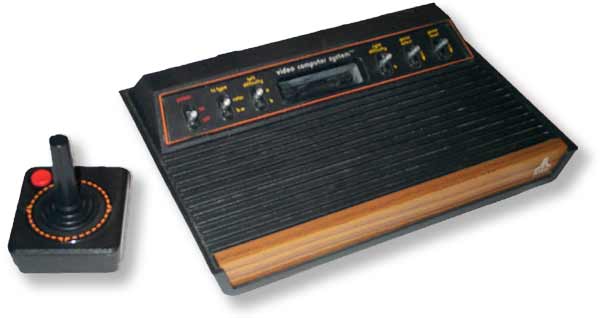
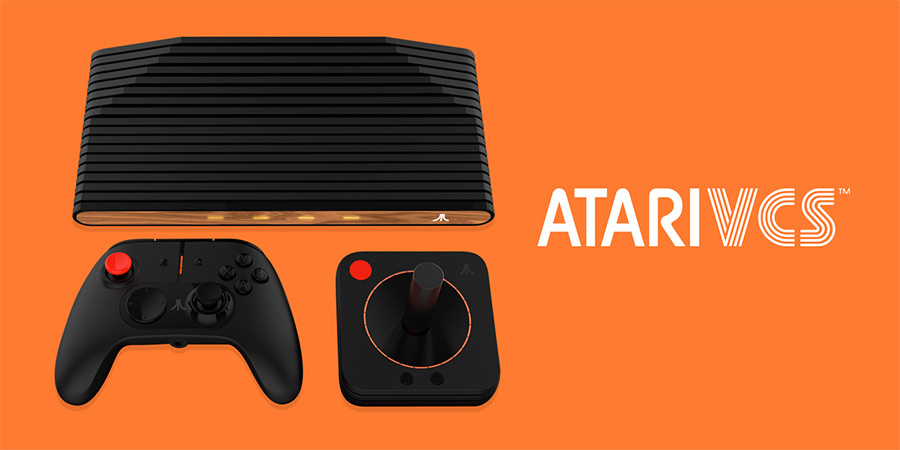
The Atari 2600 games console was originally named the VCS, for “Video Computer System,” when it launched in 1977, and “VCS” is the name given to the neo-2600 that Atari – now probably about the fifth company to have used that name – will launch in 2019, having raised $2 million in its first day of crowdfunding and pre-orders.
The new VCS evocates the ridged black plastic and woodgrain design of the original console, except using real wood this time, while the voice-activated, Linux-based system with ARM processor is expected to play high-end PC games, along with the original 2600’s games, in addition to streaming video services.
In other words, the new VCS is a standard modern computer, but in a box designed to make you feel nostalgic for a forty-year old machine whose abilities were so limited, and so notorious for how it was programmed, it may make those that did program those games want to throw it against a wall.

Put simply, a computer will usually have a “frame buffer,” driving the display, with its own dedicated memory to store each frame before it is sent out. However, computer memory was very expensive in 1977, with the latest new home machines, like the Apple II and Commodore PET, offering only 4 kilobytes (4096 bytes) of RAM – this was also the capacity of the 2600’s game cartridges. In order to reduce the cost of the 2600 as much as possible, only 128 bytes of RAM were made available for all the variables of your game, and no frame buffer was provided at all. Making the most efficient use of the available space will also involve writing each byte in assembly language, using hexadecimal code, to be read directly by the processor.

What are you supposed to do? The answer is you have to tell the machine what to draw on each individual line of the picture you see on your TV screen. This uses only 20 bits (2.5 bytes) of the RAM each time a line is drawn, but you have to keep it going, and time your program correctly, or otherwise your picture falls apart. Furthermore, you can only draw the left-hand side of the screen, with the 2600’s Television Interface Adaptor (TIA) chip enabling you to copy or flip it to the right side. The TIA, also responsible for the sound and reading the instructions given by joysticks and paddles, also provides the two on-screen player sprites, two “missiles,” and one “ball” to make your game – when the most people have played at home is “Pong,” that really is all you needed.


In time, people knew how to exploit the opportunities created by “racing the beam,” attempting to create more detail on screen by timing each line to draw multiples of sprites before the end of each line is reached – this means the bank of alien spaceships required for “Space Invaders” to work became possible, and the release of the most dynamic game yet for the 2600 caused sales of the system to explode. Atari’s own search for producing the best backgammon game that ran “bank switching” between different chips, allowing for bigger, more complicated games, and 1982’s “Pitfall!,” one of the most advanced games for the 2600, was created to make use of a realistic running man that programmer David Crane had made three years earlier.
The Atari 2600 was finally withdrawn from sale in 1992 – as there was no exclusive deals to produce games, and no copy protection in the cartridges, anyone could produce a game for the machine, so nobody stopped. Even now, homebrew programmers continue to see the restricted nature of the 2600 as a challenge, most notably a version of “Halo” written by Ed Fries, who led the team at Microsoft that created the first Xbox console.

This is a very simplified version of how the Atari 2600 works, but when you then look up the story about the debacle over the “E.T. The Extra Terrestrial” game, it becomes clear that the programmer Howard Scott Warshaw needed longer than the five and a half weeks given to him to make something more refined.

28 May 2018

YOU'LL NEVER LIVE IT DOWN UNLESS YOU WHIP IT [111]


When you can no longer tell yourself that all will be OK in the end, and how it can’t possibly get any worse, you confide in the relentless march of time: it must be over soon.
The twenty-second amendment of the United States Constitution means that Monday 20th January 2025 is the latest possible date that Donald Trump must vacate the office of President, even if he ends up serving two consecutive terms.
With the prospect of a Trump presidency lasting into my forties – hell, “The Simpsons” may still be producing new episodes by then – I need to plan for what lies ahead.
When the date of a meeting with North Korea was first announced, I refrained from writing about a post-Trump world because I was prepared to give him the benefit of the doubt, even if I previously said that was something he never needed before [link]. However, after the commemorative coins were minted, Trump cancelled the meeting, then said it was back on, then said “we’ll see,” then attacked “The New York Times” for the umpteen thousandth time, I feel safe that the level of chaos Trump has created around himself is enough to imagine I may, one day, be able to look past it.
I do not expect public discourse, let alone politics, to return to how it was, because people have been emboldened by what Trump has said, either in opposition or in agreement to them. It is all the news has become: racial hatred, sexual assault, cultural wars, identity politics, immigration, democratic processes, the due process of the law, and “alternative facts” – everything is conjecture, everything is debatable, and we all have to live with that, apparently.

What I do know is that everything will find its centre, or equilibrium once more, even if it has to make a new one, as people take stock of where everything has reached. All the rhetoric of “drain the swamp,” and “Make America Great Again” – originally Ronald Reagan’s slogan, without the inclusive “Let’s” – implies that the core of what the United States was has been lost, or destroyed, although you would only talk your own country down in the way Trump has if you were insistent that you were the only person who could fix it.
The only reason I can feel sure of this, apart from hope, is that this situation sounds a bit like what happened to the French philosopher Jacques Derrida, as people failed to grasp his concept of “deconstruction,” which he intended to be a continuing re-evaluation of Western values, as done by previous philosophers, and not a destruction of them, with the intent of making your own ones. Derrida had to explain that the notion of there being a “centre” was a functional one, as there had to be a centre that helped to form our understanding. Then again, when all you have is the text, the words, to hand, you have to see them in the sense of how they have been used. For Trump, this is all we have, no matter how badly it is presented, or spelled, on Twitter, in a form that relies on impulsivity, ahead of deliberation, time, and thought.
I hope it is clear that this isn’t a repudiation of the way politics is currently conducted in the United States, but of the way conduct is currently conducted. The lessons that the next President may take from Donald Trump may be to engage with their population in a similar way, or find different ways, but any American who may feel the same as me, a non-American, does not have a President that effectively represents them – we’ll just have to wait and see how long before that changes.

21 May 2018

AND WHO WOULD HAVE THOUGHT, IT FIGURES [110]


Nine months after promising myself that I would upgrade my iPod nano to a Sony Walkman [link], I have done exactly that, when the iPod stopped working for a few days. I have now launched headlong into the devotional task of loading my CD collection of twenty-plus years onto it – the first purchase, from Virgin Megastore in Portsmouth, was of “Jagged Little Pill,” by Alanis Morrissette, and “Now 35.”
Apparently, my NW-A45 Walkman can play “HD Audio,” which Sony defines as anything above CD quality. I had not looked into this before buying it, as my main intention was to find something that can accept a 200 Gb micro SD card – Sony says it can take a card with ten times that capacity, but none has been made yet. However, if this Walkman is expected to beat CD quality, then I can leave MP3 behind: in 2015, Ryan Maguire reconstructed a version of Suzanne Vega’s atmospheric song “Tom’s Diner,” used in the 1990s as a control when testing the “lossy” codec that compresses sounds into MP3 format, that only plays the sounds that were, in effect, discarded – enough sound is left behind for you to still identify the song as “Tom’s Diner.”
After some research, I now have the definitive advice for converting your CDs, which I will be using on my entire collection: only use FLAC (Free Lossless Audio Codec) format, setting it to 44.1 kHz 16-bit if you have the option, because this matches the settings of the CD.


The “lossless” element of FLAC, a format that has been around since 2001, means all the available information on your CD is being retained. Because of this, you do not set a bitrate of kilobits per second like you would with MP3, because that rate will change with the song. Using the first CD I converted, “Hot Potatoes: The Best of Devo,” there is a difference based on the type of song: “Devo Corporate Anthem,” a simple fanfare, reaches a maximum of 655 kbps, while “Through Being Cool,” a more involved, complicated, recording has a maximum of 871 kbps. A few Bee Gees tracks I have break the 1,000 kbps barrier, louder and richer than the Devo recordings, which proves what you can still get from a CD if it has been mastered correctly.
Put in as simple a manner as I can, CDs use a 44.1 kHz sample rate because it is twice the 20Hz to 20 kHz range of the human ear – it also matched the highest usable rate for recording digital audio on video tape - while the 16-bit pulse-code modulation used to digitise the sound, the latest development of a technology initiated to reduce the noise in long-distance phone calls, means the amount of detail picked out by the technology is more than “enough,” with a grove that won’t wear out like vinyl will.
What this does mean is that, if you have a CD that is “24-bit remastered,” this is talking about the digital master used to make the CD, which will still be 16-bit, even if more detail is available to sample. As an example, I have a 24-bit remastered copy of David Bowie’s album “Never Let Me Down,” but I also have the original 1987 release, because Bowie hated the song “Too Dizzy” enough to leave it off all subsequent reissues. The song “Beat of Your Drum,” with a chorus sounding like Bruce Springsteen’s “Glory Days,” is 34.3 Mb in size when taking a FLAC copy from the 1987 album, but the 24-bit mastered version raises this to 36.6 Mb – the difference is there, but you need a very quiet room to start with.

But with Sony highlighting the enhanced “experience” of HD Audio, the extra resonance adding to the recording, I feel like I have already achieved that, for now, by leaving MP3 behind, regaining the lost layer of sound from my, in some cases, decades-old CDs.

14 May 2018

HE’S GOT A TV IN EVERY ROOM [109]


It has been nearly two years since I added a smart TV box to my television, and my viewing has never recovered. Unless I want to watch a programme right away, instead of catching up later, my TV will be switched from “DTV” to “HDMI-2,” so I can dive into the BBC iPlayer, YouTube and Netflix – “HDMI-1” is for my blu-ray player, having got there first. I am very suited to this arrangement, as I now have a larger screen to watch the video essays you often find on YouTube for films, music, computer games, dead shopping malls, and other subjects that may be too niche for “regular” TV.
Because I don’t often watch traditional TV programmes, my TV has turned into a multipurpose screen for whatever I can put onto it, including films and podcasts. The same can be said of my phone, as well as my tablet and desktop computers: they all are now types of computers, able to do most, if not all, the same as each other. It reminded me of a Venn diagram I copied out of a book over fifteen years ago, where Nicholas Negroponte, founder of, among other things, MIT’s Media Lab, the One Laptop Per Child initiative, and “Wired” magazine, had predicted that media, telecommunications, and consumer electronics, with few overlaps even by the 1990s, will have become a conglomeration of “edutainment” by about 2005 – Negroponte described this in the mid-1980s, even referencing the idea of “surrogate travel” using virtual reality.

Now we have our all-purpose screens, what I have realised is that, now that “television” is – was – a bit of a magpie medium to begin with. Films have been a big part of schedules since the very beginning, but that involved taking an established form out of its usual setting, a pitch-black, quiet room – and making it a background object in the corner of a room. Comedy programmes, panel games and discussion shows, especially when in front of a studio audience, have their origins in theatres and halls – drama used to be the same, but have become more filmic themselves. News is often nothing more than radio with pictures – indeed, BBC News reports are planned as a one-minute piece for Radio 5 Live or the World Service, before pictures are added further down the line. What was television offering all this time, other than making it more convenient to access moving pictures?
Decades ago, I would have asked the same question of cinema, radio and newspapers, as television has been described as the death knell for all of them, but I just don’t think that TV won if you can now access all of these through a screen. I don’t think the internet won either, because describing it as a medium, in the same way that the others are types of media, doesn’t really work either – everything is online because it is higher in quality and efficiency for getting content to you than by sending it over the air, or by printing it out. The restraints on different genres of content were also freed from TV more quickly than it took for TV to adopt them, but everything moves faster these days, and you can never say there is nothing to watch on TV anymore.