Showing posts with label Nestle. Show all posts

03 March 2024

FELIX KEPT ON WALKING [438]

Original and current versions of Felix the Cat and "Felix the cat"

Felix the Cat is an animated cartoon character that first appeared in the cartoon “Feline Follies” in 1919. Like a hand-drawn Charlie Chaplin, but with a tail that magically transformed into anything needed in the moment, Felix’s surreal cartoons were a big hit in the 1920s, making him a mascot to celebrities and sports teams, and entering homes in toy form. Losing out to Mickey Mouse by the end of the decade, Felix continued in newspaper comics strips and on television, now carrying a magic bag that changed shape as required. Having not starred in a major film or series in over twenty years, Felix survives as intellectual property owned by DreamWorks Animation since 2014, his image licensed for merchandise in a manner not unlike that of another character not seen on screen in years, Betty Boop. 

“Felix the cat” has been the mascot of Felix cat food since 1989. Originally a manufacturer of dry cat biscuits in Biggleswade, Felix Catfood Ltd was bought by the Quaker Oats Company in 1970, and a relaunched product range included wet food in tins. A new advertisement campaign launched in 1989, including television for the first time, which featured a realistically-drawn black-and-white cat, named for the product and behaving as mischievously as any regular cat. This campaign continues to the present day, surviving the brand’s change in ownership to Spillers, the former makers of Kattomeat, and to Nestlé Purina Healthcare.

Searching “Felix the Cat” on Amazon.co.uk brings up “Felix” ahead of Felix, and while that is an indicator of which one has consistently made more product in the last thirty-five years, it still annoys me – I never got used to one of the UK’s Brexit negotiators being named David Frost, when they were not the same David Frost that interviewed Richard Nixon and presented “Through the Keyhole”.

There is precedence in the UK, also involving cat food and a cartoon cat, of something arriving with the same name, but it resulted in a name change to avoid confusion: Spillers already had a cat food named “Top Cat”, meaning the Hanna-Barbera series was renamed “Boss Cat” on television from 1962. This cat food is no longer produced, so there is no longer any confusion. Later in the 1960s, Marvel Comics were able to introduce their own superhero named “Captain Marvel” in the absence of the original Fawcett Comics character, now largely known as “Shazam” due to new owner DC Comics being legally unable to use their original name to title their books.

With DreamWorks’ copyright for Felix the Cat extending to “prerecorded goods” and “musical instruments, namely, guitars” with licensing of that image from there, there is the space for two Felix-es to exist, and because they exist in industries separate from each other, there should be no issue, apart from my own cognitive dissonance.

What I do find amusing is that, while DreamWorks’ copyright covers the later version of Felix the Cat, with a rounder head, larger eyes, no whiskers, longer legs and shorter body than the 1920s version – this also means that, like the “Steamboat Willie” Mickey Mouse, the original Felix the Cat is in the public domain – the cat food “Felix” that continues to appear in animated ads on television was recently redrawn with larger eyes, a more human-like smile and, like the original Felix, their own song “It’s Great to Be a Cat”, sung by Robbie Williams. However, this will remain contained within the space of an ad break, and away from the original Felix.

12 November 2023

THAT’S THE WAY THE MONEY GOES [422]

A last one.

I decided to write about Caramac, “The Caramel Flavour Bar”, the demise of which has been announced by its manufacturer Nestlé, because some headlines kept referring to it as a chocolate bar. Its recipe used treacle instead of cocoa, its lack of egg or gelatine making it vegetarian, and instead of the whole milk used by Cadbury’s in Dairy Milk bars, Caramac used skimmed milk.

I am also using the past tense because the news led to the near-complete disappearance of Caramac by people acting upon nostalgia in the shops, when declining sales in the present day prompted Nestlé’s decision, efficiently clearing shelves for other products they wish to sell. The simultaneous withdrawal of the Animal Bar, a chocolate bar aimed at children with pictures of animals on them, and the closure of a factory near Newcastle, were reported less often.


Unlike Coca-Cola’s rebranding of Lilt as a Fanta flavour, decried in the pages of “The Spectator” and incorrectly reported as the drink being withdrawn, this really is the end of a product, unless you buy the ingredients and make it yourself. My family has already been deprived by KP of their Brannigans crisps, my private joke being that their potent beef and mustard flavour, not reused on any of their brands, was decommissioned and put beyond use. Like Caramac, I only found Brannigans in discount stores and the occasional newsagent ahead of their withdrawal – perhaps I should have seen it coming, so fans of KP’s Roysters T-bone flavour crisps should stock up, to keep sales up, as petitions speak less loudly than cash.

Caramac was introduced in 1959 by Mackintosh’s, a maker of toffee that involved caramel in all its most famous brands, such as Quality Street, Rolo and Toffee Crisp. Merging in 1969 with Rowntree’s, manufacturers of Kit Kat, Smarties, Aero, After Eight, Black Magic, Polo mints, Fruit Pastilles, Fruit Gums, Yorkie and Lion bars, Nestlé took over the combined Rowntree Mackintosh in 1988 – chocolate products were branded under Nestlé, with Rowntree’s retained for the rest. I found all these products in my local supermarket, still being too established and commonplace for nostalgia to have taken form, except for how much larger tins of Quality Street used to be.

Nestlé themselves invented white chocolate with the Milkybar in 1936, and the caramel-infused Milkybar Gold variant is perhaps more sustainable for them than the separate brand of Caramac. However, like Caramac, the Australian and New Zealand versions of Milkybar don’t use cocoa butter, so adding treacle to those may get them back where they started. Any desire of mine for Caramac to be brought back wouldn’t be worth the effort, and if I did want a confectionery to be brought back, it would be Rowntree’s Cabana, a chocolate bar containing caramel, cherries and coconut – I’ve never had one, but I like the sound of it.


23 July 2018

YOU’RE AS COLD AS ICE [119]


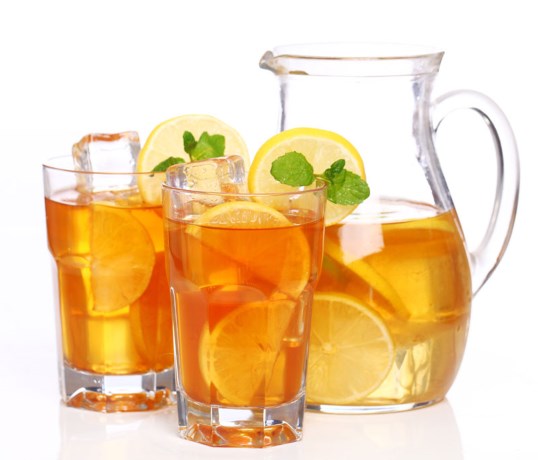
How is this for an uphill struggle: in 2010, Lipton Ice Tea, the leading brand iced tea in the United Kingdom, launched a nationwide promotional campaign, giving out free samples, under the headline, “Don’t Knock It Until You’ve Tried It,” because a survey revealed sixty per cent of people claimed they hated the taste of the drink, without even trying it. After the campaign, 87 per cent of samplers claimed they enjoyed it, and 73 per cent said they were likely to buy it in future.
How is this for a success story: during the summer of 2017, Lipton’s social media feeds in the UK were filled with queries about stocks having run out in stores, particularly Tesco, leading me to drink Lucozade for a number of weeks until supplies returned.

For all the hundreds of years of trade and empire-building that fused the British national identity with tea plantations in the Far East, and for all the arguments about whether you add the milk before or after the water - the answer to both is “no” - the UK always drinks its tea hot. It could well be to do with the weather: iced tea had been around in the United States since the 1860s, but gained prominence after Richard Blechynden, a tea plantation owner and salesman, changed his hot tea stand at the 1904 World’s Fair in St. Louis, which also hosted the Olympic Games, to iced tea, as no-one wanted a hot drink in the intense heat.

Today, I could make my own iced tea – I have been known to boil five peppermint tea bags in a bowl, put that water into a jug, add more water, but not sugar, and chill – but I usually buy bottled tea, made in the American tradition. Lipton is the world leader at any temperature, having grown from a chain of British grocery shops that bought its own tea plantation to maintain supply. However, in the UK, Lipton is only known as an iced tea brand because Unilever’s other brand of tea bags, PG Tips, is more popular. Also-rans in UK shop fridges are Coca-Cola’s Fuze Tea, and Nestea from Nestlé, and imports like the New York-based Snapple and Arizona.

Before I lionise Lipton any further, a taste test is required. I already had Lipton lemon iced tea at home – they sell other flavours, but I find anything other than lemon tends to overpower the tea, which I thought was the point – so I found Snapple’s and Arizona’s equivalent, while a peach hibiscus-flavoured bottle of Fuze Tea had to suffice, as they don’t sell a lemon-flavoured one in the UK. Honestly, all of them have a similar taste, except for the Arizona tea, and I could still taste the tea amongst the peach in the Fuze Tea sample. However, Lipton still wins for me because while it is sweet, the taste of tea is stronger – the others feel a little more like juice with added tea.
I left out the Arizona tea from the above because their entire package is curious. Apart from being a New York-based company using another state’s name, their tea is usually sold in gigantic, luridly-coloured 23 fl oz (680 ml) cans. While this is the only way they advertise, helping to maintain the 99-cent cost of the drink, it also means you are sold what is listed as “3 portions” in a package that cannot be resealed – I had to find a bottle for what I wanted to finish later. Furthermore, Arizona’s lemon tea is made differently from the others, in the common “sun brewed style,” usually done by steeping tea leaves, in non-boiling water, in the sun for hours – the aim is for a more “mellow” taste, but I read it as “weak.” I may prefer my tea cold, but I don’t want the taste to lie down on me either.