25 August 2017

NEVER SPEND YOUR GUITAR OR YOUR PEN [70]


It is hard to confirm which single product has been manufactured the most in human history, but the ubiquitous Bic Cristal pen, with over ONE HUNDRED BILLION made since 1950, but be up there. After that, we may then be looking at food and drink items, and components of bigger pieces, like bolts, nuts and screws.


Like television, the ballpoint pen is the culmination of the work of many people. The wonderfully-named John J. Loud first patented such a pen in 1888, but that patent expired through lack of interest. However, the Hungarian inventor László Bíró. with his chemist brother György, are credited with inventing the “biro” because they overcame problems others found with keeping the writing ball in place. Instead of just trying to fix it in position, they coupled it with the viscosity of the ink – with the right consistency, the ink can continue to flow without drying around the ball, and without leaking. The Biros’ invention, and the Second World War, took them to Argentina in 1941, where the first “Birome” pens were made in 1943. 
However, of all the companies to make ballpoint pens under licence from the Biros, only one was successful enough to buy the patent from them, and that was Société Bic, based in the town of Chichy, just outside of Paris. Already makers of parts for writing instruments, and well before they started making disposable lighters and razors, the Bic Cristal pen, originally known as the “atomic” pen, appeared as deceptively simple as the original 1948 Citroën 2CV, while using the same thorough, forward thinking in its design.

Firstly, the hexagonal barrel of the pen makes it as easy to grip as a pencil. Making both the barrel and inkwell from see-through plastic made it cheap, while providing a rarely-seen, for the time, guide to how much ink is left. The hole found half-way down the barrel ensures the air pressure inside the barrel remains the same as the outside, while the stainless-steel writing ball, held within a tip made from a brass / nickel compound, was milled to a diameter of one millimetre, with an accuracy of one hundredth of a millimetre. This formula has only changed a couple of times – as of 1961, the writing ball was made of a harder-wearing tungsten carbide, used in Parker’s Jotter pens since 1954, and the top of the cap was cut off in 1991, in case anyone chewing the end of their pen accidentally swallowed it.
The success of the Cristal was sealed by the time it went on sale in the United States in 1959, with Bic having bought the Waterman pen company the year before. Bic were able to offer a pen for 29 cents, when Parker were offering their Jotter for two dollars - Jotter refills costed more than an entire Cristal. It was Bic that introduced the idea that pens could be disposable, with ends broken off, or chewed out of all recognition, or used to clean out people’s ears, or just thrown away. The joke that no Bic pen has ever been “finished” was used in a 2015 promotion, with Bic giving £10 to customers that could send an (untampered) empty pen. Mind you, no-one dares speak of the tone-deaf “Bic For Her” much now, but I can’t say anything that wasn’t said better by Bridget Christie.

The Bic Cristal pen became part of the collection of the Museum of Modern Art in New York in 2001, and of the Pompidou Centre in Paris in 2006, preserving it for ever more… but you can find them everywhere…

17 August 2017

ALL THAT GLITTERS AIN’T GOLD [69]


I first became aware of rose gold when Apple released the iPhone 6S and 6S Plus in 2015, giving me a year to wait for my phone contract to end before I could get one in this colour. Apple added this colour to its range, which already included gold, mainly to attract Chinese buyers, a growing market for them. However, you can now trip over products that are burnished with a colour originally intended to be highly exclusive, but that is what the popularity and fashion games are all about.
For the record, gold becomes rose gold when you add copper to it, turning more to red when copper content is increased. The most recognised shade of rose gold is usually 75% gold, 22.5% copper, and also 2.5% in silver. In order to create that particular shade of pink – “rose” does make it easier to sell – you need to be able to afford it, in the same way that blue could only be created for paintings and elsewhere by using highly prized minerals, like cobalt and azurite, until synthetic dyes could be developed.
While “regular gold” is eternally in demand, the fortunes of rose gold rise and fall with fashion, and what can be made with it. Originally known as “Russian gold,” having been part of a palette of white, green, yellow, purple, blue and grey gold alloys used by high-end jewellery makers like Farbergé, they of the imperial Easter eggs.
However, rose gold mainly entered Western culture in 1924, with the Trinity ring by the French jeweller Cartier, which combined three bands of gold, silver and rose gold. Although now on general sale, and expanded into necklaces, bracelets and earrings, it was originally a private commission by one of the most romantic of Frenchmen, the novelist, poet and filmmaker Jean Cocteau – I had thought it was a gift to his love, but it turned out to be for himself, wearing it on his left little finger.
Rose gold did retreat in popularity in the 1930s, tastes turning to more simple, geometric designs, and stark colours like white gold and platinum. However, this itself died out when platinum was needed in production during the Second World War, and so the cycle back to yellow and rose gold began again.
Of course, the proliferation of rose gold we have now is only of the colour, not the metal – it is complementary to other jewellery, and to some skin tones, so everyone has made a run towards it. To me, it is not far away from bronze, which is copper mixed with tin, so I am now waiting for bronze to make a comeback – I can buy a Sharpie marker pen in bronze, and Apple’s next iPhone apparently could replace rose gold with a copper-based colour. I don’t know if this is the cause of fashion looking for the next big colour, but when our ideas of silver and “gold,” regular yellow-coloured gold, are clearly defined, and not to be played with, playing with colour appears to be the next step.

11 August 2017

I'VE GOT THE KEY, I'VE GOT THE SECRET [68]


Earlier this week, Bill Burr, former head of the US National Institute of Standards and Technology, lamented advice he had given to government departments in 2003 about choosing the best password. It was Burr’s advice that led to the requests to add capital letters and punctuation marks to our own passwords but, as it turns out, this can make them easier to crack, so the advice now is to use less commonly used words, like “ecumenical,” or “obfuscatory,” or sets of words, like “trout mask replica,” or “floppy croissant hell.”

It appears the new advice discourages creating the systems that help us to remember the ever-growing passwords required to access everyday services, in favour of a more creative, less predictive measure, with no pattern to predict. It is the same principle behind reCAPTCHA’s “NoCAPTCHA” – you can make a robot repeat a word, or recognise a shape, but asking if they are a robot suddenly requires some reasoning.

Following the new advice, we may all now have a page or two of random words resembling either a Dadaist monologue, or a portal into what is really going on in your head. However, the other major advice we are given about passwords – that we must never write them down – has not kept pace with how the need for them has grown like bacteria. Is there really a completely safe, fool-proof way to keep your passwords secure, and would those measures be worth it?
Testing each possible method rigorously should involve the same creative means as the passwords themselves, i.e. thinking as facetiously as possible. Therefore, if you invest in a safe to store your valuables, consider how it could just be picked up and taken away, unless you find a safe big enough to store yourself as well. Failing that, it should be screwed into the most immovable floorboards in your house, the nearest concrete surface, or a hotel wardrobe.
Likewise, human error is an enormous, potentially worrisome factor. It may be one thing to save a document containing all your passwords, give it a misleading name, and its own password to access it, then squirrel it in a secret folder, but it is another to delete the file by accident, through the silent threat of “Fat Finger Syndrome.” This menace may also accidentally delete a password for one place when you are updating another, making the next visit to that place, or site, into a mountain of guesswork that could lock you out of there.
Meanwhile, the complex biometric information we expect our mobile phones to interpret and encrypt can be lost by, well, losing your phone, with subsequent calls to your contract provider to lock your device, resulting in lost time, and through resets and kill switches, lost data, unless you made a backup somewhere. User service agreements are often expediently clicked past, but the printed manuals of that bygone technology, the 1980s-90s electronic personal organiser, made clear the manufacturer was not responsible for the loss of personal data, even when changing the button battery that held the pre-flash memory in place and, furthermore, any important data should still be written down, and kept in a safe place.
This is before we even get to the two-way street of encryption, as the companies holding your data need to ensure they don’t lose, or mislay your data, be it in the post, in a coffee shop, or on a train. Our passwords are asked to be unpredictable, but information can be lost just as unpredictably. If you feel your information is secure and under control, ask that question to yourself again, then again, and again, just to make sure.

04 August 2017

WALKING ABOUT WITH A HEAD FULL OF MUSIC [67]


Last week, Apple announced they were withdrawing the iPod shuffle and nano after twelve years on sale. In 2005, they were the latest extensions of a product line aiming to cram your music collection into your pocket, definitively doing away with cassettes, discs and vinyl for a generation of people.
And now, over a decade later, vinyl has come back, CDs remain on general release, nostalgia over cassettes exist, and MP3 players have been replaced by smartphones and streaming services like Spotify and, crucially, Apple Music, renting music instead of selling, and not taking up space on devices or on shelves.
Meanwhile Sony, creators of the Walkman personal stereo system in 1979, using their existing 3.5 mm headphone jack they created fifteen years before, will carry on regardless, having kept up with their customers’ needs, changing from cassette players to CDs, DAT, Mini-Disc, Video 8, MP3, and lossless audio, bringing out new formats as the needs arise.
This new situation may be suited to many people’s needs, but not mine: I was given free access to Spotify with a previous phone contract, and bought only a few MP3s of songs in that time, but when I found their rights to stream songs by Prince had ended, I did not begin to pay when the contract ended. (Prince is now back on Spotify, but still missing “Fury,” one of my favourite of his songs.)

I have owned an iPod nano for nearly five years, the latest in an almighty long line of personal stereos, radios and MP3 players, and it has been the most flexible and durable device of them all. Apart from storing nearly two thousand songs, with many more via FM radio, it has been dropped, rained on, thrown, and lost in the snow – earlier this year, a sign was put up on the way out of work, alerting the owner of “Leigh Spence’s iPod,” the name I gave the device to find it on iTunes, to call into the nearby police station.
The relief at getting my iPod back was palpable, even though I would not have lost a single song if I never saw it again. Being without the ability to hear my favourite music exactly when I need it speaks to the deep personal bond we make with music and their artist, be it David Bowie or the Spice Girls. The devotional task of loading all of Bowie’s studio albums onto my iPod, having dug deeper into his music following his death, while doing the same with Kate Bush’s work after being mortified at not owning any of it, can be as special as making a mixtape once was – playing and sharing love of music, to do yourself, and your friends, a massive favour in times to come.
But now, with my iPod filled to its 16Gb capacity, no next-generation model to come, and the larger iPod Touch really just an iPhone without the phone (or FM radio), where can I go next? The only logical answer is back to where it all started: Sony.
Looking for a film or album to buy in HMV, I know that Sony had a hand in creating all the formats I can buy, including Blu-Ray, but not vinyl (except perhaps the turntable to play the discs on). It also shouldn’t be a surprise music labels like Columbia/CBS, Arista, RCA, and Epic, and film companies Columbia, TriStar, MGM and United Artists, are all owned by Sony – this innovative new technology isn’t going to sell itself.
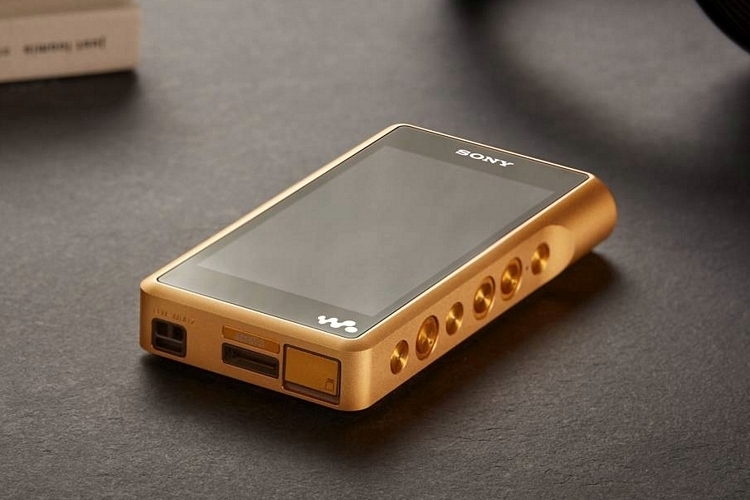
There is one Walkman I would like: a copper body, premium components, and 256 gigabytes of memory. Does anyone have a spare three thousand pounds?

28 July 2017

LIKE BREATHING OUT AND BREATHING IN [66]

UPDATE (26/10/2017): I received my Gender Recognition Certificate in the post, and the world became, for once, demonstrably better. The soundtrack to my celebration was “Land of Hope and Glory,” followed by “Look Back In Anger” by David Bowie, and the live version of his “Station to Station” title track, from the “Stage” album... and then "Sunrise" by Eric Carmen, for some reason.

*

There has been a lot about transgender rights in the news recently, especially in the last week – to those in the United States, still enraged by the President planning to remove thousands of trans people from the military, your President is Donald Trump, so what did you expect?
The one group you don’t hear, apart from left-wing pressure groups, right-wing pressure groups, and media commentators, and media commentators, are ACTUAL TRANSGENDER PEOPLE. I then remembered that I see a trans woman in the mirror every day, so here I am.

[You take five pictures, and the first one was the best.]

On Sunday 23rd July, the UK Government announced two consultations. The first, ahead of the fiftieth anniversary of the partial decriminalisation of homosexuality – the age of consent wasn’t the same for everyone until January 2001 - is to ask the LGBT community’s experiences of discrimination, and on accessing and using public services. I completed this survey online - you get the feeling that these questions are being asked for the first time, especially those on discrimination.
The other survey would have been important to me, but I already decided not to wait for the answer. In the autumn, the Government will canvass opinions on whether applying for a Gender Recognition Certificate, to change your gender in law from female to male, or vice versa, should be streamlined, allowing people simply to identify how they wish, instead of needing evidence about why you needed to do it.
Many people have not waited to be asked. We already know that Germaine Greer, “Woman’s Hour” presenter Dame Jenni Murray, and the novelists Chimamanda Ngozi Adichie and Fay Weldon are all on record as saying that transgender women are not real women, while on Twitter, Piers Morgan has a profound dislike for the idea of people not identifying as male or female, although “third gender” or “two-spirit” people, among other names, are found in cultures for centuries.

The reason I am not waiting for the Government here is simple – I am applying for a Gender Recognition Certificate, under the existing system. There had been a bill in Parliament to change the process, but after the first reading, months of delays, and a General Election, nothing more happened.  Therefore, I am pressing on with what the existing process, which costs £140, requires me to do.
It relies heavily on evidence that you are on your final-destination path, including medical reports, passport, utility bills, official letters, and a statutory declaration I have signed in the presence of a solicitor – there may have also been something about collecting all the gold rings, jumping over a ravine, and rescuing a princess, but I haven’t seen anything more about that. A panel then decides if I should be given the certificate that has “female” written on it, but with what it has taken to get there, both in years of personal experience as well as paperwork, it may as well also say “sane.” Either way, it unequivocally leaves no room for doubt.
Even if I am choosing to do this the hard way, it doesn’t mean it will be a harder-won victory than those that may only have to fill in a simple form later. For the record, I think having a statutory declaration will weed out those who don’t realise how serious changing your gender, in the eyes of the law, really is. Only 112 people submitted applications under the existing process in the first three months of 2017, so making that process easier won’t open the floodgates for women’s toilets and changing rooms to be invaded by men, which is an understandable fear, but unlikely. The Republic of Ireland already have a simpler process, introduced in September 2015, and only 240 people have used it, out of a population of five million.

21 July 2017

S-H-O-PP-I-N-G, WE’RE SHOPPING [65]


There are those people who may miss the personal touch of a friendly face at the end of their supermarket shopping trip, but for me, the self-service checkout is a joy. I can scan what I bought quickly, pay quickly, and get back into the open air. Granted, there are those times when an item is too light to have been weighed by the machine, the occasional instance of, “unknown item in the bagging area,” and the rare treat of having the machine being opened up because it jammed itself when trying to deliver the change from the note you entered, but other than that, it is fine.

I am not anti-social – at least, I don’t think so – but I want shopping to go by quickly, without having to enter into a conversation with store staff about what I wanted, or what they think I should do – I go in, I get what I wanted, and get out. You do not want any experience that involves your unloading your choices onto a conveyor belt, so a cashier can see the results of your decision-making skills. I also prefer have the cashier being redeployed into a better job elsewhere in the shop, instead of watching them scan a particularly tricky barcode on a bag of bananas, a frustration that did not need to happen.

Superficially, self-service checkouts look like a cost-saving measure, putting one member of staff in charge of a number of machines. However, what starts as a test, or trial, only continues because the rest of us find it too useful. Shops in the UK were generally run as a personal service to all, picking the items for their customers before charging for them, until Sainsbury’s converted their Croydon branch to a self-service supermarket model in 1950, pioneered by the US store Piggly Wiggly in 1916. From then on, you take your basket, and you take what you need from the shelves yourself. It reduced queuing, and freed up staff to help with merchandising, changing the shopping experience.

From then, the more the customer can be persuaded to do themselves, the more that shopping has changed. Argos, started in 1972 as an online store without the website, have stores that are mainly storage space, where customers give staff the catalogue numbers for the items they want. Argos were primed and ready for the growth of “click and collect” shopping online, because they could now get their customers to make their usual transactions with them at home, a system that other shops have had to introduce, or build warehouses that are able to handle home delivery – Argos, on the other hand, have vans waiting out the back of their larger stores, sending out stock the same way they went in.

Will this mean the end of the shop as we know it? Will we only shop online after a certain point? There once was a time when people had to queue at their bank, within its opening hours, to take cash out of their current accounts. Now, you use an ATM to take out your cash, and make deposits in some cases – ATM makers like NCR and Wincor Nixdorf also produce self-serve checkout machines –while the majority of banking is done online or over the phone. I last walked into the local branch of my bank two years ago, and I’m not sure it will be there for the next time.

14 July 2017

GET YOURSELF AN EGG AND BEAT IT [64]


Idle questions are those you should watch out for the most, because you can never be sure you will find the answer you need to put your mind at ease.
We all know people count calories for health and diet reasons, but I wanted to know when that practice began – why I wanted to know was beside the point. I knew the idea of calories is based in the 19thcentury, but the counting of them appeared to be a more recent phenomenon, my thinking most likely guided by the increasing number of diet plans available in the last forty to fifty years.
In the United States, their Food and Drug Administration started mandating nutritional information on packaging in 1973 to include calories which, along with figures on recommended daily intake, developed into the standard white “Nutrition Facts” label found everywhere. The reason for this was simple – consumers wanted to know what made up their food.
In the UK, however, things were less clear for me to find, unless I wish to spend the rest of my life straining to understand the numerous clauses, sub-clauses and definitions of terms that make up UK laws and regulations. What I did find was that, until fairly recently, the focus on UK food packaging was on telling the consumer what was in the product, rather than applying specific numbers to it.

In 1946, descriptions of ingredients had to confirm common names of foods, listed in descending order of weight. Therefore, describing a Mars bar as “milk chocolate with soft nougat and caramel centre” could be all the nutritional information that was required, but brand names and trademarks didn’t have to say anything other than their own name on their packaging until 1980 – we all know what it is, but what’s in it? More controls on descriptions, and the claims that could be made, came in from 1970, and were refined in 1980, 1984, and 1994, but a full table of calories and nutritional information were only mandated from 1996.
So, the shift in the information people wanted for food appeared in the 1970s, with calories becoming part of the decision making. This correlates with the growth in instant and microwave meals, and in processed foods and ingredients like high fructose corn syrup, first identified in 1965, which is metabolised more quickly by the body than the cane sugar it often replaces.

However, using calories in nutrition and food science is what started the practice altogether, following the results of more than five hundred experiments, begun in 1896, by the American physicist Wilbur Olin Atwater, who used a bomb calorimeter to burn foodstuffs, and measure the heat generated by it. Atwater’s results popularised the use of “food calories” as a measurement in nutrition, and confirmed that different types of foods created different amounts of energy – from there, fat and alcohol were determined to have about nine calories per gram, versus about four for protein and carbohydrates, making future calorie counts a simple case of calculation, instead of setting things on fire.
It is Atwater that concluded that Americans ate too much fat and sweets, and moved around too little, advocating a bean-and protein-based diet instead. However, because Atwater discovered that the body metabolised alcohol in the same way it did carbohydrates, and reported the conclusions, it gave drinks companies something good to use in their advertising, not an ideal situation for someone who was also involved in the anti-alcohol temperance movement.